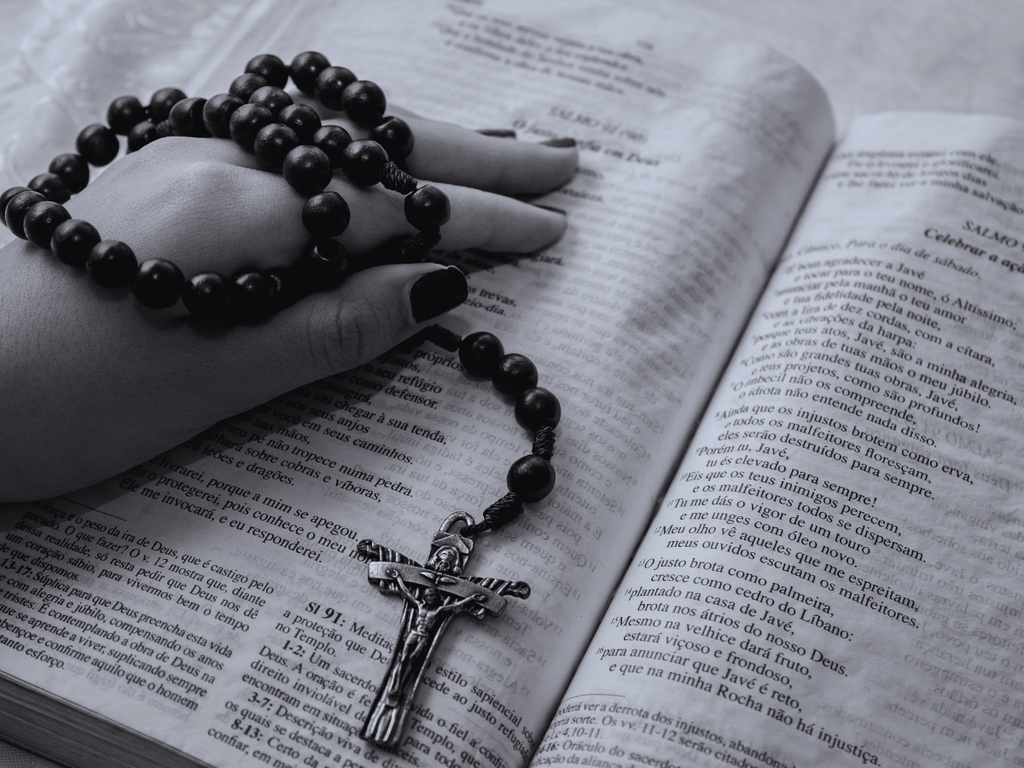
Mary is the mother of Jesus. Because Jesus is God the Son made man, the Catholic Church calls her the Mother of God, a title defined at the Council of Ephesus in 431.
She was a young Jewish woman from Nazareth who said yes to the angel Gabriel, carried Christ in her womb, raised him, stood beneath his cross, and prayed with the apostles at Pentecost. Catholics honor her more than any other saint, and every bit of that honor points to her Son.
If you grew up seeing statues of her in Catholic churches and wondered what all the devotion was about, or if you have heard that Catholics worship her and were never sure what to make of it, this is for you. Her story is told in Scripture in just a few scenes, and each one is worth slowing down for.

What Does the Bible Say About Mary
 |
She Said Yes
Luke tells us the angel Gabriel appeared to her in Nazareth and greeted her with words no one else in Scripture receives: Hail, full of grace, the Lord is with you (Luke 1:28, RSV Catholic Edition). When he told her she would conceive the Son of the Most High, she asked how that could happen, and then she answered with the sentence Catholics have repeated for two thousand years: Behold, I am the handmaid of the Lord; let it be to me according to your word (Luke 1:38). |
 |
Elizabeth Named It First
When Mary traveled to visit her cousin Elizabeth, the older woman was filled with the Holy Spirit and cried out, Blessed are you among women, and blessed is the fruit of your womb! And why is this granted me, that the mother of my Lord should come to me? (Luke 1:42 to 43, RSV Catholic Edition). Notice the word Lord. Elizabeth was already calling Mary the mother of her Lord before Jesus was born. |
 |
She Pointed to Him
At the wedding at Cana, the wine ran out and Mary noticed. She brought the problem to Jesus, and then she turned to the servants and gave the only recorded command of her life: Do whatever he tells you (John 2:5, RSV Catholic Edition). That sentence sums up what the Church believes her work has always been. |
 |
She Stayed
John is the only Gospel writer who places Mary at the cross. Jesus, dying, looked at her and at the beloved disciple standing beside her and said, Woman, behold, your son, and then to the disciple, Behold, your mother (John 19:26 to 27, RSV Catholic Edition). Catholics have always heard those words as more than a son’s care for his widowed mother. They hear Jesus giving his mother to every disciple. |

Why Do Catholics Call Mary the Mother of God
The title comes from the Greek word Theotokos, meaning God bearer. Nestorius, the patriarch of Constantinople, argued in the early fifth century that Mary should only be called the mother of Christ, since she bore his human nature and not his divinity. Cyril of Alexandria answered that Jesus is one person, not two, so the woman who bore him bore the whole person. The Council of Ephesus sided with Cyril in 431, and the Catechism sums up the result: Mary conceived by the Holy Spirit the one who is the Father’s eternal Son, so she is truly Mother of God (CCC 495). You can read a clear account of the controversy in EWTN’s article on Mary, Mother of God.
Everything about this title protects what the Church believes about Jesus. If Mary were only the mother of a man, then the man and the God would be two beings sharing a body. The Church holds that the child in her womb was God the Son from the first moment, and Mary’s motherhood is the proof.
What Are the Four Marian Dogmas
The Church has formally defined four teachings about Mary. Each one rests on something Christ did for her or through her.
1. Mother of God. Defined at the Council of Ephesus in 431, as above.
2. Perpetual virginity. Mary remained a virgin before, during, and after the birth of Jesus, a belief held from the earliest centuries and affirmed at the Lateran Council of 649 and in the Catechism (CCC 499 to 501).
3. Immaculate Conception. On December 8, 1854, Pope Pius IX defined in Ineffabilis Deus that Mary was preserved from original sin from the first instant of her conception, in view of the merits of Christ.
4. Assumption. On November 1, 1950, Pope Pius XII defined in Munificentissimus Deus that Mary, having completed her earthly life, was taken up body and soul into heavenly glory (CCC 966).
You can read Pius XII’s full text on EWTN’s page for Munificentissimus Deus, and Vatican News has a helpful piece on the Immaculate Conception in the words of the popes.

Common Questions About Mary
Do Catholics Worship Mary
No. Catholics worship God alone, Father, Son, and Holy Spirit. They honor Mary and ask for her prayers, the way you would ask a friend to pray for you. The Catechism is direct about it: her role as mother of all believers in no way obscures or diminishes the unique mediation of Christ, but shows its power (CCC 970). Everything she is comes from him.
Did Mary Need a Savior
Mary herself said so. In the Magnificat she sings, My spirit rejoices in God my Savior (Luke 1:47, RSV Catholic Edition). Catholics believe Jesus saved her in the most complete way possible, by keeping her from sin from the start, the way a doctor who prevents an illness has healed a patient more thoroughly than one who cures it afterward. The Immaculate Conception is a teaching about what Christ’s grace can do, with Mary as the first person it reached.
What About the Brothers of Jesus
The Gospels mention brothers and sisters of Jesus. The Greek word is adelphoi, and in Scripture it covers a wider circle of relatives than it does in modern English. In Genesis 13:8, Abram calls his nephew Lot his brother, using the same word in the Greek Old Testament. Saint Jerome defended Mary’s perpetual virginity in the fourth century in his work Against Helvidius, and the early Church read the Gospels the same way. Nowhere does the New Testament call these figures sons of Mary other than Jesus.

How Can You Pray With Mary Today
1. Pray a Hail Mary slowly. Its first lines are straight from Gabriel and Elizabeth in Luke 1, so you are praying Scripture.
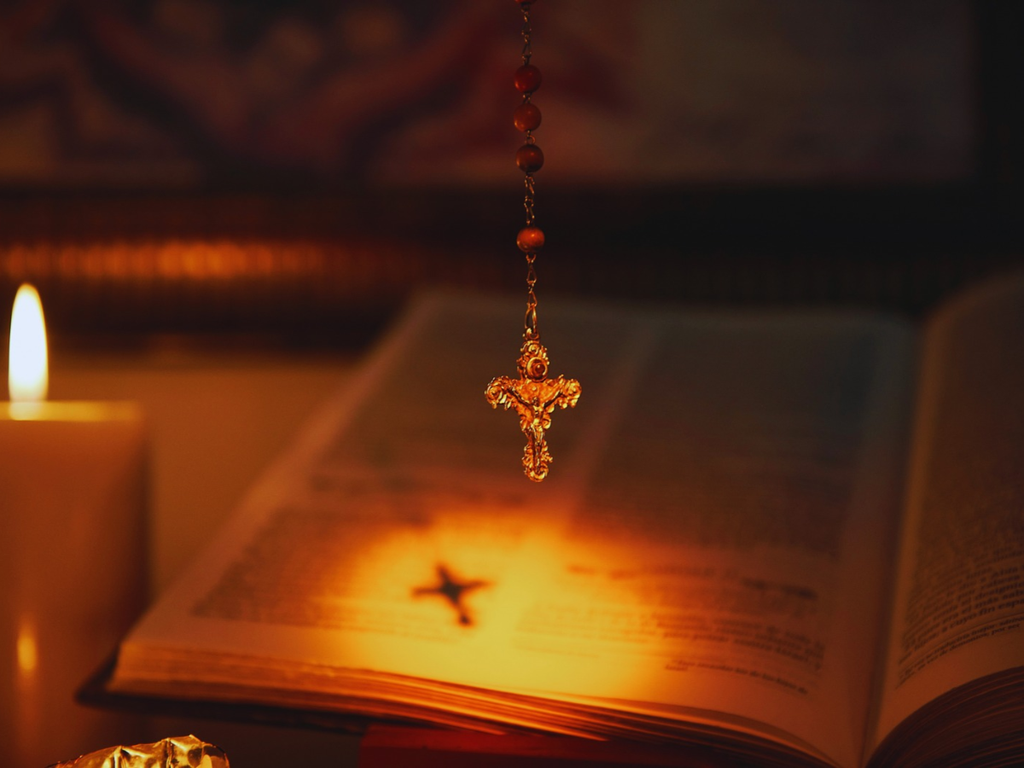
2. Pray a decade of the Rosary, walking through one scene from the life of Jesus with his mother beside you.
3. Read Luke 1 from verse 26 to 56 in one sitting, ending with the Magnificat, and notice who her song is about.
4. Take one worry to her the way you would to a mother, and ask her to bring it to her Son.
| Mary never asked anyone to look at her. Her one recorded instruction is to look at him: Do whatever he tells you. |
The Heart of It
Mary is the woman who said yes, and the Savior she carried is the one who saved her and everyone she loves. Jesus gave her to the Church from the cross, and she has spent two thousand years doing what she did at Cana, turning every face toward her Son. He is the one who forgives, heals, and sets people free. She simply stands beside you and points.
For more on Mary, the Rosary, and the prayers that have carried Catholics for centuries, visit Restored in Prayer, where every guide leads back to Jesus.
Hail Mary, full of grace, the Lord is with thee.