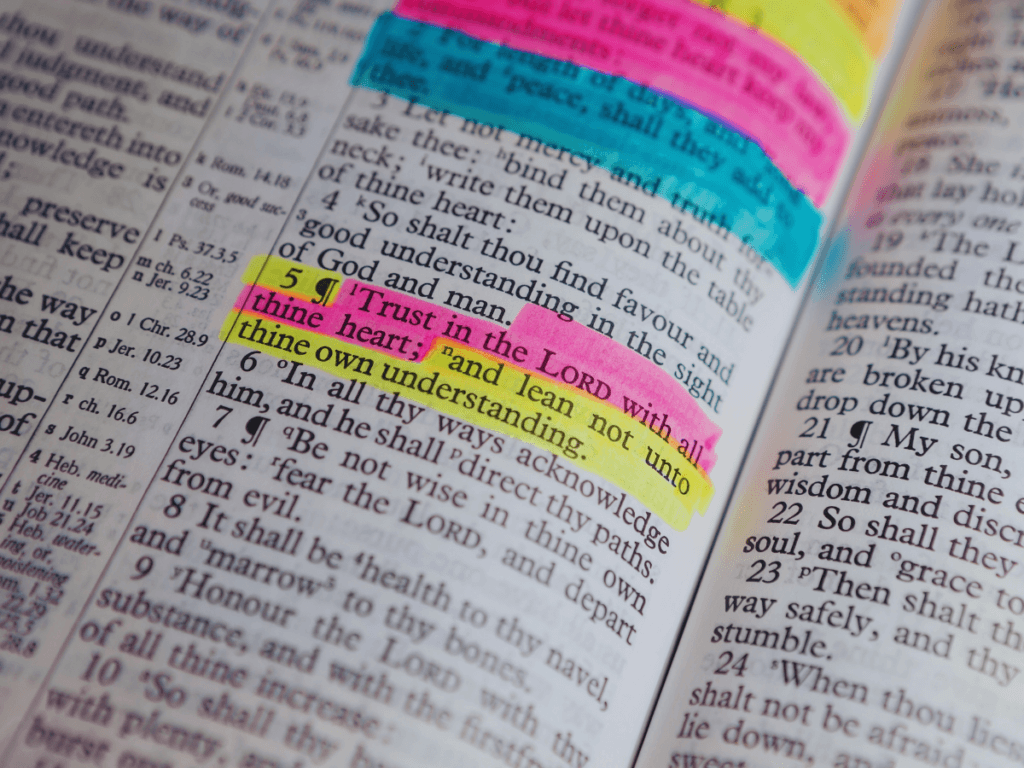
There is a version of the Christian life where salvation is a transaction you completed in the past, a prayer you said at an altar, a box you checked on the way to better behavior. And then there is the version the New Testament actually describes: a death and a resurrection, a complete change of identity, a second birth that is as real and as irreversible as the first one. This guide is about the second version.
The Question Beneath All Other Questions
Every human being, at some point, comes to a moment where the ordinary answers stop working. The career is going well, the relationships are mostly intact, the calendar is full, and still, somewhere underneath all of it, there is a question that will not go away: Is this all there is?
That question is not a sign of ingratitude or instability. It is a sign of design. Augustine of Hippo, writing in the fourth century, put it in a sentence that has outlasted every empire since: “You have made us for yourself, O Lord, and our hearts are restless until they rest in you.” The restlessness is not the problem. It is the signal. It is the soul recognizing that it was made for something it has not yet found.
Salvation, in the language of the New Testament, is the name for what happens when that restlessness finally meets its answer. Not a religious system. Not a set of improved behaviors. A Person. And the question of what salvation actually is, where it comes from, what it costs, and what it produces, is the most important question any human being can take seriously.
What the Word Actually Means
The Greek word most often translated “salvation” in the New Testament is soteria. It carries the idea of rescue, of deliverance, of being brought safely through something that would otherwise have destroyed you. The same root gives us the name Jesus, which is the Greek form of the Hebrew Yeshua, meaning “the Lord saves.” His name was his mission statement before he performed a single miracle.
Salvation in Scripture is not one thing. It is a landscape, and the writers of the New Testament describe it from multiple angles:
It is justification, the legal declaration that you stand before God not in your own record but in the record of Jesus. Paul writes in Romans 5:1 that “since we have been justified through faith, we have peace with God through our Lord Jesus Christ.” The peace that most people spend their entire lives trying to manufacture through performance is a gift given at the moment of faith.
It is reconciliation, the restoration of a relationship that was broken. Second Corinthians 5:18 tells us that “God was reconciling the world to himself in Christ, not counting people’s sins against them.” The distance between God and humanity was not abolished by humanity reaching upward. It was crossed by God coming down.
It is regeneration, the inner transformation that Jesus described to a religious leader named Nicodemus in John 3: “You must be born again.” Not improved. Not educated. Not reformed. Born. The language of birth is the language of a completely new beginning, a new nature, a new capacity for life that was not there before.
It is redemption, the purchase of freedom for someone who was enslaved. Ephesians 1:7 describes “redemption through his blood, the forgiveness of sins.” The imagery comes from the ancient practice of buying a slave’s freedom in the marketplace. Something was owed that you could not pay. Someone else paid it.
And it is adoption, the act by which God takes someone who had no claim on his family and gives them full standing as a son or daughter. Romans 8:15 says, “The Spirit you received brought about your adoption to sonship. And by him we cry, ‘Abba, Father.'” Abba is the intimate Aramaic word for Father, closer to “Dad” than to any formal title. The most powerful being in the universe invites rescued people to call him that.
Why Salvation Was Necessary
To understand why salvation is necessary, you have to understand what the problem actually is. And the problem is not primarily behavioral, though behavior is involved. The problem is relational and spiritual at the deepest level.
Genesis 1 and 2 describe a world made in goodness, with human beings created in the image of God, placed in relationship with him, with each other, and with the world they were given to tend. There was access. There was intimacy. There was life. Then Genesis 3 describes the moment when the human beings chosen to trust their own judgment over God’s word, and the relationship fractured. Not because God stopped loving them, but because a holy God and a sinful humanity cannot occupy the same space without something being done about the sin.
The rest of the Old Testament is the long story of God not abandoning the people he made but working through a covenant, through a law, through sacrifices that pointed forward, through prophets who kept insisting that something greater was coming, toward the moment when he would deal with the problem at its root.
Isaiah 59:2, written seven hundred years before Jesus, names the issue plainly: “Your iniquities have separated you from your God; your sins have hidden his face from you, so that he will not hear.” The separation is not emotional distance. It is moral reality. A judge who ignores sin is not kind. He is corrupt. The justice of God required that sin be addressed. The love of God required that the address not be destruction.
The cross is where those two requirements met.
The Cross: What Actually Happened
The crucifixion of Jesus is the most written about event in human history, and it is possible to be so familiar with it that you stop hearing what it says.
Jesus of Nazareth was fully human and fully God at the same time, a claim that has scandalized skeptics and anchored believers for two thousand years. The Incarnation, the Word becoming flesh, meant that the one person in the history of the cosmos who had no debt to pay chose to enter the human condition and live it from the inside. He was born in poverty. He grew up in an occupied country. He was misunderstood by his family and betrayed by his friends. He knew hunger and exhaustion and grief. Hebrews 4:15 says he was “tempted in every way, just as we are, yet he did not sin.” He was not play-acting humanity. He inhabited it.
And then he died. Not as a martyr, not as a failed revolutionary, but as a substitute. Second Corinthians 5:21 contains one of the most compressed and most explosive sentences in all of Scripture: “God made him who had no sin to be sin for us, so that in him we might become the righteousness of God.” The sinless one became, in some way that language strains to contain, the bearer of the sin that separated humanity from God. Not merely the sympathizer of sinners, but the sin-bearer.
Isaiah 53 described this six centuries before it happened, with a specificity that has astonished readers across every generation: “He was pierced for our transgressions, he was crushed for our iniquities; the punishment that brought us peace was on him, and by his wounds we are healed.” Every detail of the crucifixion narrative reads as the fulfillment of a script written centuries earlier, which is either the most remarkable coincidence in literary history or exactly what Christians have always claimed: that the cross was not an accident but an appointment, planned before the foundation of the world.
The resurrection three days later was not a postscript to the cross. It was the validation of it. If Jesus had remained dead, Paul says in 1 Corinthians 15:17, “your faith is futile; you are still in your sins.” The resurrection declared that death had been defeated, that the debt had been fully paid, that the judgment had been fully absorbed, and that the life Jesus offers is not a metaphor but a reality with an open tomb to prove it.
You can read the full account of the resurrection in all four Gospels: Matthew 28, Mark 16, Luke 24, and John 20.
What It Means to Be Born Again
Nicodemus came to Jesus at night. John 3 tells us he was a Pharisee, a member of the ruling council, a man who had spent his entire life trying to be righteous by the most rigorous standard his culture offered. And he came at night, which suggests he was not ready for his colleagues to know he was curious about this teacher from Galilee.
Jesus did not begin with a lecture on doctrine. He began with a declaration that shattered Nicodemus’s entire framework: “Very truly I tell you, no one can see the kingdom of God unless they are born again.”
Born again. The Greek word is anothen, and it carries a double meaning that was probably intentional: it can mean “again” and it can mean “from above.” A new birth, and a birth that originates not in human effort but in God himself. Nicodemus heard the physical impossibility: “How can someone be born when they are old? Surely they cannot enter a second time into their mother’s womb to be born!”
Jesus clarified: “Flesh gives birth to flesh, but the Spirit gives birth to spirit.” The new birth is not a physical event. It is a spiritual one. It is the Holy Spirit entering and permanently transforming the interior of a human being, creating a new nature, new desires, new capacities, a new orientation toward God that was not there before.
This is why being born again is so different from self-improvement. Self-improvement works with the existing material. The new birth produces new material. As Paul describes it in 2 Corinthians 5:17: “If anyone is in Christ, the new creation has come: The old has gone, the new is here!” Not revised. Not renovated. New.
The Billy Graham Evangelistic Association has written helpfully on this: the new birth is not an emotional experience that fades, not a cultural identity inherited from family, but a genuine spiritual transformation that changes the direction of a life.
How Does Salvation Happen? The Mechanics of Faith
This is where many people get confused, because there are so many competing voices about what exactly a person has to do to be saved.
The New Testament is consistent and clear: salvation comes through faith. Not through ritual, not through good behavior, not through religious heritage, and not through earning anything. Ephesians 2:8 and 9 may be the clearest statement of this anywhere in Scripture: “For it is by grace you have been saved, through faith, and this is not from yourselves, it is the gift of God, not by works, so that no one can boast.”
Grace is the active ingredient. Faith is the receptive instrument. Works are the result, not the cause.
But what is faith, exactly? The word pistis in Greek carries three dimensions that are all essential:
Knowledge. Faith is not a blind leap into the dark. It is a response to something that has been revealed. You cannot believe in someone you have never heard of. Romans 10:17 says, “Faith comes from hearing the message, and the message is heard through the word about Christ.” The content of the message matters. It is the specific claim that Jesus died for your sins and rose from the dead.
Agreement. Knowing the facts is not enough. Faith involves personally agreeing that those facts are true, that Jesus is who he claimed to be, that the cross accomplished what the New Testament says it accomplished.
Trust. This is the dimension that moves faith from the head to the life. It is not enough to believe that a bridge can hold your weight. Faith is walking across it. Trusting Christ means committing yourself to him, not as an insurance policy for the afterlife, but as the Lord and Savior of your actual daily life.
John 3:16 holds all three together in a single sentence: “For God so loved the world that he gave his one and only Son, that whoever believes in him shall not perish but have eternal life.” The believing is a present ongoing trust, not a past moment only. And the life it produces is not merely a longer version of the life you already have. It is eternal life, a quality of life rooted in the life of God himself, beginning now.
Repentance: The Turn That Faith Requires
You cannot discuss salvation honestly without discussing repentance, and you cannot discuss repentance without first clearing away the caricature that most people carry.
Repentance is not feeling terrible about yourself. It is not self-punishment. It is not a performance of guilt sufficient to unlock God’s forgiveness. The Greek word is metanoia, and it means a change of mind, a change of direction, a turning from one orientation to another.
In Acts 2:38, Peter’s first public sermon after the resurrection ends with this call: “Repent and be baptized, every one of you, in the name of Jesus Christ for the forgiveness of your sins. And you will receive the gift of the Holy Spirit.” Repentance and faith are two sides of the same movement. Repentance is turning from; faith is turning to. You cannot genuinely turn toward Jesus without also turning away from the life organized around self and sin.
This does not mean you have to be perfectly free of sin before you come to Jesus. The whole point of salvation is that you come as you are, not as you wish you were. But it does mean that genuine salvation produces a genuine change of direction. Not perfection, but trajectory.
C.S. Lewis described repentance in Mere Christianity as the process of “unlearning all the self-conceit and self-will that we have been training ourselves into for thousands of years.” It is not a one-time event but a posture, a continuous orientation toward God rather than toward self, that begins at the moment of conversion and deepens for the rest of a life. You can read more about the biblical meaning of repentance at Got Questions, one of the most thorough biblical reference resources available online.
The Moment of Conversion and What Follows
There is often a question about whether salvation happens in a single definable moment or whether it is a process. The honest answer is: both are true, and the tension between them is not a contradiction.
In terms of the legal declaration of justification, the moment of faith is the decisive point. The moment you genuinely trust Christ, you are declared righteous before God. That is a single event. Colossians 1:13 and 14 describes it in past tense: “He has rescued us from the dominion of darkness and brought us into the kingdom of the Son he loves, in whom we have redemption, the forgiveness of sins.” Has rescued. Has brought. The transfer of kingdom is an event, not a gradual drift.
But in terms of the inner transformation, the process of sanctification, the deepening of the new nature and the fading of the old patterns, that is lifelong. Philippians 1:6 holds the tension beautifully: “He who began a good work in you will carry it on to completion until the day of Christ Jesus.” The beginning is an event. The carrying on is a process.
The traditional “sinner’s prayer” is often used as the moment of conversion, and there is nothing wrong with it as an expression of faith. But the words of any specific prayer are not magical. What matters is the genuine turning of the heart toward God, the real trust in Christ, the actual repentance from a self-directed life. If you have never made that turn and you want to, here is the kind of prayer that expresses it:
Lord Jesus, I know I am a sinner and I cannot save myself. I believe you died for my sins and rose again. I turn from my sin and I place my trust in you, not in my own goodness. Come into my life. Be my Lord and my Savior. I receive your forgiveness. Amen.
If you prayed something like that and meant it, the Billy Graham Evangelistic Association has a helpful next steps page that walks through what comes next.
Assurance: Can You Know That You Are Saved?
One of the most common struggles among people who have made a decision to follow Christ is the question of whether it “took.” Whether they did it right. Whether God actually accepted them, or whether they are perpetually on probation, one sin away from losing what they received.
The New Testament is emphatic on this point. First John 5:13 was written precisely to address this anxiety: “I write these things to you who believe in the name of the Son of God so that you may know that you have eternal life.” Know. Not hope. Not guess. Not anxiously monitor your emotional state for signs. Know.
The assurance of salvation does not rest on the quality of your conversion experience or the consistency of your subsequent behavior. It rests on the character of God and the finished work of Christ. John 10:28 and 29 gives Jesus’s own statement on the matter: “I give them eternal life, and they shall never perish; no one will snatch them out of my hand. My Father, who has given them to me, is greater than all; no one can snatch them out of my Father’s hand.”
No one. Not the enemy. Not your worst day. Not your most profound failure. The keeping of the saved is not your responsibility. It is his.
This does not mean you can live however you like without consequence. The New Testament is equally clear that genuine salvation produces genuine change, and that a “faith” that produces no change in the direction of a life is something to examine. But the examination is not meant to produce paralysis. It is meant to point you back to Christ, the author and finisher of faith (Hebrews 12:2), who is both the one who saved you and the one who is sustaining the saving.
Eternal Life: What It Is and When It Starts
The phrase “eternal life” appears often enough in the New Testament that people tend to assume they know what it means: a very long time after you die. But that is not the full picture.
In John 17:3, Jesus defines eternal life himself: “Now this is eternal life: that they know you, the only true God, and Jesus Christ, whom you have sent.” Eternal life is not primarily a duration. It is a relationship. It is the knowledge of God, and knowledge in the biblical sense means not mere information but intimate, relational, personal encounter. The life that begins at salvation is the life of God himself, the zoe of the New Testament, flowing into a human life through the presence of the Holy Spirit.
This means eternal life begins at the moment of salvation, not at the moment of physical death. You do not have to wait to die to begin living the life of God. It is available now, in the ordinary texture of every day, in prayer and in Scripture and in community and in the slow transformation of desires and loves and habits that comes from walking with Jesus over time.
The Bible Project has an excellent video series on the meaning of eternal life in the Gospel of John that goes deeper into this beautiful word study for anyone who wants to explore further.
What Salvation Produces: The Fruit of the New Life
Salvation is not the end of the story. It is the beginning of a new one. And the new story has a character that is recognizably different from the old one, not immediately, not perfectly, but genuinely.
The New Testament describes the evidence of the new life in multiple ways. In Galatians 5:22 and 23, Paul describes the fruit of the Spirit: love, joy, peace, patience, kindness, goodness, faithfulness, gentleness, and self-control. These are not virtues you produce by trying harder. They are the natural output of a life connected to the True Vine, as Jesus described it in John 15. They grow as the connection to Christ deepens.
In 1 John, the apostle gives a series of practical tests for the genuineness of salvation: a love for other believers, a pattern of obedience to God’s commands, a decreased love for the world as the primary orientation of the heart, and the witness of the Holy Spirit in the interior life. These are not a checklist to earn assurance. They are the natural signs of a life that has been genuinely transformed.
The person who has been truly born again does not become sinless. But their relationship to sin changes. They no longer feel at home in it. They grieve it rather than celebrating it. They return to God after falling rather than running from him. First John 1:9 is both a promise and an indicator of genuine spiritual life: “If we confess our sins, he is faithful and just and will forgive us our sins and purify us from all unrighteousness.” The pattern of honest confession and returning is itself a mark of the new nature.
For the Person Who Is Wondering
If you are reading this and something in you is awake to the possibility that this is real, that is not an accident. The drawing toward God that you feel is itself a work of the Holy Spirit. Jesus said in John 6:44 that “no one can come to me unless the Father who sent me draws them.” The very hunger you feel is the evidence that you are being drawn.
You do not have to have it all figured out before you come. You do not have to have your doubts resolved or your past cleaned up or your questions answered. Every person Jesus ever encountered in the Gospels came to him in some state of incompleteness, and not one of them was sent away for not being ready enough.
The woman at the well came with a history that disqualified her from polite company, and Jesus gave her living water and sent her to tell an entire town about him.
The thief on the cross beside Jesus had, by definition, no time to clean up his life or perform any religious act. He said, simply: “Jesus, remember me when you come into your kingdom.” And Jesus said to him: “Truly I tell you, today you will be with me in paradise.” Today. No delay. No performance required. Just the turning of a heart toward the only One who could help.
If you want to know more about taking this step, the Christianity Explored course is a thoughtful and gentle introduction to the person and claims of Jesus, designed for people at any point of inquiry.
A Prayer for the Person Ready to Begin
Lord Jesus, I have been reading about salvation and something in me knows this is the most important truth I have ever encountered. I want it to be real, not just as an idea but as my actual life.
I confess that I have lived for myself. That I have tried to fill the deep interior hunger with things that are not you. That I need not just improvement but the new birth you described to Nicodemus.
I believe you died for my sins. I believe you rose from the dead. I believe your resurrection is the proof that the debt has been fully paid and that the life you offer is real.
I turn from a life organized around myself and I turn toward you. I receive your forgiveness, your righteousness, your Spirit, your eternal life. Make me new. Not the version of me I have been constructing on my own, but the version you designed me to be.
I am yours. Lead me.
Amen.
Where to Go From Here
If you have prayed that prayer and meant it, the journey is just beginning. Here are a few next steps worth taking:
Find a community. The Christian life was never designed to be lived alone. Hebrews 10:24 and 25 says “let us consider how we may spur one another on toward love and good deeds, not giving up meeting together.” Find a local church where the Bible is taught honestly and people are genuinely trying to follow Jesus. The Gospel Coalition’s church finder is a helpful resource for finding a gospel-centered church in your area.
Begin reading Scripture. The Gospel of John is the best starting place for a new believer. It was written, as John himself says in John 20:31, “so that you may believe that Jesus is the Messiah, the Son of God, and that by believing you may have life in his name.” Read it slowly. Come to it with the actual questions you actually have. YouVersion’s Bible app makes it easy to read Scripture daily with plans designed for people at every stage.
Pray specifically. Prayer is not a religious ritual. It is a conversation with a Person who is present and who hears. Begin simply, with honesty, bringing the real state of your life to God rather than a polished performance of faith.
Tell someone. Romans 10:9 and 10 connects the inward reality of salvation with its outward confession: “If you declare with your mouth, ‘Jesus is Lord,’ and believe in your heart that God raised him from the dead, you will be saved.” There is something about saying it out loud to another person that cements what has happened on the inside.
A Final Word
Salvation is the most extraordinary word in the human vocabulary because it is the word for what happens when the God who made everything comes personally to rescue the people he made. Not the people who deserved it. Not the people who had earned the right to be rescued. The people who were lost.
You do not have to be impressive to receive it. You do not have to understand every theological nuance. You have to be honest about your need and willing to receive what only he can give.
The same Jesus who walked the shores of Galilee and touched lepers and raised the dead and said to a dying thief, “Today you will be with me in paradise,” is present right now, through the Spirit, to anyone who comes to him.
He has not gone anywhere. He is still in the business of making dead things alive.
“For God so loved the world that he gave his one and only Son, that whoever believes in him shall not perish but have eternal life.” — John 3:16