How to Pray the Rosary Step by Step
A complete guide to the prayers, beads, mysteries, and meditations of the holy Rosary
Because the Rosary is not a task to complete. It is a conversation to enter.
What Is the Rosary and Why Do People Pray It?
If you have never prayed the Rosary before, the first thing to know is that it is not as complicated as it looks. A set of beads, a sequence of prayers, a series of events from the life of Jesus to hold in your mind and heart. That is the Rosary at its most basic. But the people who have prayed it for years, or for decades, will tell you it becomes something else entirely once you settle into it: a kind of walking meditation through the Gospel, a daily encounter with Christ through the eyes of the woman who knew him most intimately.
The Rosary is a scripture-based prayer, which surprises people who have only heard it described as repetitive or rote. The Apostles Creed summarizes the whole of Christian faith. The Our Father comes directly from Matthew 6. The first half of the Hail Mary is drawn word for word from the angel Gabriel’s greeting in Luke 1:28 and Elizabeth’s exclamation in Luke 1:42. The Mysteries that form the heart of the prayer take the person praying through the Annunciation, the Nativity, the Agony in the Garden, the Crucifixion, the Resurrection, the Ascension, and beyond. The Rosary is, as several popes have called it, a compendium of the Gospel.
Word Origin: rosarium (roh-SAR-ee-um) A garden of roses — The Latin root of the word rosary. In medieval usage the term described a collection of beautiful things arranged together, much as a garden of roses is a gathering of individual blooms. The prayers of the Rosary are a garland offered to Mary and, through her, to Christ.
Pope Francis, who carried a set of rosary beads in his breast pocket every day of his papacy, once said the Rosary is a prayer from his heart. Pope John Paul II called it his favorite prayer. St. Padre Pio, who reportedly prayed up to fifteen decades daily, called it a weapon. And in 2025, Pope Leo XIV called on Catholics worldwide to pray the Rosary every day throughout October for peace. The reasons people come to the Rosary are as varied as people themselves: grief, anxiety, gratitude, intercession for a prodigal child, the need for something anchored in a world that will not stop moving.
Whatever brought you here, you are welcome. Here is everything you need to begin.
What You Need to Pray the Rosary
You do not need anything to pray the Rosary except a willing heart. People pray it on long commutes counting on their fingers, in hospital rooms with no beads in sight, on walks through neighborhoods where they have memorized every crack in the sidewalk. That said, most people find a set of rosary beads genuinely helpful, especially when learning, because the physical act of moving from bead to bead gives the hands something to do while the mind and heart settle into meditation.
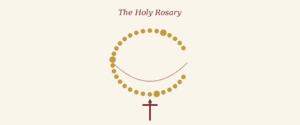
A traditional rosary has five decades of ten smaller beads, separated by single larger beads, with a tail containing a crucifix, one larger bead, and three smaller beads. The centerpiece medal connects the tail to the circle of beads and typically depicts Mary, Jesus, or a patron saint. If you are looking for a quality rosary, the Catholic Woodworker (catholicwoodworker.com) makes handcrafted wooden rosaries built for daily use. A beautifully illustrated free printable guide is also available from Hallow (hallow.com/blog/how-to-pray-the-rosary) for those who prefer to have it on paper.
If you do not have beads yet, start anyway. Consistency matters far more than equipment.
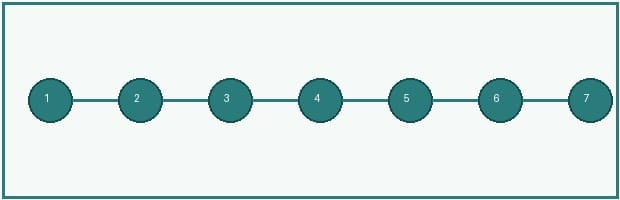
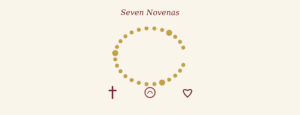
The seven core steps of the Rosary, from the opening Sign of the Cross through the closing prayer.
The Prayers of the Rosary: What Each One Means
Before walking through the steps, it helps to understand each prayer you will be saying. None of them are arbitrary. Each one carries centuries of theology and devotion in a handful of words.
The Sign of the Cross
The prayer that opens and closes every Rosary. In the name of the Father, and of the Son, and of the Holy Spirit, spoken while making the sign over your body. It is a declaration of identity and belonging, a reminder that you come to prayer as a child of the Triune God.
The Apostles Creed
A brief, ancient summary of the core beliefs of Christian faith: the Trinity, the Incarnation, Christ’s death and resurrection, the forgiveness of sins, and the life everlasting. Praying it at the opening of the Rosary plants your feet on the solid ground of what you believe before you begin to meditate.
The Our Father (Pater Noster)
The prayer Jesus himself taught his disciples in Matthew 6:9 to 13. It introduces each of the five decades of the Rosary, aligning your heart with God’s will before you enter into each mystery. According to the United States Conference of Catholic Bishops (usccb.org/how-to-pray-the-rosary), this prayer’s placement before each decade reflects its role as an orientation of the soul toward the Father.
“Pray then like this: Our Father in heaven, hallowed be your name.” — Matthew 6:9 (ESV)
The Hail Mary (Ave Maria)
The central prayer of the Rosary, repeated fifty times across the five decades. It is drawn almost entirely from Scripture. The first line, ‘Hail, full of grace, the Lord is with you,’ comes from the angel Gabriel’s greeting to Mary in Luke 1:28. The second line, ‘Blessed are you among women and blessed is the fruit of your womb,’ comes from Elizabeth’s greeting in Luke 1:42. The second half of the prayer, which asks for Mary’s intercession now and at the hour of death, was added later and made official under Pope Pius V.
“And he came to her and said, ‘Greetings, O favored one, the Lord is with you!’” — Luke 1:28 (ESV)
The Glory Be (Gloria Patri)
A doxology that closes each decade, offering praise to the Trinity: Glory be to the Father, and to the Son, and to the Holy Spirit, as it was in the beginning, is now, and ever shall be, world without end. It reorients every decade toward worship before moving to the next mystery.
The Fatima Prayer
An optional prayer widely used today, added to each decade after the Glory Be. It was revealed to the three shepherd children at Fatima, Portugal, in 1917 during the apparitions of Our Lady of Fatima: O my Jesus, forgive us our sins, save us from the fires of hell, lead all souls to heaven, especially those in most need of Thy mercy. Many Catholics consider it an essential part of their Rosary practice.
The Hail Holy Queen (Salve Regina)
The closing prayer of the full Rosary, addressing Mary as Mother of Mercy and asking for her intercession. It is one of the oldest Marian prayers in the Catholic tradition, dating to approximately the eleventh century. It closes the circuit of the prayer with a final appeal to Mary’s maternal care.
How to Pray the Rosary: Every Step in Order
Walk through this sequence once and you will have the complete structure. Beginners often find it helpful to keep this guide open the first few times and simply follow along. Within a few sessions the rhythm becomes natural.
Step 1 Begin With the Sign of the Cross
Hold the crucifix in your hand. Make the sign of the cross while speaking the words. This is both an act of worship and a reminder of whose presence you are entering.
Prayer words: In the name of the Father, and of the Son, and of the Holy Spirit. Amen.
Step 2 Pray the Apostles Creed on the Crucifix
While still holding the crucifix, pray the full Apostles Creed. This declaration of faith grounds the entire prayer in the core truths of Christianity before you move into meditation.
Prayer words: I believe in God, the Father Almighty, Creator of Heaven and earth; and in Jesus Christ, His only Son, Our Lord…
Step 3 Pray the Our Father on the First Large Bead
Move to the single large bead on the tail. Pray the Our Father here. This is the prayer Jesus taught and it belongs at the opening of everything.
Prayer words: Our Father, who art in heaven, hallowed be Thy name…
Step 4 Pray Three Hail Marys for Faith, Hope, and Love
Pray one Hail Mary on each of the three small beads that follow the large bead. These are traditionally offered for an increase in the three theological virtues: faith, hope, and love.
Prayer words: Hail Mary, full of grace, the Lord is with thee. Blessed art thou amongst women, and blessed is the fruit of thy womb, Jesus. Holy Mary, Mother of God, pray for us sinners, now and at the hour of our death. Amen.
Step 5 Pray the Glory Be, Then Announce the First Mystery
After the third Hail Mary, pray the Glory Be. Optionally add the Fatima Prayer. Then announce the First Mystery of whatever set you are praying (see below). A brief pause to picture the scene helps focus meditation.
Prayer words: Glory be to the Father, and to the Son, and to the Holy Spirit…
Step 6 Pray Each Decade: Our Father, 10 Hail Marys, Glory Be
This is the heart of the Rosary. Repeat the decade structure for all five mysteries. The repetition is not empty. As the words become automatic, the mind is freed to rest in each mystery rather than focus on saying the right thing.
Prayer words: Pray the Our Father on the large bead, ten Hail Marys on the small beads while meditating on the Mystery, then the Glory Be and optional Fatima Prayer.
Step 7 Close With the Hail Holy Queen
After the fifth decade, pray the Hail Holy Queen and the closing Rosary prayer. Make the Sign of the Cross to conclude. The full Rosary typically takes 15 to 25 minutes.
Prayer words: Hail, Holy Queen, Mother of Mercy, our life, our sweetness and our hope…
“The repetition is not empty. When the words become automatic, the heart is freed to rest in each mystery.”
The 20 Mysteries of the Rosary
The Mysteries are the soul of the Rosary. They are events from the lives of Jesus and Mary, drawn from Scripture, that you hold in your mind while praying each decade. The idea is not to think analytically about each event but to be present with it, to place yourself in the scene and let it speak to your own life and faith.
There are four sets of five mysteries, and different sets are traditionally prayed on different days of the week. Pope John Paul II added the Luminous Mysteries in 2002 in his apostolic letter Rosarium Virginis Mariae, providing scriptural meditations on the public ministry of Jesus that the original three sets did not fully cover.
Which mysteries to pray on which day:
Monday and Saturday · Joyful Mysteries Thursday · Luminous Mysteries Tuesday and Friday · Sorrowful Mysteries Wednesday and Sunday · Glorious Mysteries
The four sets of mysteries representing the full arc of Christ’s life, from the Annunciation to the Assumption and Coronation.
The Joyful Mysteries (Mondays and Saturdays)
These five mysteries meditate on the events surrounding the birth and early life of Jesus, full of wonder, surrender, and the first stirrings of what God was doing in the world through a young woman who said yes.
1. The Annunciation
“Do not be afraid, Mary, for you have found favor with God.” — Luke 1:30 (ESV)
Mary receives the angel Gabriel’s message that she will conceive and bear the Son of God. A model of surrendered faith for everyone who has ever been asked by God to say yes to something that felt impossible.
2. The Visitation
“Blessed are you among women, and blessed is the fruit of your womb!” — Luke 1:42 (ESV)
Mary travels in haste to visit her cousin Elizabeth, who is pregnant with John the Baptist. The first meeting of Jesus and John, through the bodies of two faithful women.
3. The Nativity
“And she gave birth to her firstborn son and wrapped him in swaddling cloths.” — Luke 2:7 (ESV)
The birth of Jesus in Bethlehem. God entering the world not in power but in poverty, in a stable, in the dark, to be found by shepherds who were the least likely to be invited.
4. The Presentation in the Temple
“Lord, now you are letting your servant depart in peace.” — Luke 2:29 (ESV)
Mary and Joseph bring the infant Jesus to the Temple. Simeon’s ancient prophecy of a sword piercing Mary’s soul points already toward Calvary.
5. The Finding of Jesus in the Temple
“Did you not know that I must be in my Father’s house?” — Luke 2:49 (ESV)
The twelve-year-old Jesus is found teaching the teachers in the Temple after three days of frantic searching. A foretaste of the resurrection, three days of loss followed by joyful finding.
The Luminous Mysteries (Thursdays)
Added by Pope John Paul II in 2002, these mysteries cover the public ministry of Jesus, a stretch of the Gospel that the original Rosary did not include. They are sometimes called the Mysteries of Light because they illuminate who Jesus is through his teaching and miracles.
1. The Baptism of Jesus
“You are my beloved Son; with you I am well pleased.” — Luke 3:22 (ESV)
Jesus is baptized by John in the Jordan, and the voice of the Father and the presence of the Spirit reveal the Trinity at the opening of his public ministry.
2. The Wedding at Cana
“Do whatever he tells you.” — John 2:5 (ESV)
Jesus performs his first miracle at the request of his mother. Mary’s instruction to the servants has become one of the most beloved Marian phrases in Catholic tradition.
3. The Proclamation of the Kingdom
“Repent, for the kingdom of heaven is at hand.” — Matthew 4:17 (ESV)
Jesus begins preaching, calling people to conversion and announcing a kingdom that operates by the logic of grace rather than power.
4. The Transfiguration
“His face shone like the sun, and his clothes became white as light.” — Matthew 17:2 (ESV)
On the mountain, Peter, James, and John see Jesus in his glory. A glimpse of the resurrection before the crucifixion, a reminder of what is coming.
5. The Institution of the Eucharist
“This is my body, which is given for you. Do this in remembrance of me.” — Luke 22:19 (ESV)
At the Last Supper, Jesus gives the gift of himself in the bread and wine. The Eucharist is not a memorial of an absent Christ but the continued presence of the one who promised never to leave.
The Sorrowful Mysteries (Tuesdays and Fridays)
These five mysteries walk with Jesus through his suffering and death, inviting the person praying to unite their own pain and difficulty to the suffering of Christ. This is where the Rosary often becomes most personally powerful for those who are walking through hardship.
1. The Agony in the Garden
“My Father, if it be possible, let this cup pass from me; nevertheless, not as I will, but as you will.” — Matthew 26:39 (ESV)
Jesus sweats blood in Gethsemane, wrestling with what is coming. He chose the cup. That choosing is where our redemption begins.
2. The Scourging at the Pillar
“By his wounds you have been healed.” — 1 Peter 2:24 (ESV)
Jesus is beaten by Roman soldiers. The physical reality of the Incarnation meant that God, in Christ, could be hurt. And chose to be.
3. The Crowning With Thorns
“They stripped him and put a scarlet robe on him, and twisting together a crown of thorns, they put it on his head.” — Matthew 27:28-29 (ESV)
The soldiers mock the King of kings. What they meant as humiliation, God meant as coronation.
4. The Carrying of the Cross
“And he went out, bearing his own cross, to the place called the Place of a Skull.” — John 19:17 (ESV)
Jesus carries the instrument of his execution through Jerusalem. Simon of Cyrene is compelled to help. We are called to carry our crosses too, and we are never carrying them alone.
5. The Crucifixion
“It is finished.” — John 19:30 (ESV)
The death of Jesus on the cross. The word tetelestai in Greek, translated ‘it is finished,’ was a commercial term meaning a debt has been paid in full. The debt of sin, cancelled.
The Glorious Mysteries (Wednesdays and Sundays)
These five mysteries celebrate the triumph of Christ over death and the continued life of the Holy Spirit in the Church and in Mary. They are prayed with joy because they remind us where the story is ultimately going.
1. The Resurrection
“He is not here, for he has risen, as he said.” — Matthew 28:6 (ESV)
The tomb is empty. Death has been defeated. Everything the Rosary meditates on is only possible because of this morning.
2. The Ascension
“He was lifted up, and a cloud took him out of their sight.” — Acts 1:9 (ESV)
Jesus returns to the Father. His departure is not abandonment but preparation: he goes to prepare a place, to send the Spirit, to intercede at the right hand of the Father.
3. The Descent of the Holy Spirit
“And they were all filled with the Holy Spirit.” — Acts 2:4 (ESV)
Pentecost. The birth of the Church. The same Spirit who hovered over the waters at creation hovered over the disciples in that upper room.
4. The Assumption of Mary
“[Mary has been assumed body and soul into heavenly glory.]” — Catechism of the Catholic Church, 974
Mary is taken into heaven at the end of her earthly life. This mystery invites reflection on the future resurrection of all who belong to Christ.
5. The Coronation of Mary
“A great sign appeared in heaven: a woman clothed with the sun, with the moon under her feet, and on her head a crown of twelve stars.” — Revelation 12:1 (ESV)
Mary is crowned Queen of Heaven, a reflection of the honor given to the one who bore the King of kings. The Rosary ends where the story of salvation reaches its glorified horizon.
How to Actually Meditate on the Mysteries While Praying
This is the question most beginners wrestle with first: how do you say the prayers and think about the mystery at the same time? The answer is that you do not exactly think. You rest.
The repetition of the Hail Mary is designed to quiet the analytical mind so that something deeper can happen. Saint Louis de Montfort, one of the great teachers of the Rosary, described it as a contemplative method in which the lips continue to pray while the heart gazes. You do not need to actively construct a detailed image or extract a theological insight from each mystery. You simply hold the scene gently in the background of your awareness while the familiar words move through you.
A few things help in practice. Some people visualize the scene as if they were present: standing at the foot of the cross, or at the stable in Bethlehem, or in the garden with Mary when the angel arrived. Others read a short scripture passage before each decade to anchor the mystery in their mind. Some find it helpful to listen to a guided rosary recording, especially when starting out, and both Hallow (hallow.com) and the Rosary Center (rosarycenter.org/how-to-pray-the-rosary) offer beautifully guided versions in audio form.
“Saint Louis de Montfort described the Rosary as a contemplative method: the lips continue to pray while the heart gazes.”
The key insight, and the one that changes everything, is that imperfect Rosary prayer is still prayer. You will get distracted. Your mind will wander to the grocery list and the unanswered email. That is not failure. The practice is not about achieving a state of perfect focus; it is about returning, again and again, to the place where God is. Every time your attention wanders and you bring it back, that return is itself an act of prayer.
Where Did the Rosary Come From? A Brief History
The Rosary has a history that is richer, older, and more complicated than most people realize. Its roots lie in the ancient monastic practice of praying the 150 Psalms, a practice that ordinary laypeople of the medieval period could not participate in because most could not read Latin. Gradually, a parallel tradition developed of praying 150 Hail Marys in their place, often using knotted cords or stones to keep count.
The defining legend of the Rosary ties its origin to Saint Dominic, the Spanish founder of the Dominican Order, who tradition holds received the devotion from an apparition of Mary in 1208 while he was combating the Albigensian heresy in southern France. According to EWTN (ewtn.com), Mary gave Dominic the rosary as a spiritual weapon against a heresy that denied the reality of Christ’s incarnation, a heresy that the mysteries of the Rosary, with their deep engagement with the physical life of Jesus, were perfectly designed to combat.
Historians are divided on the details of this tradition. As Catholic Answers notes (catholic.com), earlier Dominican constitutions and early biographies of Dominic do not mention the Rosary, and the earliest detailed account of Mary appearing to Dominic with a rosary appears in the writings of Blessed Alan de la Roche in the late fifteenth century, nearly 240 years after Dominic’s death. What is clear is that the Dominicans became the primary promoters of the Rosary throughout the medieval world and that the devotion was already widespread before Alan de la Roche wrote about it.
The structure of fifteen mysteries (the original three sets of five) was largely standardized by the late fifteenth and early sixteenth century. Pope Pius V officially endorsed the Rosary in 1569 following the great Catholic naval victory at Lepanto, which many attributed to the widespread prayer of the Rosary by Catholics across Europe. Pope John Paul II added the Luminous Mysteries in 2002, bringing the total to twenty.
The Franciscan Media (franciscanmedia.org) notes that the Rosary’s development also draws on the medieval tradition of the Marian Psalter developed by the Cistercians, in which 150 Hail Marys were divided into groups by Our Fathers, with prayer beads used to keep count. The mysteries were added separately as a way of giving the prayer a meditative, Gospel-rooted focus that distinguished it from mere counting.
Common Mistakes Beginners Make With the Rosary
Rushing Through the Prayers
The most common mistake is treating the Rosary as a task to finish rather than a time to be present. Speed guarantees distraction. If you find yourself racing through the decades, slow down to the pace of a normal conversation. The goal is presence, not performance.
Skipping the Mysteries
Some beginners learn the prayers but skip the step of announcing and meditating on the mystery at the start of each decade. Without the mysteries, the Rosary loses its evangelical heart and becomes repetitive in an unhelpful way. Even a brief, single-sentence announcement of the mystery before the Our Father makes a significant difference.
Waiting Until You Feel Ready
Many people put off beginning the Rosary because they do not yet have it memorized, do not have beads, or are not sure they are doing it right. The Catholic Woodworker (catholicwoodworker.com) puts it plainly: the most important thing is to start. You can carry a printed guide for the first few sessions. You can count on your fingers. You can follow a guided recording. The Rosary does not require mastery to begin delivering its graces.
Giving Up After One Distracted Decade
Distraction during prayer is universal, not a sign of spiritual failure. Every serious practitioner of the Rosary has spent decades counting Hail Marys while thinking about something else entirely. What matters is the return. Come back to the mystery. The practice is the returning, not the arriving.
Frequently Asked Questions About the Rosary
How long does it take to pray the Rosary?
Praying the full five decades of the Rosary typically takes between 15 and 25 minutes, depending on your pace and how much time you spend in meditation between decades. If 20 minutes feels like too much when you are starting out, begin with a single decade: one Our Father, ten Hail Marys, a Glory Be, and a brief meditation on one mystery. That takes about three to four minutes and builds the habit before the full commitment.
Do you have to be Catholic to pray the Rosary?
The Rosary is a Catholic devotion rooted in Catholic theology, particularly the veneration of Mary and her role as intercessor. Non-Catholics who are drawn to it can certainly pray the scriptural prayers and meditate on the life of Jesus through the mysteries without theological conflict, as each mystery is drawn from the Gospels. However, the full meaning of the Rosary, especially the Hail Mary with its request for Mary’s intercession, is deeply tied to Catholic doctrine on Mary’s role in salvation history. Those from Protestant traditions may prefer a scripture-only version of the meditation, focusing on the Gospel passages without the Marian prayers.
What is the difference between the Rosary and the Chaplet of Divine Mercy?
The Rosary and the Chaplet of Divine Mercy are both popular Catholic devotions using beads, but they are distinct prayers with different origins and purposes. The Rosary, as described in this guide, meditates on the mysteries of Christ’s life through the Joyful, Luminous, Sorrowful, and Glorious mysteries. The Chaplet of Divine Mercy was given to Saint Faustina Kowalska in the 1930s and focuses specifically on the mercy of God, with the repeated prayer: For the sake of His sorrowful passion, have mercy on us and on the whole world. Both are beautiful forms of meditative prayer and can be complementary practices.
Can you pray the Rosary without a set of beads?
Yes, absolutely. The beads are a helpful tool, not a requirement. People have prayed the Rosary on their fingers, using pebbles, tied knots in string, or simply counted silently in their minds. If you are new and want to begin immediately but do not have beads, start without them. The prayer itself is what matters.
What should I do if I fall asleep while praying the Rosary?
Keep praying. Padre Pio reportedly said that if you fall asleep while praying the Rosary, Mary counts it as a gift. More seriously, this is a completely normal experience, especially for those who pray at night or early in the morning. If sleepiness is a persistent challenge, try praying while walking, which is an ancient practice and one strongly recommended by the Hallow guide (hallow.com). The movement keeps the body engaged enough to stay alert while the rhythm of the prayer carries the mind into contemplation.
Sit With This Today
Before you begin, take a moment with these questions. They are not about the technique. They are about the heart you bring to it.
1. What is the one thing you most want to bring before God today? Name it before you pick up the beads. Let the whole Rosary be prayed in the direction of that intention.
2. Which of the twenty mysteries speaks most directly to your current season of life? Spend a few extra moments with that mystery this week.
3. If you have prayed the Rosary before and drifted away from it, what was the reason? Is there something about how you approach it that could shift?
4. Pope Francis said the Rosary is a prayer from his heart. What would it mean for the Rosary to become a prayer from your heart, rather than a prayer you say with your mouth?
A Closing Prayer Before You Begin
Lord, I come to this prayer not because I have it all figured out and not because my faith is strong today. I come because You invited me to draw near, and because the quiet repetition of these ancient words, and the events of Your life that anchor them, is something I want to know more deeply.
As I pray these decades, still my mind when it wanders. Bring me back, gently, to the mystery before me. Let the words I say with my mouth slowly become the language of my heart. And let whatever intentions I carry into this prayer be held in Your hands far more capable than mine.
Mary, pray for us. Teach us to say yes the way you said yes. Teach us to stand at the foot of the cross when standing there is the last thing we want to do. And bring us, as you have brought countless souls across eight centuries of this prayer, closer to the One whose life we are about to walk through again. In the name of the Father, and of the Son, and of the Holy Spirit. Amen.
Continue Reading
Explore these related articles and resources for deeper prayer and faith:
• Prayers for Restoration With Scriptures (Restored in Prayer)
• Romans 8:28 Devotional: All Things Work Together for Good (Restored in Prayer)
• Overcoming Anxiety with Faith: Biblical Answers (Restored in Prayer)
• How to Pray the Rosary: Complete Guide with Animated Video (Hallow)
• How to Pray the Rosary: Official USCCB Guide (United States Conference of Catholic Bishops)
• Rosary Center: Complete Prayers and History (Dominican Rosary Center)
• The History of the Rosary: Origin, St. Dominic, and Development (Dynamic Catholic)
• The Origins of the Rosary (Franciscan Media)
• Restore Our Joy in You: A Prayer for God-Centered Revival (Desiring God)