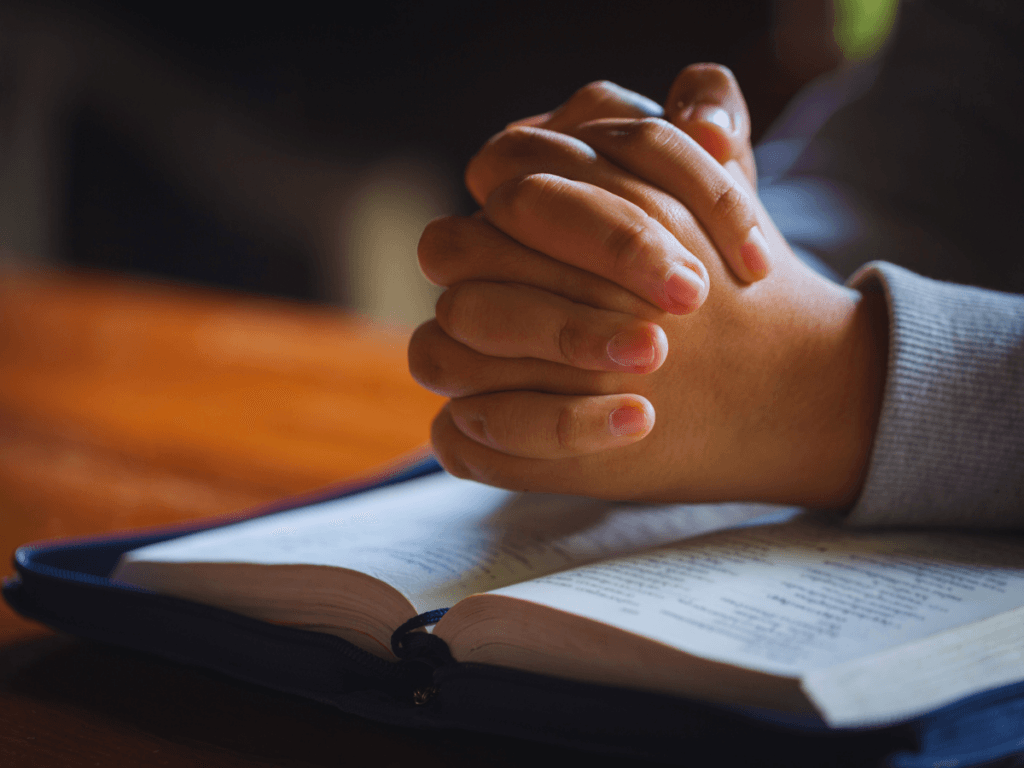
“And the peace of God, which transcends all understanding, will guard your hearts and your minds in Christ Jesus.”Philippians 4:7 (NIV)
Focus Keyphrase: Finding Peace When Life Hurts22 Min ReadJob Loss, Rent, and Unpaid Bills
I want to talk about the kind of pain that does not make it onto social media. Not the kind you can dress up in a filter or frame with an inspiring caption. I want to talk about the pain of checking your bank account and feeling your stomach drop. The pain of opening an envelope from a landlord and reading words you were not ready to read. The pain of lying awake at two in the morning running numbers that do not add up no matter how many times you run them, while the people you love are sleeping nearby and they are trusting you to have some kind of answer, and you do not have one. Finding peace when life hurts in those specific, unsexy, financially brutal ways is something the church does not always talk about as honestly as it should, and it is something I want to talk about now, because I have lived inside that particular kind of fear, and I want you to know that there is a way through it.
This is not an article that will tell you that faith means your bills will disappear or that God rewards Christians with financial stability if they pray hard enough. I do not believe that, and more importantly, the Bible does not teach it. What this article will tell you, from personal experience and from the full weight of Scripture, is that finding peace when life hurts, genuinely and profoundly and not just as a performance of courage, is entirely possible even when the circumstances have not yet resolved. Furthermore, I believe this kind of peace, the peace that Philippians 4:7 describes as surpassing all understanding, is available to you right now, wherever you are reading this and whatever number is currently in your bank account.
Moreover, I believe some of the most important things God has ever taught me, about who He is, what He is made of, and what I am actually made of, came through a season of financial crisis that I would not have chosen for anything and would not trade for anything. This is the story of that season, and more importantly, this is the story of what I found inside it.
What I Want to Share With You
- The Day the Call Came
- When the Math Stopped Working
- The Shame Nobody Talks About
- The Night I Hit the Wall
- What God Said Through His Word
- What Finding Peace Actually Felt Like
- What I Did Practically and What God Did Supernaturally
- Seven Things I Learned About God in the Valley
- If You Are in the Middle of It Right Now
- Frequently Asked Questions
- Conclusion and Prayer
The Day the Call Came
There are days that divide your life into before and after, and the day the call came was one of those days for me. The company was restructuring. My position was being eliminated. My last day would be in two weeks. The voice on the phone was professional and not unkind, and I said the words I was supposed to say, that I understood, that I appreciated the opportunity, that I wished the company well. And then I sat in a silence so complete I could hear my own heartbeat.
The first thing I felt was not fear. It was a strange, dissociated calm, the kind your nervous system produces when the news is too large to absorb immediately. Fear came later, in waves, once the practical reality of the situation began to unfold. Because the truth was that the timing could not have been worse. Rent was due in eleven days. There were three months of a medical bill still outstanding that I had been paying down slowly. A car payment. Utilities. Groceries for a household that depended on the income I had just lost. The margin was already thin before the call came, and now there was no margin at all.
Furthermore, I did not have savings to speak of, not because I had been reckless but because life had been consistently expensive in the way that ordinary life is for ordinary people, one unexpected cost after another gradually depleting the buffer before it could ever quite build to a comfortable size. This is, I have come to understand, the experience of the vast majority of people, and the shame that attaches to it is almost entirely manufactured by a culture that pretends everyone else has their finances sorted out. They do not. Most people are far more fragile financially than they appear, and the crisis I was entering was not a consequence of failure. It was a consequence of being human in an expensive world.
When the Math Stopped Working
In the two weeks between the call and my last day of work, I ran the numbers approximately four hundred times. I am not exaggerating by much. I am the kind of person who believes that if you look at a problem carefully enough and long enough, a solution will eventually emerge from the looking. However, no amount of staring at a spreadsheet changes the fundamental arithmetic of more going out than coming in. The math had stopped working, and no spreadsheet was going to fix that.
I applied for jobs with a focus and a desperation that I had never brought to a job search before, rewriting my resume, reaching out to every professional contact I could think of, spending hours each day doing what all the career advice websites told me to do. Meanwhile, the eleven days became ten, then nine, then eight, and the rent due date moved toward me with the absolute indifference that due dates have. They do not care about your circumstances. They arrive when they arrive.
The landlord conversation was one of the hardest I have ever had, not because the landlord was cruel, they were not, but because asking for help with something as basic and as personal as the roof over your head strips away every pretense of being a person who has things under control. I explained the situation. I asked for two weeks of grace. There was a long pause on the other end of the line that felt, in the moment, approximately forty years long. And then they said yes, they could give me until the end of the month.
I hung up and sat down on the kitchen floor, which is where I have discovered many of the important moments in my life have happened, and I felt something I had not felt since I was a child: completely, nakedly dependent. Not on my skills or my network or my resourcefulness. Just dependent. And in a strange way that I could not have articulated at the time, that floor felt like the right place to be.
A Moment I Return to Often
There is a verse in Psalm 34 that I must have read fifty times over the following weeks: “The righteous person may have many troubles, but the Lord delivers him from them all” (Psalm 34:19). I want to be honest about my first reaction to that verse when I found it in that season, which was somewhere between desperate hope and frustrated skepticism. The righteous person may have many troubles felt unfortunately accurate. The Lord delivers him from them all felt, at that particular moment, like a promise that belonged to someone else.
Nevertheless, I wrote it on a piece of paper and put it on the kitchen windowsill where I could see it every morning. Not because I fully believed it yet. Because I wanted to. And I have since come to understand that wanting to believe a promise, returning to it even when it feels distant, is itself a form of prayer that God honors with extraordinary faithfulness.
The Shame Nobody Talks About
I want to spend some time here, because I think this dimension of financial hardship is the one that does the most unacknowledged damage and receives the least honest attention in Christian spaces. The shame of financial difficulty is profound, specific, and almost entirely silent. You do not talk about it at church. You do not post about it. You find ways to decline social invitations that cost money without explaining why, and you become skilled at the particular art of making absence look like busyness.
Moreover, there is a theology of prosperity, subtle and sometimes not so subtle, that seeps into Christian culture and suggests that financial hardship is somehow connected to insufficient faith, unconfessed sin, or inadequate spiritual discipline. I do not believe this theology and I think it is genuinely harmful, but I want to acknowledge that even people who do not consciously hold that belief can still feel its shadow in a hard season, the nagging worry that if you were praying more, trusting more, giving more faithfully, perhaps the numbers would be different.
Job’s friends made exactly this argument to a man whose suffering had nothing to do with his faithfulness and everything to do with God’s sovereign purposes in his life. God’s response to those friends at the end of the book of Job was unambiguous: “I am angry with you and your two friends, because you have not spoken the truth about me, as my servant Job has” (Job 42:7). The equation that suffering equals sin and prosperity equals faithfulness is not only theologically wrong. According to God Himself speaking in Scripture, it is a lie about His character.
The Bible is full of people who were deeply, genuinely faithful and who nevertheless experienced profound financial precarity. Elijah was fed by ravens beside a brook. Ruth gleaned leftover grain from the edges of fields she did not own. The widow of Zarephath had only enough flour and oil for one final meal when God sent Elijah to her door. Paul wrote about knowing “what it is to be in need, and what it is to have plenty” (Philippians 4:12), and the need he described was not metaphorical. The financial vulnerability of the saints is woven through the entire biblical narrative, and it carries no shame in God’s economy, whatever the culture around us suggests.
I have learned, in whatever situation I am, to be content. I know how to be brought low, and I know how to abound. In any and every circumstance, I have learned the secret of facing plenty and hunger, abundance and need. I can do all things through him who strengthens me.Philippians 4:11-13 (ESV)
That word “learned” has always struck me. Paul is describing contentment not as a personality trait or a natural disposition but as something he learned, through experience, through difficulty, through the repeated practice of bringing his circumstances to God and finding God sufficient for them. Consequently, the financial crisis I was in was not a sign of God’s absence. It was, as I was beginning to discover, one of the most effective classrooms He had ever enrolled me in.
The Night I Hit the Wall
There was a specific night, about three weeks into the crisis, when I stopped managing my fear and let myself actually feel it. I had been functioning on controlled panic, the kind of functional desperation that keeps you productive during the day but costs you sleep at night. On this particular night I was out of resources for that kind of management. I was just afraid. Afraid in the uncomplicated, bodily way that you are afraid when you do not know how something essential is going to work out.
I did not have an elegant prayer for that night. What I had was something closer to an argument with God. I told Him I was exhausted. I told Him the situation was not fair. I told Him I had been trying to do the right things, and that the outcomes had not corresponded to the effort, and that I genuinely did not know what He was doing or why He was allowing this particular season to last as long as it had. I told Him I was scared for the people who depended on me. And then I ran out of words entirely and just sat there in the quiet, which is where the most important thing happened.
Because in that silence, a verse arrived, not dramatically, not with the sense of a supernatural experience, but with the quiet insistence of something true pressing itself to the surface of my mind. It was Matthew 6:26: “Look at the birds of the air: they neither sow nor reap nor gather into barns, and yet your heavenly Father feeds them. Are you not of more value than they?” I had read that verse dozens of times. Nevertheless, it landed differently that night, perhaps because for the first time I was genuinely hungry enough, genuinely empty enough, to receive it as something more than a pleasant thought.
Furthermore, in our article on overcoming anxiety with faith through Philippians 4:6, we explore exactly what it means to bring that kind of raw, specific fear to God rather than managing it alone. That night, still sitting on the kitchen floor, I did exactly that. I brought the rent and the bills and the job applications and the bank account balance and the weight of being responsible for other people, and I placed them in God’s hands as deliberately and as honestly as I knew how. Not because I had figured out how to trust Him. Because I had run out of other options, which, I have come to believe, is sometimes exactly where God has been patiently waiting for us to arrive.
What God Said Through His Word
In the weeks that followed that night, I began reading Scripture in a way I never had before. Not devotionally in the comfortable sense of reading a few verses with morning coffee and then going about a normal day. I was reading the way a person reads when they need actual answers, with a pencil in hand, underlining things that felt addressed to my specific situation, returning to passages that stopped me, sitting with them until I understood what they were saying to me personally rather than what they said in the abstract.
The book of Psalms became my closest companion. David, writing from caves and battlefields and palace courtyards alike, had a gift for naming the interior landscape of crisis with a precision that felt like someone reading my mail. Psalm 55:22 became something I prayed aloud every morning for weeks: “Cast your burden on the Lord, and he will sustain you; he will never permit the righteous to be moved.” I did not fully understand what “sustain” was going to look like in practical terms. However, the word had a solidity to it that the circumstances around me did not, and I held on to it accordingly.
Moreover, I found myself drawn repeatedly to the story of Elijah in 1 Kings 17 through 19, because Elijah’s experience of God’s provision contains something honest that I needed to hear. When Elijah was fed by ravens beside the brook Cherith, God did not provide a banquet. He provided bread and meat in the morning and bread and meat in the evening, enough for that day, not a stockpile that would remove the need for daily dependence. When the brook dried up and God sent Elijah to the widow of Zarephath, the provision came one meal at a time, the jar of flour not being exhausted and the jug of oil not going empty until the drought ended. Not in advance. Not all at once. Day by day, just enough, with the provision tied inseparably to the ongoing relationship with the God who was providing it.
This is, I believe, precisely what Jesus means in Matthew 6:11 when He teaches His disciples to pray for “daily bread” and not weekly bread or monthly bread or enough bread to stop needing to ask. The daily-ness of the provision is not a design flaw in God’s generosity. It is a feature of His relational intention. He feeds His people day by day because He wants them to come to Him day by day, and the need that drives them there is not a punishment. It is an invitation. As we explored in our deep study of the Lord’s Prayer and what daily bread really means, this kind of intentional daily dependence is the very posture God is cultivating in every believer He loves.
What Finding Peace Actually Felt Like
I want to describe the peace I found during this season carefully, because I think peace is one of those words that gets used in Christian circles in ways that can feel either impossibly vague or unrealistically triumphant, and neither of those serves the person who is genuinely suffering and genuinely looking for something real to hold on to.
The peace I found was not the absence of fear. The fear was still present, especially on the mornings when a new bill arrived or when yet another job application went unanswered. The peace I found was something that existed alongside the fear without being cancelled by it, the way you can be cold and still be warm near a fire, the cold is real but it is no longer the only reality in the room. Philippians 4:7 describes it as a peace “that transcends all understanding,” and what I found is that “transcends all understanding” is not just poetry. It genuinely does not make intellectual sense. The circumstances were objectively difficult and the outcomes were still uncertain, and nevertheless there was a settled quality to my interior life that I cannot account for except by saying that God was keeping His promise.
Furthermore, the peace came specifically through prayer, through the practice of Philippians 4:6, which instructs believers to “present your requests to God” with thanksgiving in everything and not to be anxious. I had always read that verse as a kind of spiritual self-help instruction, as if the not-being-anxious was something you achieved through sufficient piety. What I discovered during those weeks is that it is not an instruction to achieve a state. It is an invitation to a practice. You bring the anxious thing to God. You name it specifically. You thank Him for what He has done and what He will do. And then, not always immediately but over time and with repetition, the thing that was producing anxiety loses some of its power over you, not because it has gone away but because you have placed it in hands larger than yours and found that those hands are steady.
“Peace did not arrive when the circumstances resolved. It arrived when I stopped trying to resolve them alone and started trusting the One who holds all things.”
What I Did Practically and What God Did Supernaturally
I want to be balanced here, because I think testimony sometimes creates a false impression that the faithful response to a crisis is to pray and wait while God handles everything, with no human effort required. That is not what happened in my experience, and I do not think it is what the Bible teaches. Faith and action belong together. James 2:14-17 makes clear that faith without works is dead, and that principle applies to the management of a financial crisis just as much as to anything else.
Therefore, I did the practical things. I created a strict budget and I stuck to it with a discipline I had never previously applied to my finances. I reached out to every person in my professional network without letting pride make me hesitant about it. I applied for unemployment benefits, which exist precisely for this kind of moment and carry no shame whatsoever. I called each of my creditors directly, explained the situation honestly, and asked about hardship arrangements, discovering that most creditors have programs for exactly this kind of circumstance that they do not advertise but will discuss if you ask. I looked for additional income in forms I would not previously have considered. I sold things. I simplified. I cut every non-essential expense I could identify.
And while I was doing all of that, God was doing things I cannot account for through any natural explanation. An unexpected gift from a family member who did not know the full extent of the situation, given at a moment when it was needed with a precision that felt unmistakably intentional. A job lead that came through a contact I had not spoken to in years, reaching out apparently on impulse the very week I most needed it. A property tax delay that gave me two extra weeks of breathing room at precisely the right moment. None of these things, individually, looks miraculous. Together, in the context of consistent prayer and the specific needs I had been bringing to God, they looked exactly like what Psalm 34:6 describes: “This poor man cried, and the Lord heard him and saved him out of all his troubles.”
The Provision That Came Through People
One of the things I learned about God’s provision during this season is that He most often provides through people, and that receiving that provision gracefully requires a humility that does not come naturally to people who have spent their lives being self-sufficient. A friend who quietly appeared with groceries one afternoon without making it a conversation. A church community that offered practical support in ways so understated and so dignified that receiving it did not feel like charity so much as family. A neighbor who fixed something that needed fixing without accepting payment and without commentary.
I was deeply moved, during those months, by the way the body of Christ functioned exactly the way 1 Corinthians 12 describes: parts of the body that are seemingly weaker being given extra honor, the parts that feel less honorable being treated with special care, the whole body sharing in suffering and sharing in being honored. If you are in a hard season and you have not told your church community about it, I want to gently encourage you to reconsider. You were not designed to carry this alone, and the people around you may be the very hands through which God intends to provide for you. Our article on 11 powerful prayer points for total life restoration offers a prayer framework that covers exactly the kind of comprehensive restoration that God specializes in during these seasons.
Seven Things I Learned About God in the Valley
What the Valley Taught Me
- God’s provision is real but rarely early. He did not resolve the crisis before I needed resolution. He provided what was needed when it was needed, day by day, in ways that required me to keep looking to Him rather than resting on a stockpile. This is by design, not by oversight.
- Shame about financial hardship is a lie, and naming it as one matters. The prosperity gospel in all its forms, overt and subtle, is a distortion of the biblical picture of a God who was present with people in their poverty, not only in their abundance.
- Prayer becomes most real when the stakes are highest. I have never prayed more specifically, more honestly, or more persistently than I did during those months, and the intimacy with God that developed through that kind of desperate, daily dependence is something I carry still and would not give back.
- God uses the practical and the supernatural together. He did not ask me to stop job-hunting and trust Him to drop a job offer from the sky. He provided alongside my effort, in ways that were timed too precisely to be coincidental and too specific to be accidental.
- The body of Christ is one of God’s primary means of provision. Allowing yourself to receive from your community is not weakness. It is the body functioning as it was designed to function, and it gives other people the gift of being used by God in your life.
- Gratitude is not a feeling, it is a discipline. Philippians 4:6 says to present your requests to God with thanksgiving. In the middle of a hard season, thanksgiving is not something you feel spontaneously. It is something you practice intentionally, naming what you have rather than only what you lack, and it shifts everything about how you experience the difficulty.
- The God who was faithful in this season will be faithful in the next. The valley does not last forever. The Psalm 23 promise, “though I walk through the valley of the shadow of death,” is a promise about walking through, not taking up permanent residence. What you build with God inside a hard season is not lost when the season ends. It goes with you into whatever comes next.
If You Are in the Middle of It Right Now
I have tried to write this article the way I would have wanted someone to speak to me in the worst weeks of that season, with complete honesty about how hard it was and complete honesty about where the hope came from, because I think anything less than both of those things is a disservice to anyone reading this from inside a similar pain. If you are there right now, if you are the person who checked the bank account this morning and felt that specific, cold sinking feeling, or who is trying to figure out which bill to prioritize because you cannot cover all of them, I want to say several things to you as directly and as warmly as I know how.
First, you are not being punished. Financial hardship is not evidence of insufficient faith or unconfessed sin. It is a feature of life in a broken world that falls on the faithful and the faithless without making careful distinctions, and God’s presence in it does not depend on your worthiness to receive it. He is with you in this exactly as He was with the widow of Zarephath and with Ruth in Boaz’s fields and with Paul writing from prison about having learned contentment in want.
Second, bring the specifics to God. Not the general prayer that things would improve, but the actual numbers. The rent amount. The bill due date. The job you really need. The person you need to find the courage to call. Matthew 6:8 tells us that the Father knows what you need before you ask, but He still instructs you to ask, because the asking is not for His information. It is for your formation. Bring it all, specifically and repeatedly, and watch what He does with it.
Third, do the next practical thing, even when you cannot see further than that. Update the resume. Make the phone call. Apply for the assistance that exists for exactly this moment. Sell the thing you have been keeping. Ask for the grace period. God tends to provide through the doing, not instead of it, and the next faithful practical step is usually visible even when the whole path is not. As we have explored in our article on Christian purpose and finding your calling in every season, God is working in every chapter including this one, and the faithfulness you practice in the valley shapes the person you will be on the other side of it.
Fourth, let people help you. Tell someone what is actually happening. Not the polished version. The real version. The church community, friends who have proven themselves trustworthy, a pastor, a counselor if needed. You were made for community, and the isolation that financial shame produces is one of the enemy’s most effective tools for keeping people from the very provision God has arranged for them through the people around them.
Finally, and most importantly, hold on to the promises. Write them down if that helps. Put them on the windowsill. Psalm 34:19. Matthew 6:26. Philippians 4:6-7. Psalm 23:4. These are not motivational sentiments. They are the Word of the living God spoken over your specific situation, and they have carried people through situations harder than yours and mine across every century of human history since they were written. They will carry you too. That is not optimism. That is testimony.
Promises to Hold When the Numbers Are Hard
- “And my God will meet all your needs according to the riches of his glory in Christ Jesus.” (Philippians 4:19 NIV)
- “Cast all your anxiety on him because he cares for you.” (1 Peter 5:7 NIV)
- “The righteous person may have many troubles, but the Lord delivers him from them all.” (Psalm 34:19 NIV)
- “Even though I walk through the darkest valley, I will fear no evil, for you are with me; your rod and your staff, they comfort me.” (Psalm 23:4 NIV)
- “Do not be anxious about anything, but in every situation, by prayer and petition, with thanksgiving, present your requests to God.” (Philippians 4:6 NIV)
- “Look at the birds of the air: they neither sow nor reap nor gather into barns, and yet your heavenly Father feeds them. Are you not of more value than they?” (Matthew 6:26 ESV)
- “I sought the Lord, and he answered me and delivered me from all my fears.” (Psalm 34:4 ESV)
Frequently Asked Questions About Finding Peace in Financial Hardship
Does the Bible say God will always provide financially for His people?
The Bible consistently promises that God will provide what His people need, though not always what they want or in the timing they prefer. Philippians 4:19 says God will meet all your needs according to His riches in glory in Christ Jesus. Matthew 6:31-33 promises that God knows your physical needs and that seeking His kingdom first positions you to receive His provision. However, the Bible also makes clear that provision often comes day by day rather than all at once, through both supernatural means and ordinary channels including work, community, and human generosity. The biblical promise is sufficiency, not necessarily abundance, and the timing and manner of God’s provision are His to determine.
Is it a lack of faith to feel afraid during a financial crisis?
No. Fear during a genuine crisis is a normal human response, not a spiritual failure. The Psalms are full of honest expressions of fear and anguish from people the Bible describes as righteous and faithful, including David, who wrote Psalm 22 beginning with “My God, my God, why have you forsaken me?” The call to not be anxious in Philippians 4:6 is not a prohibition against feeling fear. It is an instruction about where to take the fear: to God, in prayer, with thanksgiving. Bringing your fear honestly to God is the opposite of faithlessness. It is one of the most faith-filled things you can do.
What practical steps should a Christian take during a financial crisis?
Scripture consistently pairs faith with practical action. Practically, a Christian in a financial crisis should create a realistic budget that prioritizes essential needs and reduces non-essential expenses. They should communicate directly and honestly with creditors, landlords, and lenders, as most have hardship programs not widely advertised. They should pursue available assistance including unemployment benefits, food banks, and community resources without shame. They should tell their church community what is happening and allow the body of Christ to function as it was designed to. Spiritually, they should maintain consistent prayer, bring specific needs to God, read Scripture daily, and actively practice gratitude even in the difficulty.
How do you find peace when you do not know how the bills will be paid?
The peace described in Philippians 4:7, which surpasses understanding, is not a peace that waits for the circumstances to resolve before it arrives. It is a peace that comes through the consistent practice of bringing your specific anxieties to God in prayer and trusting His character over your circumstances. In practical terms this means praying specifically about the actual bills and actual amounts rather than just asking God to “help.” It means returning to His promises in Scripture repeatedly, especially on the days when they feel distant. It means practicing gratitude deliberately for what you do have. And it means making the next practical step while trusting God with the outcome of it.
Why does God allow financial hardship to last so long sometimes?
Scripture does not always give a specific reason for the duration of a particular trial, and the honest answer is that God’s timing is not always comprehensible from inside the difficulty. However, the Bible consistently shows that God uses extended seasons of hardship to develop qualities in His people that could not be produced any other way, including patient trust, genuine dependence, deep prayer, humility, compassion for others in need, and a faith that has been tested and found solid. Romans 5:3-5 describes this process: suffering produces perseverance, perseverance character, and character hope. The valley is not a detour from God’s purposes. It is often the very road through which those purposes are most deeply accomplished.
Should Christians feel ashamed about needing financial help?
No, and the Bible consistently models and commends the kind of community care that removes this shame. The early church in Acts 2 and 4 is described as sharing with anyone who had need. Galatians 6:2 instructs believers to carry each other’s burdens. Ruth’s willingness to receive from Boaz and Elijah’s willingness to receive from the widow of Zarephath are held up in Scripture without any suggestion of shame. The shame that attaches to receiving help is largely a cultural product rather than a biblical value, and receiving gracefully from the body of Christ allows other believers the gift of being used by God to provide for you.
What Bible verses help most during financial hardship?
Philippians 4:6-7 and 4:19 are perhaps the most directly applicable, promising peace through prayer and God’s provision of needs. Matthew 6:25-34 addresses anxiety about provision directly in the words of Jesus. Psalm 34:4-7 and 34:19 describe God’s specific attention to the poor and the righteous in their troubles. Psalm 23:4 provides reassurance of God’s presence in the darkest valleys. Hebrews 13:5 records God’s promise to never leave or forsake His people. And Lamentations 3:22-23, “The steadfast love of the Lord never ceases; his mercies never come to an end; they are new every morning,” is a particularly powerful anchor on the mornings when the financial fear feels freshest.
How can prayer help when the financial problem seems practically unsolvable?
Prayer does at least two things simultaneously during a financial crisis. First, it brings the situation before the God who is genuinely capable of intervening in ways that are not visible from within human circumstances, opening doors, moving hearts, arranging timing, providing through channels you could not have anticipated. Second, and equally importantly, it changes the interior posture of the person praying, moving them from isolated fear to accompanied trust, from trying to solve everything alone to partnering with a God who sees what they cannot see and holds what they cannot hold. Consistent, specific, thanksgiving-infused prayer does not always change the circumstances immediately. It consistently changes the person inside the circumstances, which is often the more important transformation.
Conclusion: The God Who Provides in the Valley
I want to end where the best stories end, not with everything neatly resolved but with the thing that actually matters most clearly in view. The financial crisis I walked through did eventually resolve, not all at once and not on my preferred schedule, but in stages, through a combination of my practical efforts and God’s provision that arrived in ways too specific and too timely to be accidental. The job came. The bills got paid. The rent situation stabilized. And I emerged from that season not unscathed but unbroken, and carrying something I had not carried into it: a knowledge of God’s faithfulness that is no longer theoretical.
That kind of knowing, the knowing that comes from having actually needed God and found Him sufficient, is different in quality from any other kind of knowing. It is the knowing David had when he wrote the twenty-third Psalm, not from a comfortable theological vantage point but from the actual valley, with the shadow of death real and present around him, where he discovered that the rod and the staff were also real and present. Psalm 23 was not written from the mountaintop. It was written from the valley, by someone who had walked through it and come out the other side with a testimony about the Shepherd who had been there the whole time.
Furthermore, the peace I found in that season did not depend on knowing how the story was going to end. It depended on knowing the character of the God who was writing it. That is the peace that transcends understanding, the peace that does not wait for the circumstances to arrange themselves correctly before it arrives, the peace that is available right now, today, in whatever valley you are currently walking through, because the God who provides and protects and sustains is the same yesterday and today and forever, and He has never once abandoned anyone who cried out to Him from the kitchen floor.
He is with you in yours. And if that is the only thing you carry away from this article, it is enough, because it is the thing that changes everything else. As we have explored in our article on Romans 8:28 and finding faith in trials, not one moment of your current difficulty is outside the sovereignty and the love of a God who works all things together for good for those who love Him. Not the overdue bill. Not the unanswered application. Not the conversation with the landlord. All of it, every last piece of it, is in His hands, and those hands have never once dropped what they were holding.
Do not be anxious about anything, but in every situation, by prayer and petition, with thanksgiving, present your requests to God. And the peace of God, which transcends all understanding, will guard your hearts and your minds in Christ Jesus.Philippians 4:6-7 (NIV)
A Prayer for the Hard Season
Lord, I am bringing You the thing I have been trying to carry alone, because I have run out of ways to carry it. The bill that is overdue. The job that has not come. The rent that I do not know how to cover. The fear that wakes me up at two in the morning and will not let me go back to sleep. I am placing all of it in Your hands right now, not because I have enough faith to feel confident about the outcome, but because Your hands are the only ones large enough and steady enough to hold it. I believe You see me in this. I believe You are not surprised by any of it. I believe that what You have promised You will perform. Give me Your peace, the kind that does not make sense given the circumstances, the kind that can only come from You. Meet my needs the way only You can, through every channel You choose, in Your timing and not mine. And let this hard season make me know You in a way I could not have known You in an easier one. In Jesus’s name, amen.
You Were Not Meant to Walk This Alone
Explore more deeply researched, biblically faithful, and warmly written articles on faith, prayer, and finding God in every season of life at Restored in Prayer.Explore More Articles
Keep Walking With God
- Overcoming Anxiety with Faith: Biblical Answers from Philippians 4:6
- Romans 8:28 Devotional: All Things Work Together for Good in Trials
- 11 Powerful Prayer Points for Total Life Restoration
- Overcoming Spiritual Dryness: A Biblical Guide for Hard Seasons
- Knowing God Personally: Moving from Head Knowledge to Heart Relationship
- Christian Purpose: Discovering Your Calling and God-Given Gift
Written by a Follower of Jesus Christ | Restored in Prayer
This testimony is written for every person sitting on a kitchen floor somewhere, holding a bill they do not know how to pay and a faith they are not sure is strong enough to carry them through. It is. He is. All Scripture quotations are from the New International Version (NIV) or English Standard Version (ESV) as noted. The valley is real. The Shepherd is realer still.