A deeply personal guide for the soul that is tired of being afraid
There is a specific kind of tired that anxiety produces. It is not the tired that comes after a long day of good work, the kind that lets you fall asleep feeling satisfied. It is the tired of waking up at 3 a.m. with a racing heart and a mind that will not stop rehearsing conversations that have not happened yet, problems that may never come, and worst-case scenarios dressed up so convincingly that they feel like prophecy. It is the tired of carrying a weight you never agreed to pick up but somehow cannot put down.
If you know that tired, this article is written for you.
Anxiety, worry, and doubt are not modern inventions. They are as old as the human condition. David wrote psalms soaked in fear and desperation. Elijah, fresh off one of the most dramatic miracles in all of Scripture, collapsed under a tree and begged God to let him die. The disciples, who had watched Jesus walk on water, still panicked in the middle of a storm. The Bible is extraordinarily honest about the reality of human anxiety, and that honesty itself is a form of grace. God did not fill His Word with “do not be afraid” more than 365 times because He expected us to never feel afraid. He said it because He knew we would.
But here is what the Gospel insists upon: fear does not have to be your final address. You can acknowledge it, name it, and then, day by day, choose something different. This is what 30 days of intentional faith practice is really about. Not performing peace for the benefit of others. Not suppressing the feelings that God already sees anyway. But genuinely, slowly, stubbornly replacing anxiety with trust, one small act of surrender at a time.
Why Anxiety and Faith Are Not as Incompatible as You Think
One of the most damaging things the church sometimes communicates, often without meaning to, is the idea that anxiety is a spiritual failure. That if you really trusted God, you would not feel afraid. That worry is the opposite of faith, and since you are a person of faith, you should have conquered this by now.
That message is not only unhelpful. It is untrue.
Crossway’s commentary on 1 Peter 5:6-7 makes an important theological observation: worry is described as a form of pride because it involves taking our concerns upon ourselves instead of entrusting them to God. The invitation of that passage is not condemnation. It is a call to humility, to the releasing of burdens that were never ours to carry in the first place. The assumption underneath the text is not that believers never feel anxious but that they have somewhere to bring that anxiety when it comes.
Paul, writing from prison, did not tell the Philippians “if you have enough faith, you will not be anxious.” He told them what to do when anxiety came: pray, petition, and thank God, and then receive a peace that transcends their ability to understand it (Philippians 4:6-7). The peace is described as a guard, which is a military image. Guards are necessary where there is a threat. God was not pretending the threat was not real. He was promising to protect the gate.
This matters because it gives you permission to begin honestly. You do not have to manufacture feelings of serenity before God will meet you. You come as you are, anxious and all, and you start there.
What the Research Is Saying (And Why It Points Back to Scripture)
There is a growing body of neuroscientific research that is, perhaps unintentionally, making the case for what Scripture has always taught about prayer and peace of mind.
A 2025 systematic review published in Frontiers in Psychology found that spiritual practices like prayer may have a similar or even greater influence on anxiety, depression, and stress than secular mindfulness-based therapies. The researchers proposed that the experience of interacting with God in prayer is psychologically comparable to secure human attachment bonds, the same kind of deep relational safety that developmental psychologists have long identified as central to emotional regulation and wellbeing.
Put more simply: prayer does for the soul what a secure relationship does for a child. It teaches your nervous system that you are not alone, that you are held, and that the one holding you is not going anywhere.
Research noted by neuroscientist and biblical scholar sources shows that during contemplative prayer, the frontal lobe of the brain, which handles attention and complex thinking, becomes more active, while the parietal lobe, associated with our sense of a separate, isolated self, shows decreased activity. This is the biological correlate of what Psalm 46:10 describes: “Be still, and know that I am God.” In the presence of God, our anxious, ego-driven self-monitoring quiets, and something deeper takes over.
This does not mean faith replaces professional care when it is needed. If your anxiety is clinical, please pursue both: the God who created human minds also gifted humanity with the tools to heal them. But for the everyday anxiety that is a feature of life in a fallen world, the ancient practices of prayer, Scripture meditation, and community are not naive superstitions. They are neuroscientifically plausible pathways to genuine peace.
The Architecture of 30 Days: How This Journey Is Built
Thirty days is not an arbitrary number. It is long enough to form real habits and short enough to feel approachable. The 30-day journey of faith over fear can be organized around four broad movements, each building on the one before it.
Week One: Honest Acknowledgment (Days 1 to 7)
Before you can replace anxiety with trust, you have to name what you are anxious about. Many people of faith skip this step because naming the fear feels like giving it power. In fact, the opposite is true. Naming it reduces its grip. Psalm 56:3 models this beautifully: “When I am afraid, I put my trust in you.” Notice the sequence. Fear comes first. Trust is the response to fear, not the absence of it.
During the first week, the practice is simple. Each morning, write down the top two or three things your mind is anxious about. Do not spiritualize them yet. Just name them. Then, at the end of each day, bring them to God in prayer. This is the casting of 1 Peter 5:7, physically handing something over rather than clutching it through the night.
iBelieve’s guide on biblical strategies for anxiety suggests also reflecting on past faithfulness during this week, recalling specific moments when God came through. This is not nostalgia. It is evidence gathering. A God who was faithful yesterday is the same God who holds today.
Week Two: Renewing the Mind (Days 8 to 14)
Romans 12:2 tells us not to be conformed to the pattern of this world but to be transformed by the renewing of the mind. Anxiety, at its core, is a mind that has been shaped by patterns of catastrophizing, self-reliance, and the belief that the worst-case scenario is the most likely scenario. The antidote is not willpower. It is a slow, consistent feeding of a different narrative into the mind.
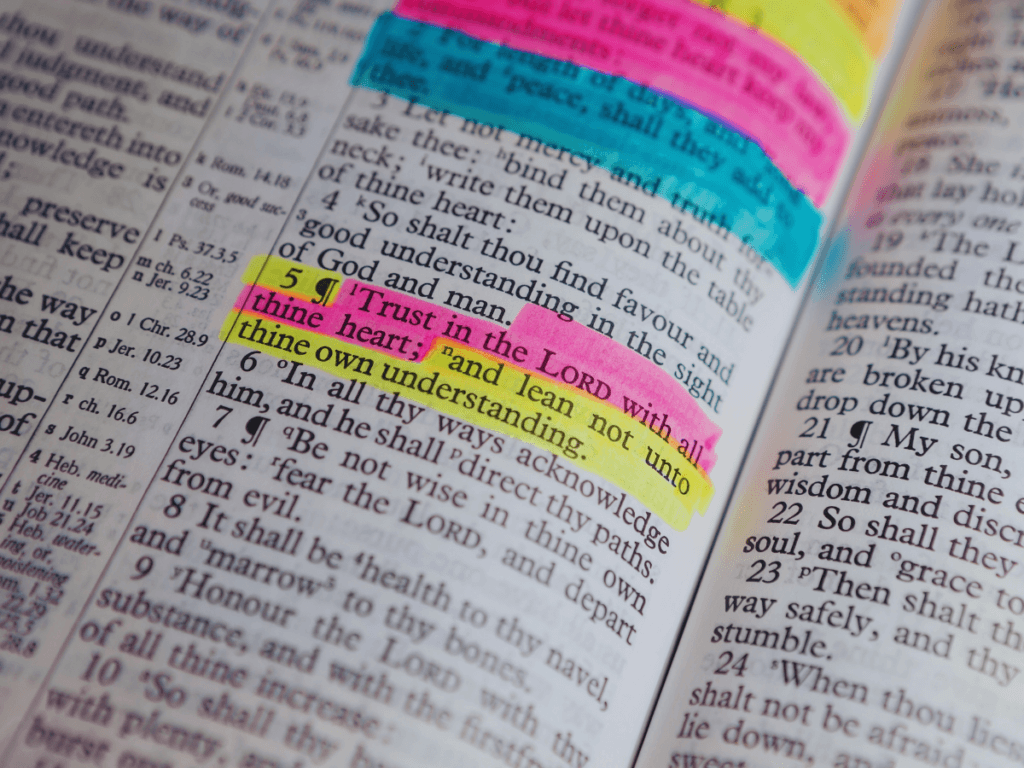
Bible Memory Goal’s resource on Scripture memorization recommends beginning with one verse at a time. Not ten. One. Memorizing a verse is not an intellectual exercise. It is an act of planting a truth so deeply into the mind that it surfaces automatically when anxiety rises. Isaiah 26:3 is particularly rich for this purpose: “You will keep in perfect peace those whose minds are steadfast, because they trust in you.” The word for “steadfast” in Hebrew is samak, meaning leaned upon, propped against. Peace is the result of actually leaning your mind against God’s character, not just acknowledging it from a distance.
During week two, choose a new verse each day and carry it with you. Write it on a sticky note. Set it as your phone lock screen. Say it out loud in the shower. The goal is saturation.
Week Three: Prayer as a Lifestyle, Not a Rescue Call (Days 15 to 21)
Most of us treat prayer like a 911 call. We dial when things get desperate. The third week of this journey invites you into something different: prayer as the ambient atmosphere of your day rather than the emergency measure of your crisis.
Grace Christian Counseling’s resource on overcoming anxiety describes regular prayer and meditation as creating perspective and peace because they train you to gain access to God’s view of your circumstances rather than only your own. When anxiety narrows your field of vision down to the worst possible outcome, prayer widens the lens back out to the God who holds the whole story.
During week three, the practice is to pray at the beginning of worry, not just after it has fully overwhelmed you. The moment the anxious thought surfaces, instead of following it down the rabbit hole, pause and speak it aloud to God. “Lord, I am feeling afraid about this. I bring this to you now.” It sounds simple. It is radically countercultural to the way most of us have been trained to respond to fear.
Week Four: Living from Trust Rather Than Fear (Days 22 to 30)
The final week is about integration. Trust is not just a feeling or a theological position. It is a way of making decisions. It means taking the step even though you cannot see the full path. It means choosing rest when the anxious part of you wants to keep planning and controlling. It means releasing outcomes that were never yours to control in the first place.
Joshua 1:9 is the commission God gives to Joshua as he stands at the edge of something terrifying and unknown: “Be strong and courageous. Do not be afraid; do not be discouraged, for the Lord your God will be with you wherever you go.” The strength and courage God calls for here are not emotional states to be manufactured. They are acts of will grounded in a theological reality: God is present. And His presence changes everything.
The Specific Anxieties This Journey Addresses
Anxiety About the Future
Jesus addressed this particular fear with characteristic directness: “Therefore do not worry about tomorrow, for tomorrow will worry about itself. Each day has enough trouble of its own” (Matthew 6:34). The invitation is not to be naive about the future but to resist the tyranny of living there before you arrive. Bible Verse Daily’s reflection on this passage describes it as “a daily rhythm of surrender,” the practice of bringing your attention back to today, where God’s grace is actually available, rather than borrowing worry from a tomorrow that may look entirely different from what you fear.
Doubt About Whether God Actually Cares
This is the deepest anxiety of all, the one beneath all the others. Not just “will things be okay” but “does God actually see me and care about what I am going through?” The Psalms are your greatest companion here. David did not pretend he had no doubts. He threw them at God directly: “My God, my God, why have you forsaken me?” (Psalm 22:1). And yet that same David also wrote, “I sought the Lord, and he answered me; he delivered me from all my fears” (Psalm 34:4). Doubt is not the opposite of faith. Indifference is. The one who wrestles with God in doubt is still in the ring with God.
Romans 8:38 to 39 is Paul’s most sweeping declaration on this question: nothing in all of creation, not death, not life, not any power, not present things or things to come, can separate us from the love of God in Christ Jesus. Choosing Therapy’s collection of anxiety scriptures highlights this passage as a reminder that God’s care is not contingent on our circumstances, our faith level, or our emotional steadiness. It is settled. It is fixed. It is not going anywhere.
Worry About What Other People Think
This is anxiety with a social face, and it is among the most exhausting forms because it never fully resolves. There is always another person whose opinion you could seek, another possible interpretation of your words or actions to spiral over. Proverbs 29:25 speaks to this precisely: “Fear of man will prove to be a snare, but whoever trusts in the Lord is kept safe.” The snare metaphor is vivid and accurate. The fear of human judgment catches and holds you in place, keeps you performing and shrinking and second-guessing rather than living freely. Trust in God is the only thing wide enough and sturdy enough to replace it.
Practical Daily Rhythms for the 30 Days
The best intentions collapse without structure. Here are the practices that, combined, make this journey concrete rather than aspirational.
Morning Anchoring (5 to 10 minutes)
Before you check your phone, before the news, before the list of things to do has a chance to descend, spend five minutes reading one Scripture verse slowly and prayerfully. Not to master it. Just to receive it. Ask About My Faith’s reflection on Isaiah 41:10 describes this kind of anchoring as keeping your mind fixed on what God has promised before the day has a chance to offer you its competing narrative.
Worry Journaling (10 minutes, any time)
Writing fears down externalizes them. They stop living exclusively in the loop of your mind and become something you can see, evaluate, and bring before God with more clarity. Faithful Path Community’s guide recommends writing both the worry and a scriptural truth alongside it. The worry in one column. The promise in the other. Over 30 days, the journal becomes a record of God’s faithfulness that you can return to.
Gratitude Naming (Evening, 3 to 5 minutes)
Gratitude is not denial of what is hard. It is the practice of refusing to let what is hard be the only thing you see. Each evening, name three things you are genuinely grateful for. Not three things that should make you feel better. Three things that actually do, even small ones. A good cup of tea. A conversation that made you laugh. The fact that you got through today. This practice rewires the brain over time, shifting its default search pattern from threat detection to gift recognition.
Community Accountability (Weekly)
Anxiety thrives in isolation. Bringing your fears into a community of trusted believers, whether a small group, a spiritual director, a close friend, or a pastor, introduces accountability and perspective that you cannot generate alone. Bible Study Tools’ collection reminds us that the invitation to cast our cares on God does not cancel the invitation to bear one another’s burdens. These are meant to work together.
What to Do When the Fear Comes Back
It will. That is not a failure. It is a feature of living in a world that is not yet fully redeemed.
The measure of these 30 days is not whether anxiety disappears completely. It is whether your reflex changes. Whether, when fear rises, your first impulse is now to turn toward God rather than away. Whether you have built enough of a practice that the Scripture surfaces before the spiral takes over. Whether trust has become even marginally more automatic than worry.
Sarah Geringer’s reflection on Christian meditation captures it beautifully: the goal is for faith to grow stronger as reasons to fear multiply. That is not the elimination of fear. It is the building of something stronger.
When anxiety returns, and it will, remember Psalm 56:3. When I am afraid. Not if. When. And then: I put my trust in you. That pivot, small as it sounds, is one of the most profoundly countercultural acts available to a human soul. It is the movement from the chaos of self-reliance to the rest of surrender. And it gets more natural with practice.
A Closing Prayer for the Journey
Lord,
You know what I am carrying. You know which fears wake me up in the night and which doubts I have been afraid to say out loud even to myself. You know the worst-case scenarios I have rehearsed and the outcomes I cannot stop trying to control.
I come to You not with my fear already resolved but with it still in my hands. I am choosing, today, to open those hands. To release what was never mine to hold in the first place. To trust that You are not surprised by any of this, that Your purposes are not derailed by my anxiety, and that Your love for me does not fluctuate based on how well I am managing.
For 30 days, help me to come back to this. Every morning. Every anxious moment in the middle of the day. Every sleepless night. Help me to turn toward You before I turn anywhere else.
And give me, as You promised, a peace that I cannot fully explain. A peace that guards the places in me that have been most afraid.
In Jesus’ name,
Amen.
If you are navigating serious anxiety or depression, please know that seeking professional support is not a lack of faith. It is wisdom. You can find faith-integrated counseling resources at Grace Christian Counseling and explore the connection between faith and mental health further at Faithful Path Community.
Want to go deeper this month? Keep a 30-day journal alongside this journey, writing down one fear per day and one Scripture promise alongside it. At the end of the month, read back from the beginning. You may be surprised by how much ground you have gained.