Born Again: My Journey From Lost to New Creation in Christ
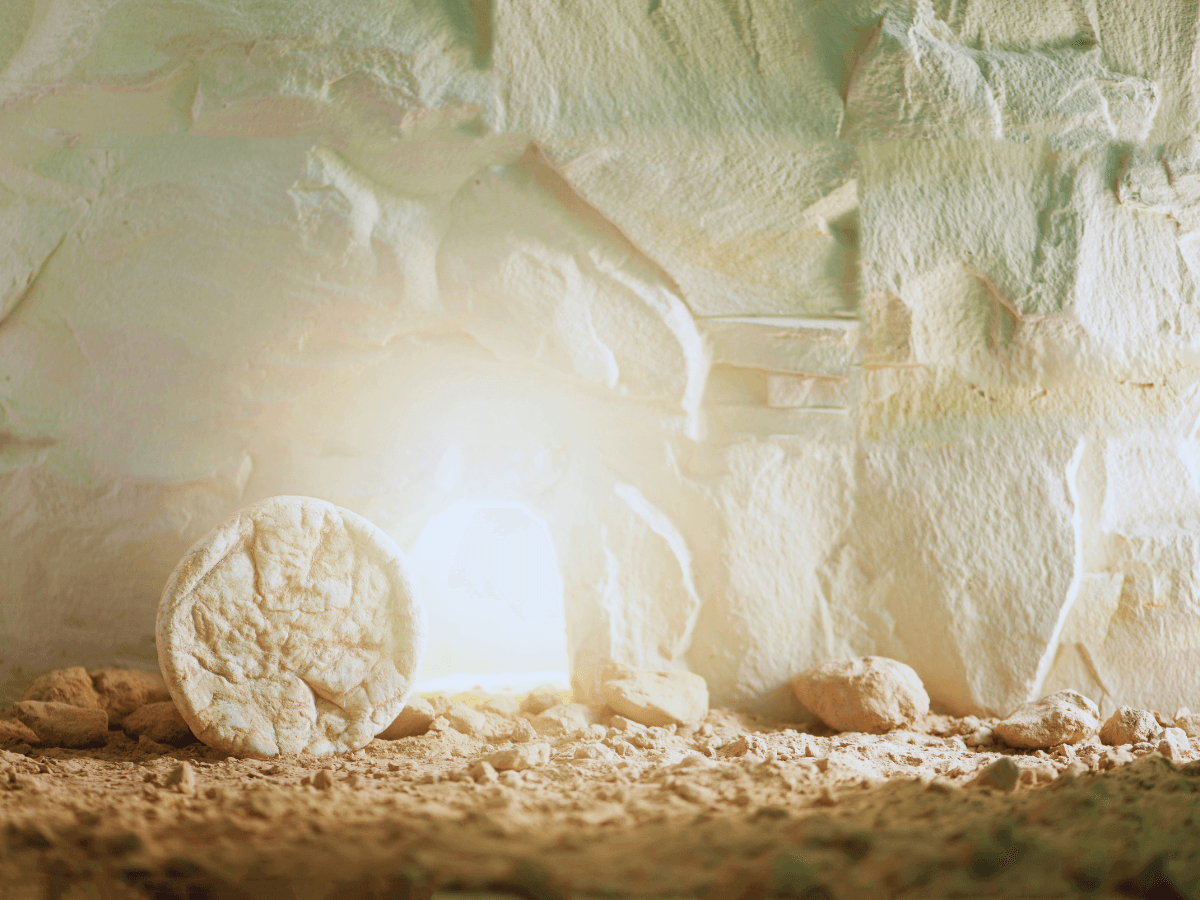
“Therefore, if anyone is in Christ, he is a new creation. The old has passed away; behold, the new has come.”2 Corinthians 5:17 (ESV)
I want to tell you a born again testimony, and I want to tell it honestly, without polishing the parts that still feel raw and without exaggerating the parts that still feel miraculous, because both of those things are equally true and equally important. This is the story of how I was lost long before I ever admitted it to anyone, including myself, and how God found me in the middle of that lostness and did something I still do not fully have words for. He made me new. Not improved. Not slightly better behaved. New, the way 2 Corinthians 5:17 describes it, the old genuinely passing away and something genuinely new coming in its place.
I am telling this story because I believe it is not really my story alone. Furthermore, I believe the basic shape of it, lostness, searching, emptiness, an encounter with the living God, and a slow and ongoing transformation, is the shape of nearly every born again testimony that has ever been told, even though the specific details differ from life to life. Therefore, my hope is that somewhere in these words, you will recognize a piece of your own story, whether you are already walking with Jesus or whether you are standing exactly where I once stood, lost and not entirely sure you wanted to be found.
Moreover, I want to be honest about something else from the very beginning. Being born again did not erase my past or give me a flawless life from that day forward. It gave me something better than a flawless life. It gave me a new heart, a new direction, and a relationship with the God who made me, which has been unfolding ever since in ways I am still discovering. This is the story of how that began.
What I Want to Share With You
- The Years I Did Not Know I Was Lost
- The Emptiness That Success Could Not Fill
- The Moment Everything Came Undone
- The Searching That Led Me Back to God
- The Night I Was Born Again
- What Actually Changed When I Became a New Creation
- Being Born Again Did Not Make Me Perfect
- What It Means to Be Born Again, Biblically
- If You Are Where I Was
- Frequently Asked Questions
- Conclusion and Prayer
The Years I Did Not Know I Was Lost
For a long time, I would not have described myself as lost. I would have described myself as fine. Busy, ambitious, reasonably good to the people around me, and entirely uninterested in anything that smelled like religion. I had grown up with a vague, cultural awareness of God, the kind that surfaces at Christmas and at funerals and then disappears again into the background noise of ordinary life. I was not angry at God. I simply did not think about Him enough to be angry. He was a closed door in a hallway I never walked down.
Looking back now, I can see what I could not see then: that this kind of quiet indifference is itself a form of lostness, perhaps the most common form of all. Romans 1:21 describes people who “knew God” in some sense but “neither glorified him as God nor gave thanks to him,” and as a result their thinking became futile and their hearts were darkened. That darkening does not always look dramatic from the inside. Often it looks like an ordinary life, filled with ordinary pursuits, with God simply absent from the center of it, not rejected so much as never invited.
Furthermore, I built my identity during those years on the things most people build their identity on: achievement, the approval of others, a growing sense of control over my circumstances. And for a while, it worked well enough. I had enough wins to keep the project of self-construction feeling viable. Nevertheless, there was a kind of low, persistent hum underneath everything, a sense that I could not quite name, that something essential was missing even when nothing was visibly wrong.
The Emptiness That Success Could Not Fill
The strange thing about emptiness is that it does not announce itself loudly when you are achieving the things you set out to achieve. It hides behind the next goal. I told myself that the hum I felt would quiet down once I reached the next milestone, once a particular relationship stabilized, once a particular financial pressure eased. However, each time I reached one of those markers, the hum was still there, sometimes louder than before, as if the achievement had simply removed one more excuse for ignoring it.
Ecclesiastes, written by a man who had access to every pleasure and achievement the ancient world could offer, describes this exact pattern. “I undertook great projects… Yet when I surveyed all that my hands had done and what I had toiled to achieve, everything was meaningless, a chasing after the wind; nothing was gained under the sun” (Ecclesiastes 2:4-11). I did not have the categories at the time to understand why a verse written thousands of years before I was born would describe my interior life so precisely. I only knew that the chasing was real and that the wind never stopped being wind no matter how fast I ran.
A Moment I Remember Clearly
There is a particular kind of evening that many people who eventually come to faith remember with unusual clarity: sitting alone after a day that, by every external measure, had gone well, and feeling a hollowness so complete that it was almost physical. I remember sitting in that hollowness more than once, wondering what exactly I thought all the striving was supposed to add up to, and having no honest answer.
Augustine, writing centuries ago in his Confessions, named the ache behind evenings like that one with words that have outlived every other description of it: “You have made us for yourself, O Lord, and our heart is restless until it rests in you.” I did not know those words yet. But I knew the restlessness intimately, the way you know a houseguest who has overstayed by years.
The Moment Everything Came Undone
Most born again testimonies have a hinge point, a season when the structures that had been quietly holding a life together gave way all at once, and mine was no different. It came in the form of a season of loss stacked on loss: a relationship that ended in a way I had not seen coming, a professional disappointment that undercut the identity I had built around competence and control, and a stretch of physical exhaustion that left me unable to outrun any of it through sheer activity, which had always been my preferred method of avoidance.
For the first time in years, I was forced to sit still long enough to feel the full weight of the hollowness I had been managing rather than addressing. Furthermore, I discovered something uncomfortable: none of the things I had built my identity on were strong enough to hold the weight of genuine grief and genuine failure at the same time. They had been load-bearing walls for a much smaller storm.
Psalm 42:7 describes this kind of season with an image that has stayed with me ever since: “Deep calls to deep in the roar of your waterfalls; all your waves and breakers have swept over me.” That is precisely what it felt like, not one wave but a continuous, relentless swell, each one arriving before I had recovered from the last. Nevertheless, I have come to believe that this kind of undoing is often, though certainly not always, the precondition for the kind of searching that actually leads somewhere real. C.S. Lewis, in his account of his own resistance to and eventual surrender to God recorded in Surprised by Joy, described God as the great iconoclast who breaks the false images we have built our lives around precisely because He intends to replace them with something real.
The Searching That Led Me Back to God
I did not walk into a church the week everything fell apart. The searching that eventually led me to God was slower and less linear than that, and I think it is important to say so honestly, because so many born again testimonies are told as if the conversion happened in one dramatic afternoon, when for many of us, myself included, it was closer to a long walk through fog that gradually thinned.
I started reading, somewhat aimlessly at first, books on meaning and suffering and the human condition, the way a person picks at a wound to see how deep it goes. Eventually, almost by accident, that reading led me to the Gospels themselves, and I found myself reading the words of Jesus with none of the defensiveness I had carried toward religion for most of my life, because frankly I no longer had the energy to defend anything. I had nothing left to protect.
What struck me first was not an argument. It was a person. The Jesus described in the Gospel of John was not the soft, generic, inoffensive figure I had vaguely imagined from cultural Christianity. He was someone who told the truth bluntly, who wept openly at a friend’s grave, who confronted religious hypocrisy with real anger, and who said the most staggering things about Himself, that He was the bread of life, the light of the world, the resurrection and the life, with an authority that did not sound like a man trying to be impressive. It sounded like a man stating facts. John 6:35 records Him saying, “I am the bread of life. Whoever comes to me shall not hunger, and whoever believes in me shall never thirst.” I remember reading that verse and feeling, for the first time in years, something other than the hollowness. I felt addressed.
Jesus said to her, “I am the resurrection and the life. Whoever believes in me, though he die, yet shall he live, and everyone who lives and believes in me shall never die. Do you believe this?”John 11:25-26 (ESV)
That question at the end, “Do you believe this?”, stopped me cold every time I read it. It was not rhetorical. It was personal, direct, and it demanded an actual answer rather than a polite nod. I could not honestly say yes yet. However, I also discovered that I could no longer honestly say no.
The Night I Was Born Again
There is a particular night I return to often, not because the room was special or because anything dramatic happened that an outside observer would have noticed, but because something happened in me that I have never been able to fully explain except by saying that it was the night I stopped arguing with God and simply talked to Him.
I had been reading John chapter 3, the conversation between Jesus and Nicodemus, where Jesus first uses the phrase that gives this entire experience its name: “Truly, truly, I say to you, unless one is born again he cannot see the kingdom of God” (John 3:3). I remember being struck by how confused Nicodemus was, a respected religious teacher who, despite all his learning, could not understand what Jesus was describing. It oddly comforted me. If a man that educated about God could be that lost, perhaps my own confusion was not disqualifying after all.
That night, I did not have an elaborate theology of salvation. I did not have a complete understanding of substitutionary atonement or the doctrine of justification. What I had was a simple, desperate honesty. I told God, in words far less polished than anything in this article, that I was tired. That I had run out of ways to fix myself. That I believed, somehow, despite years of indifference, that Jesus was who He said He was, and that I wanted whatever it was He was offering, because nothing else had worked and I was done pretending it had.
What I Prayed, As Close As I Can Remember
Lord, I do not fully understand what I am doing right now. But I believe Jesus died and rose again, and I believe somehow that has something to do with me. I am sorry for the years I ignored You. I cannot fix myself, and I am done trying. If You will have me, I am Yours. Please make me new, because I cannot make myself new.
I did not weep dramatically, though many people do, and that is also a genuine and beautiful part of many testimonies. What I felt instead was a quiet, settled relief, the kind you feel when you finally put down something heavy that you had been carrying for so long you had forgotten it was optional. Romans 10:9 says, “If you confess with your mouth that Jesus is Lord and believe in your heart that God raised him from the dead, you will be saved.” I had done exactly that, clumsily and without ceremony, and according to the promise of Scripture, it was enough. It has always been enough.
What Actually Changed When I Became a New Creation
People sometimes ask what was different the next morning, expecting, I think, a story of instant transformation, of old habits vanishing overnight and a permanent emotional high replacing the years of hollowness. That is not quite what happened, and I want to be honest about that, because I think an overly tidy version of this story does a disservice to anyone walking through the same process more slowly than they expected.
What changed first was not my circumstances. It was my orientation. The hollowness that had defined years of my life simply was not the dominant feature of my inner landscape anymore. In its place was something I can only describe as presence, an awareness that I was not alone in the way I had always assumed I was, and a strange, new hunger to read the very book I had ignored my entire life. I read the Gospels the way a starving person eats, not out of discipline but out of need.
Furthermore, I began to notice things shifting in my actual behavior, slowly and unevenly but genuinely. Old grudges that I had nursed for years started to feel, strangely, like weight I no longer wanted to carry. Anxieties that had organized my daily decision-making for as long as I could remember began to loosen their grip, not because my circumstances had changed but because I had, for the first time, something larger than my circumstances to anchor myself to. Galatians 5:22-23 describes this as the fruit of the Spirit: love, joy, peace, patience, kindness, goodness, faithfulness, gentleness, and self-control. I did not produce these things through effort. They began appearing, slowly, like green shoots after a long winter, as evidence that something alive had taken root.
Therefore, if anyone is in Christ, he is a new creation. The old has passed away; behold, the new has come.2 Corinthians 5:17 (ESV)
I have thought about that verse almost daily since the night I prayed that clumsy prayer. The old has passed away. Not perfected. Not improved upon. Passed away, the way winter passes away into spring, not because winter tried harder but because something larger than winter arrived and changed the entire season.
Being Born Again Did Not Make Me Perfect
I want to be careful here, because I think this is the part of a born again testimony that gets flattened most often in the retelling, and the flattening does real damage to people who are watching their own conversion unfold more slowly or more messily than the highlight-reel version they have heard from others. Being born again did not make me perfect. It did not remove temptation. It did not erase old patterns of thinking overnight or give me unbroken emotional stability from that day forward.
There were mornings, even in the first months, when the old anxieties came roaring back exactly as they always had, and I had to relearn, again and again, how to bring them to God rather than managing them alone the way I always had before. There were relapses into old habits of self-reliance, old patterns of trying to fix myself through achievement rather than resting in grace. Paul, writing as a mature apostle decades into his own walk with Christ, described an ongoing internal struggle in Romans 7:15: “For I do not do what I want, but I do the very thing I hate.” If Paul experienced that tension, I was not failing by experiencing it too.
However, here is what was different. The struggle was no longer happening in isolation. Philippians 1:6 became one of the verses I returned to most in those early months: “And I am sure of this, that he who began a good work in you will carry it on to completion until the day of Jesus Christ.” Being born again did not mean the work was finished. It meant the work had genuinely begun, under new management, with a patient and faithful God committed to finishing what He had started, even on the days I could not see any progress at all. As we explored in our article on Romans 8:28 and finding faith in trials, God does not waste a single chapter, including the messy ones that come after conversion.
“Being born again did not mean the work was finished. It meant the work had genuinely begun, under new management, with a patient and faithful God committed to finishing what He had started.”
What It Means to Be Born Again, Biblically
Looking back, I think it is worth pausing on what the phrase “born again” actually means biblically, because I had heard it used casually for years without understanding its weight. The phrase comes directly from Jesus’s words to Nicodemus in John 3:3: “Truly, truly, I say to you, unless one is born again he cannot see the kingdom of God.” The Greek word translated “again” can also mean “from above,” and both meanings are intended simultaneously. To be born again is to receive a second birth, one that originates not from human effort or biology but from God Himself.
Theologians call this experience regeneration, and it describes something far more radical than a change of opinion or a renewed commitment to better behavior. Titus 3:5 says God saved us “not because of works done by us in righteousness, but according to his own mercy, by the washing of regeneration and renewal of the Holy Spirit.” Regeneration means that the Holy Spirit brings a person who was spiritually dead into spiritual life, the same kind of decisive, instantaneous, miraculous shift that occurs when a body that was dead is raised. It is not self-improvement. It is resurrection on a spiritual scale.
What Happens When Someone Is Born Again
- A new spiritual life begins: The person who was spiritually dead in sin (Ephesians 2:1) is made spiritually alive by the Holy Spirit, capable for the first time of genuinely knowing and loving God.
- A new identity is received: John 1:12 says that to all who receive Jesus, He gives the right to become children of God. Adoption into God’s family replaces the orphaned spiritual condition every person is born into.
- A new nature is given: 2 Peter 1:4 describes believers as those who “have become partakers of the divine nature,” meaning the very capacity for holiness and love that did not previously exist is now present and growing.
- A new desire emerges: Where there was once indifference or hostility toward God, there is now genuine, if imperfect, love and longing for Him, a desire that the person did not produce themselves.
- A permanent seal is placed: Ephesians 1:13-14 describes believers as sealed with the Holy Spirit, a guarantee of the full inheritance still to come and a security that cannot be undone by failure or doubt.
For anyone who wants to go deeper into the full biblical picture of salvation and what it means to be born again, our article on what is salvation, a simple guide to being born again and finding eternal life in Jesus walks through the full theology in far greater depth than I can offer in the context of my own personal story here.
If You Are Where I Was
If you have read this far, I suspect there is a reason. Perhaps you recognize the hollowness I described, the sense that something essential is missing even when nothing is visibly wrong. Perhaps you have had your own season where the structures you built your identity on gave way and you found yourself, for the first time in years, sitting still long enough to feel the weight of what you had been outrunning. Perhaps you are simply curious, the way I once was, reading words about Jesus with the defensiveness slowly draining out of you because you no longer have the energy to maintain it.
Whatever brought you here, I want to tell you plainly what I wish someone had told me earlier: you do not need a perfect prayer or a complete theology to come to God. You do not need to wait until you feel ready, because none of us, including me on that ordinary night, ever feel fully ready. You need only the kind of honesty I stumbled into that night: an admission that you cannot fix yourself, and a willingness to believe that Jesus, who died and rose again, is exactly who He said He is.
John 6:37 records Jesus saying, “Whoever comes to me I will never cast out.” Not “whoever comes to me with sufficient understanding.” Not “whoever comes to me after cleaning up their life first.” Whoever comes. That is the entire qualification. If you are willing to come, however clumsily, however uncertain, He will receive you exactly the way He received me, and the way He has received every person who has ever come to Him honestly across two thousand years of born again testimonies just like this one.
Frequently Asked Questions About Born Again Testimonies
What does it mean to be born again according to the Bible?
To be born again means to receive a spiritual rebirth from God, described by Jesus in John 3:3 as necessary to see the kingdom of God. It is not a reference to physical rebirth or a vague metaphor for self-improvement. It describes a real, decisive spiritual transformation in which a person who was spiritually dead in sin is made spiritually alive by the Holy Spirit, receiving a new nature, a new identity as a child of God, and the beginning of a genuine relationship with Him. Theologians call this process regeneration, and the New Testament describes it as entirely a work of God’s grace rather than something a person achieves through effort.
Does being born again happen instantly or gradually?
The moment of spiritual regeneration itself is instantaneous, a decisive shift from spiritual death to spiritual life that occurs the moment a person genuinely places their faith in Jesus Christ. However, the awareness and the lived experience of that change often unfolds gradually, as my own testimony describes. Some people experience a dramatic, identifiable moment of conversion. Others come to faith through a longer, quieter process of searching that eventually crystallizes into genuine trust. Both patterns are biblically valid, and the New Testament includes examples of both sudden conversions, like Paul’s on the road to Damascus, and more gradual journeys of growing faith.
Why do people share their born again testimony publicly?
Sharing a born again testimony follows a long biblical pattern of believers recounting what God has done in their lives as a way of encouraging others and giving glory to God. Revelation 12:11 speaks of believers overcoming “by the blood of the Lamb and by the word of their testimony.” Personal testimonies help other people recognize their own spiritual hunger, see that genuine transformation is possible, and understand practically what coming to faith in Christ can look like. They are not meant to glorify the person telling the story but to point toward the God who did the transforming work.
Do I need a dramatic experience to know I am born again?
No. While some people experience dramatic emotional moments at conversion, the New Testament never makes a particular emotional intensity the test of genuine new birth. Assurance of being born again rests on the promises of Scripture, such as Romans 10:9, combined with the ongoing evidence of a changed life over time, including a growing love for God and others, increasing hatred of sin, and a sense of the Holy Spirit’s presence and work. If you have genuinely placed your faith in Jesus Christ and trusted Him as Lord and Savior, you are born again regardless of how dramatic or quiet that moment felt.
What if I do not feel different after praying to be born again?
Feelings are not the measure of genuine spiritual rebirth. Some people experience an immediate and overwhelming sense of peace and joy. Others feel very little at first and only recognize the change gradually over weeks and months as their desires, priorities, and behavior begin to shift. The promise of salvation rests on the trustworthiness of God’s Word, not on the intensity of an emotional experience. If you have sincerely confessed Jesus as Lord and believed in your heart that God raised Him from the dead, Scripture assures you that you are saved, whether or not that truth feels emotionally vivid in the moment.
Can I be born again more than once?
No. Being born again is a one-time spiritual event, just as physical birth happens only once. However, many believers, including in testimonies like this one, describe periods of recommitment, renewal, or rededication after seasons of spiritual coldness or wandering. These experiences are real and valuable, but they are different from the original new birth. They represent a believer returning more fully to the relationship and identity they already received at their initial regeneration, rather than receiving a brand new spiritual birth a second time.
How is being born again different from simply trying to be a better person?
Trying to be a better person relies on human effort and willpower to produce moral improvement, often with limited and temporary results. Being born again is fundamentally different because it is a work of God, not a work of self-effort. It results in a genuinely new spiritual nature, described in 2 Corinthians 5:17 as a new creation, from which transformed behavior flows naturally over time as a fruit of the Holy Spirit’s presence, rather than being the cause of acceptance with God. Moral effort says, become good enough and then you will be accepted. The gospel says, you are accepted through Christ, and from that acceptance, genuine transformation grows.
What should I do if I want to be born again like in this testimony?
Begin with honest prayer. Tell God truthfully where you are, including your doubts, your failures, and your need for Him. Believe that Jesus Christ died for your sins and rose again from the dead, and confess Him as your Lord, trusting Him rather than your own efforts to save you. Romans 10:9 promises that this kind of genuine confession and belief results in salvation. After that, begin reading the Bible, starting with the Gospel of John, and seek out a Bible-believing church community that can walk alongside you as your new faith grows. Our article on what is salvation and how to be born again walks through this process in much greater practical depth.
Conclusion: He Finds the Lost
I began this born again testimony by saying I want to tell it honestly, and I want to end it the same way. The years since that ordinary night have not been a straight line of triumph. There have been seasons of doubt, seasons of failure, seasons when the old hollowness has tried to return and convince me it never really left. However, what has remained constant through every one of those seasons is the truth I discovered that night and have continued to discover every day since: God finds the lost. Not the people who appear lost. Not the people who have hit some recognizable rock bottom that makes their need obvious to everyone watching. The actually lost, including the kind of lost that looks, from the outside, indistinguishable from fine.
Luke 15:4-7 records Jesus telling a story about a shepherd who leaves ninety-nine sheep to search for the one that wandered off, and who rejoices more over finding that one than over all the others combined. I was that one sheep for a very long time, wandering in a field I had convinced myself was exactly where I wanted to be. And the Shepherd came looking anyway. He did not wait for me to find my way back on my own merit. He came into the hollowness Himself and called me by name, the way He had been calling all along, long before I had ears to hear it.
If you are in that field right now, wandering in a way that might not even look like wandering from the outside, I want you to know what I know now: He is already looking for you. The searching you have been doing, whatever shape it has taken, is not separate from His searching for you. It may, in fact, be the very evidence of it. Furthermore, as we explored in our article on faith, doubt, and knowing God personally, the questions you are asking right now are not obstacles to faith. They are often the very road that leads there.
For the Son of Man came to seek and to save the lost.Luke 19:10 (NIV)
A Prayer If You Are Ready
Lord Jesus, I do not need a perfect prayer to come to You, and I am grateful for that, because I do not have one. I confess that I have lived much of my life without You at the center, sometimes ignoring You and sometimes simply forgetting You were there. I believe that You died for my sins and that You rose again from the dead, and I believe that means something real for my life right now. I cannot fix myself, and I am tired of trying. I ask You to forgive me, to come into my life, and to make me new the way only You can. Thank You for finding me before I even knew I was lost. I am Yours now. In Your name I pray, amen.
Take the Next Step in Your Own Story
If something in this testimony stirred your heart, explore more deeply researched, biblically faithful articles on faith, salvation, and walking closely with God at Restored in Prayer.Explore More Articles
Continue Your Journey
- What Is Salvation? A Simple Guide to Being Born Again and Finding Eternal Life in Jesus
- Is There a God? Faith, Doubt, and Knowing God Personally
- Knowing God Personally: Moving from Head Knowledge to Heart Relationship
- Romans 8:28 Devotional: All Things Work Together for Good
- Exploring Forgiveness in the Bible: A Biblical Guide to Grace and Freedom
- Jesus Christ: The True Way to Know God Personally and Find Purpose
Written by a Follower of Jesus Christ | Restored in Prayer
This testimony reflects the common pattern of being lost, searching, and being found by God that countless believers have walked through across the centuries. Every detail is offered to point toward the unchanging faithfulness of the God who seeks the lost, not to draw attention to any one individual’s story. All Scripture quotations are from the New International Version (NIV) or English Standard Version (ESV) as noted. If He found me, He will find you too.