“Your word is a lamp to my feet and a light to my path.”Psalm 119:105 (ESV)
Most people who own a Bible have, at some point, opened it with the best of intentions and closed it twenty minutes later feeling more confused than when they started. The language felt ancient. The context felt foreign. The sheer volume of it felt impossible. And somewhere in the quiet of that moment, a small discouraging thought took root: perhaps this book is not really for someone like me. If you have ever felt that way, you are not alone, and you are not as far from understanding Scripture as you think. Learning how to read the Bible for beginners is not a matter of intelligence or theological training. It is a matter of approach, posture, and the simple willingness to come back to it again and again with an open heart.
Furthermore, the Bible was never intended to be a book that only scholars could access. Jesus did not say “blessed are the theologians” or “the truth will be available to those with sufficient academic preparation.” He said, “Come to me, all you who are weary and burdened, and I will give you rest” (Matthew 11:28). The God who spoke the universe into existence and who breathed every word of Scripture into being is perfectly capable of making those words intelligible to a person sitting alone at a kitchen table on a Tuesday morning with a cup of coffee and a genuine desire to hear from Him.
Moreover, the same Spirit who inspired every word of Scripture is alive in every believer, ready to open its meaning to anyone who sincerely asks. That is not a poetic promise. It is a theological reality with direct and practical implications for how to read the Bible for beginners. This guide walks through everything a new reader needs to know: what the Bible actually is, where to begin, how to understand what you are reading, how to build a habit that lasts, and how to let the words on the page become the living voice of a God who has been waiting to speak to you for longer than you have been waiting to hear.
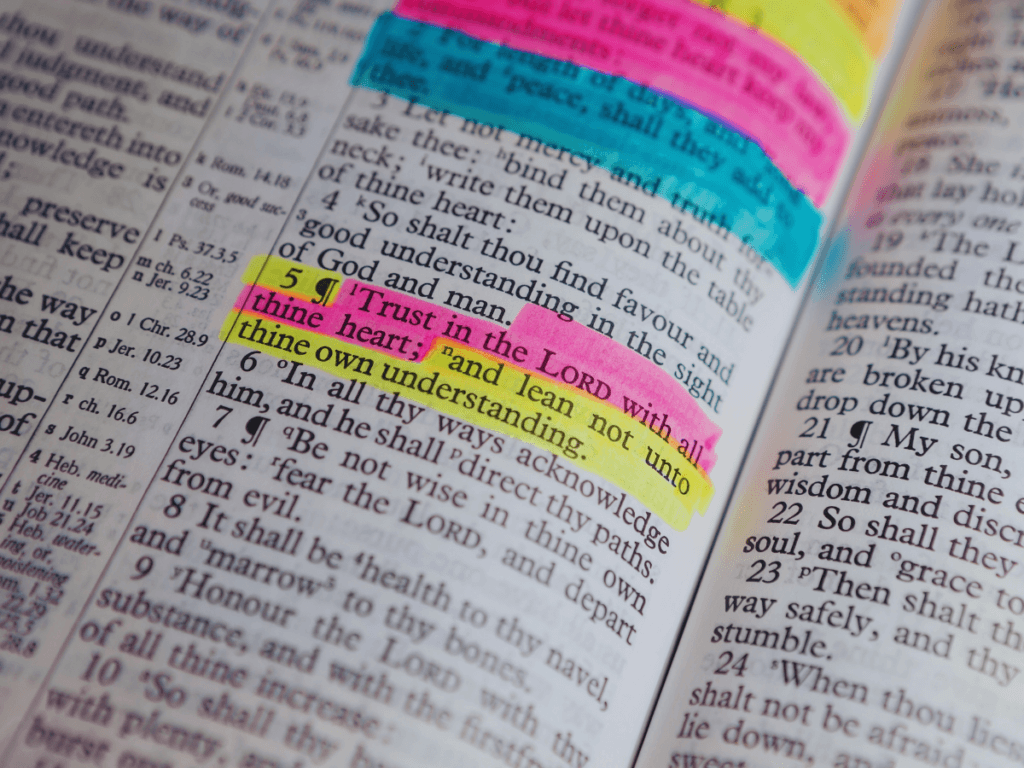
Image 1 Recommendation
Placement: Directly below the introduction, before the Table of Contents
Alt text: “open Bible on wooden table showing a beginner learning how to read the Bible for beginners with morning light”
Caption: Learning how to read the Bible for beginners begins not with a reading plan or a method but with a posture: coming to the text honestly, expectantly, and with prayer.
What We Will Explore Together
- Why Reading the Bible Changes Everything
- What the Bible Actually Is Before You Open It
- Step One: Begin With Prayer Every Single Time
- Step Two: Start in the Right Place
- Step Three: Read in Consistent and Manageable Portions
- Step Four: Use a Translation You Can Actually Understand
- Step Five: Learn to Read Every Passage in Context
- Step Six: Apply What You Read to Your Actual Life
- Step Seven: Journal What You Are Learning
- Step Eight: Read in Community as Well as Private
- When You Get Stuck: What to Do With Hard Passages
- Building a Daily Habit That Actually Lasts
- A Word to the Person Who Has Tried Before and Stopped
- Frequently Asked Questions
- Conclusion and Prayer
Why Reading the Bible Changes Everything
Before diving into the practical steps of how to read the Bible for beginners, it is worth pausing on the why, because motivation matters enormously in any discipline and especially in this one. The Bible is not merely an ancient religious document. It is, as the writer of Hebrews puts it, “living and active, sharper than any two-edged sword, piercing to the division of soul and of spirit, of joints and of marrow, and discerning the thoughts and intentions of the heart” (Hebrews 4:12). The word “living” is doing serious work in that description. Most ancient texts speak to their own time and place. Scripture speaks to every time and every heart, because the God who breathed it into existence is the same God who knows your specific life, your specific questions, and your specific needs right now.
Furthermore, Psalm 119, the longest chapter in the entire Bible, is essentially one extended meditation on what the Word of God does to a human life. It cleanses the way of the young (verse 9). It keeps a person from sin (verse 11). It gives wisdom beyond years (verse 98). It is a lamp to the feet and a light to the path (verse 105). The psalmist does not describe the Scriptures as a source of information. He describes them as a source of life, the kind of life that does not exist anywhere else.
Jesus himself, when pressed to identify the most essential thing a human being needs, turned to Deuteronomy 8:3 and said, “Man shall not live by bread alone, but by every word that comes from the mouth of God” (Matthew 4:4). He placed the Word of God in the same category as food. Not optional. Not supplementary. Essential for life itself. Therefore, learning how to read the Bible for beginners is not merely a useful skill for religious people. It is a matter of spiritual survival for anyone who wants to follow Jesus with their whole life. Every hour you invest in learning to read Scripture well will return dividends for the rest of your life and into eternity.
All Scripture is God-breathed and is useful for teaching, rebuking, correcting and training in righteousness, so that the servant of God may be thoroughly equipped for every good work.2 Timothy 3:16-17 (NIV)
What the Bible Actually Is Before You Open It
One of the most common mistakes beginners make is approaching the Bible the way they would approach a novel, starting on page one and reading straight through to the end. This approach almost always fails, and not because the reader lacks discipline. It fails because the Bible was not written as a single linear book. Understanding what you are actually holding in your hands is one of the most liberating things a new reader can grasp.
The Bible is a library. It is a collection of sixty-six individual books, written by more than forty different authors, across a span of roughly fifteen hundred years, in three different languages: Hebrew, Aramaic, and Koine Greek. Those authors include kings, shepherds, fishermen, a doctor, a tax collector, a military commander, a priest, and a prophet who spent time in the belly of a large fish. Their backgrounds are as varied as their writing styles. Consequently, reading a passage of Hebrew poetry, like the Psalms, requires a completely different approach from reading a letter written by Paul to a specific church in the first century, like Ephesians, which in turn requires a different approach from reading an account of the creation of the world, like Genesis 1.
Within that library, there are at least a dozen distinct literary genres: historical narrative, poetry, wisdom literature, law, prophecy, apocalyptic writing, epistles or letters, and the Gospels, which are a genre entirely their own. As GotQuestions explains in their introduction to reading the Bible, understanding that you are holding a library rather than a single book is one of the most liberating things a new reader can grasp. It immediately removes the pressure to read it the way you would read any other book.
Nevertheless, within all that diversity, the Bible tells a single coherent story. It is the story of a God who creates the world in love, who watches that creation fracture under the weight of human rebellion, who refuses to abandon what He made, and who pursues the restoration of all things through the life, death, and resurrection of His Son. Every book, every story, every psalm, every prophecy, and every letter points in some way toward that central narrative. Moreover, understanding this single storyline holds the entire library together and gives every individual passage a home within a larger whole.
The Five-Act Story of the Bible
Bible scholars often describe the single storyline of Scripture in five acts. Act One is Creation, God makes a good world and places humanity in it as His image bearers. Act Two is the Fall, human rebellion breaks the relationship between God and humanity and introduces sin, suffering, and death into the created order. Act Three is Israel, God calls a people through whom He will begin the work of restoration and through whom the promised Rescuer will eventually come. Act Four is Jesus, the Son of God enters human history, lives the perfect life, dies the atoning death, and rises triumphantly from the dead, accomplishing the redemption of all things. Act Five is the Church and the New Creation, the Spirit is sent, the church is formed, the mission goes out to all nations, and history moves toward the final renewal of all things at the return of Christ.
Every passage of Scripture belongs somewhere in this five-act structure. Therefore, knowing which act you are reading in, and how the passage connects to the broader story, is one of the most powerful tools available to anyone learning how to read the Bible for beginners. The BibleProject’s introduction to the Bible offers one of the finest free resources for understanding this narrative arc in a visually engaging and biblically rigorous way.
Step One: Begin With Prayer Every Single Time
This is the step most beginners overlook because it seems too simple, too automatic, too obviously religious to be practically significant. It is, in fact, the single most important preparation you can make before opening Scripture. The Bible is not a book you understand by intellect alone. First Corinthians 2:14 states plainly that “the natural person does not accept the things of the Spirit of God, for they are folly to him, and he is not able to understand them because they are spiritually discerned.” The things of God require the Spirit of God to illuminate them. Therefore, before you read a single word, ask Him.
It does not have to be a formal or lengthy prayer. It can be as simple and honest as this: Lord, I am opening your Word. Open my eyes to see what you want me to see today. Speak to me through what I am about to read. I am listening. That posture, simple and dependent, changes the entire experience of reading. You are no longer a student analyzing a text. You are a child coming to a Father who is already eager to speak.
Psalm 119:18 models exactly this kind of prayer: “Open my eyes, that I may behold wondrous things out of your law.” The psalmist did not assume he could see what Scripture contained on his own. He asked for eyes to see. Similarly, every new reader of the Bible, and every experienced one, should ask for the same. Furthermore, this posture of dependence is itself a form of worship, an acknowledgment that the understanding you need cannot be manufactured by effort or intelligence alone but must be received as a gift from the God whose words you are reading.
“You are not merely a student analyzing a text. You are a child coming to a Father who is already eager to speak.”
Step Two: Start in the Right Place
The question of where to begin reading the Bible is one of the most common questions new believers and seekers ask, and the answer matters more than most people realize. Starting in the wrong place is one of the most reliable ways to become discouraged early. The conventional advice to start at Genesis 1 and read straight through is well-intentioned but often counterproductive for beginners. The first five books of the Bible contain extensive passages of law, genealogy, and detailed priestly instructions that require significant context to understand and apply. Reading Leviticus in the first weeks of Bible engagement is a reliable way to stall.
Instead, begin with the Gospels. Specifically, begin with the Gospel of Mark. It is the shortest of the four Gospels, fast-paced, vivid, and immediately immersive. Mark has no lengthy prologue or genealogy. It opens with John the Baptist in the wilderness and Jesus being baptized, and it moves with a breathless momentum from there. The Greek word translated “immediately” appears more than forty times in Mark. You feel it on every page. Furthermore, beginning with Mark places you immediately in the presence of Jesus Himself, which is the best possible starting point for any spiritual journey.
After Mark, read the Gospel of John. John was written with a specific stated purpose: “These are written so that you may believe that Jesus is the Christ, the Son of God, and that by believing you may have life in his name” (John 20:31). It is simultaneously the most accessible and the most theologically profound of the four Gospels. Many people who have encountered Jesus in a transforming way point to John as the book where it happened. Subsequently, the letter to the Romans gives you the fullest systematic explanation of the Gospel in the entire New Testament. First John gives you a warm, pastoral, and deeply practical letter on the marks of genuine faith and love. And the Psalms give you an introduction to the full range of honest human emotion addressed directly to God.
The BibleProject’s “How to Read the Bible” video series is one of the finest free resources available for understanding the literary design of Scripture, covering everything from biblical narrative and poetry to prophecy and letters. It is an excellent companion for any new reader and will save you months of confusion about what genre you are reading and how to approach it.
Image 2 Recommendation
Placement: After the section on where to start, before the consistent reading section
Alt text: “person reading Bible for beginners starting with the Gospel of Mark and taking notes in journal”
Caption: Beginning with the Gospel of Mark is one of the most reliable starting points for anyone learning how to read the Bible for beginners, because it places you immediately in the presence of Jesus with clarity and momentum.
Step Three: Read in Consistent and Manageable Portions
One of the most common mistakes new Bible readers make is trying to read too much too fast. They start in January with great determination, commit to reading five chapters a day, and find themselves exhausted and behind by the end of the first week. Discouragement follows. The Bible closes. And the habit dies before it ever had a chance to form. Consistency matters far more than quantity. Ten minutes of genuinely attentive, prayerful reading every day will produce more spiritual fruit over the course of a year than sporadic marathon sessions followed by long dry spells.
The goal is not to consume the Bible as quickly as possible. The goal is to meet God in its pages, and that kind of meeting requires presence more than pace. For most beginners, a daily reading of one chapter, read slowly and thoughtfully, is an excellent starting point. One chapter takes between three and ten minutes depending on its length. It is short enough to be genuinely sustainable and long enough to carry a complete unit of thought. As you read, resist the urge to speed past what you do not understand. Mark it. Write it down. Return to it. Not understanding a passage is not a failure. It is an invitation to go deeper.
Desiring God’s resource library on Bible reading contains some of the most practically helpful guidance available on building a sustainable daily reading habit, written by people who have been doing it for decades and have learned what actually works. Furthermore, the YouVersion Bible App offers hundreds of free reading plans specifically designed for beginners, removing the daily decision of what to read and making it easier to build the kind of consistent habit that actually transforms your faith over time.
Step Four: Use a Translation You Can Actually Understand
This is more practical than it sounds, and it matters more than most people realize. The Bible was not originally written in English. The Old Testament was written primarily in Hebrew, with some Aramaic. The New Testament was written in Koine Greek, the common street-level Greek of the first century. Every English Bible you hold is a translation, and translations exist on a spectrum from word-for-word literal renderings to thought-for-thought readable paraphrases.
For beginners, the two translations most consistently recommended by pastors and Bible teachers are the English Standard Version, known as the ESV, and the New International Version, known as the NIV. Both are accurate, readable, and widely supported by study tools, commentaries, and resources. The ESV leans slightly more toward word-for-word precision. The NIV leans slightly more toward natural readability. Either is an excellent choice for anyone learning how to read the Bible for beginners.
The New Living Translation, or NLT, is also worth mentioning for readers who find the ESV or NIV difficult to follow at first. It is a thought-for-thought translation that prioritizes natural English flow, and many people who struggled with other translations have found the NLT to be the version that finally made Scripture feel genuinely accessible. Additionally, reading the same passage in two translations side by side is one of the most powerful tools available for understanding what a verse actually means. Bible Gateway’s free online platform allows you to compare any passage in dozens of translations simultaneously, which is one of the most valuable free resources available to any Bible reader.
What matters most, however, is not which translation you choose but that you choose one and begin. A Bible read consistently in a translation you find readable is worth far more than an “ideal” translation that sits unopened on a shelf. Moreover, you can always expand your translation range later as your familiarity with Scripture grows.
Step Five: Learn to Read Every Passage in Its Context
Context is the single most important tool in understanding the Bible, and the lack of it is the single most common reason people misinterpret Scripture. A verse taken out of its context can be made to say almost anything. Placed back within its context, it becomes clear, specific, and often far more powerful than it appeared in isolation. Learning to read in context is therefore not an advanced skill reserved for seminary students. It is a basic practice that every beginner should begin developing from their very first reading session.
Context operates on several levels simultaneously. There is the immediate context, the verses directly surrounding the passage you are reading. There is the chapter context, the argument or narrative being developed across the whole chapter. There is the book context, the purpose and the original audience of the specific book you are reading. And there is the whole-Bible context, how this passage fits within the overall story that Scripture is telling from Genesis to Revelation. All four levels matter, and together they prevent the kind of misreading that produces harmful theology and disappointed expectations.
A practical example is worth including here. Jeremiah 29:11 is one of the most quoted verses in popular Christian culture: “For I know the plans I have for you, declares the Lord, plans to prosper you and not to harm you, plans to give you hope and a future.” It appears on greeting cards, coffee mugs, and inspirational posters everywhere. However, read in its context, God spoke these words to Israelites who were in exile in Babylon. He was telling them that even in their captivity, He had not abandoned them and would eventually bring them home after seventy years. The verse does not promise individual prosperity or immediate resolution of personal difficulties. It promises that God’s purposes for His people cannot be permanently derailed by their circumstances. That truth is, in some ways, even more encouraging than the greeting card version. But you only see it when you read in context.
As GotQuestions outlines in their guide on proper Bible study, always asking who wrote this, to whom, when, and why is one of the most reliable ways to unlock the meaning of any passage. These four questions, applied consistently, will transform your Bible reading within weeks.
Step Six: Apply What You Read to Your Actual Life
The Bible was never intended to function as a purely academic text. James 1:22 is blunt about this: “Be doers of the word, and not hearers only, deceiving yourselves.” The deception James refers to is subtle but common: the person who reads Scripture, feels the weight of it, nods in agreement, and then returns to life exactly as it was. The reading registered intellectually but produced no change. Consequently, one of the most important disciplines for anyone learning how to read the Bible for beginners is the habit of asking, after every reading session: what does this mean for how I live today?
Every passage of Scripture is pointing toward something you can take into your day. Sometimes it is a command to obey. Sometimes it is a promise to trust. Sometimes it is a warning to take seriously. Sometimes it is a picture of God’s character that reshapes how you see Him and how you talk to Him. Sometimes it is a story that shows you something about human nature, including your own, that you needed to see.
A simple framework many experienced Bible readers use is the observation, interpretation, application method. First, observe what the text actually says, the plain and literal content of the passage. Second, interpret what it means, what the author intended and what the original audience would have understood. Third, apply what it means to your specific life, your specific situation, your specific struggles and choices right now. This three-part movement, consistently practiced, is what takes Bible reading from a religious habit to a genuine means of transformation. It is what Paul had in mind in Romans 12:2 when he described being “transformed by the renewal of your mind.” The renewal happens through repeated, attentive, obedient engagement with the Word, not in a single session but over a lifetime of returning to it.
Step Seven: Journal What You Are Learning
One of the most underused tools in the practice of Bible reading is a journal. Writing is thinking made visible, and the act of putting into words what you are noticing in Scripture does something to your understanding that reading alone does not. It forces clarity. It creates a record. It gives you something to return to. Furthermore, the journal does not have to be elaborate or well-written. It can be a simple notebook where you write the date, the passage you read, one thing that struck you, one question you are sitting with, and one way you want to apply what you read. Five sentences. That is enough to make the reading stick in a way it otherwise would not.
Over time, a Bible journal becomes something remarkable: a record of your own spiritual journey, a visible account of what God has been saying to you through His Word across months and years. Reading back through old entries, many people are deeply moved by how consistently God met them exactly where they were, how specific His timing was, and how faithfully He used Scripture to speak into the precise circumstances of their lives.
Additionally, writing down your questions is particularly valuable. The Bible is a book that rewards questioning. There is nothing irreverent about sitting with a difficult passage and writing out an honest question: why does this passage sit so uncomfortably with me? What do I do with this apparent difficulty? What does this tell me about God that I have not yet understood? Honest questions, honestly engaged, lead to genuine understanding. Suppressed questions, by contrast, lead to suppressed faith and the slow erosion of engagement that leaves people years later wondering why the Bible ever felt alive to them.
Step Eight: Read in Community and Not Only in Private
The Bible was designed to be read together. Long before the printing press made individual Bible ownership possible, Scripture was read aloud in community settings, in synagogues, in house churches, around tables, and in homes. The communal dimension of Scripture reading is not a concession to those who struggle alone. It is part of how God designed the Word to work in His people. When you read with others, you encounter perspectives and notices that you would never arrive at on your own. Someone else in your small group sees something in a passage that has completely escaped you, and it opens the text in a way that private reading never could.
Hebrews 10:24-25 connects Scripture engagement with community in a single breath: “Let us consider how to stir up one another to love and good works, not neglecting to meet together.” The meeting together and the stirring one another are not incidental to the Christian life. They are constitutive of it. Therefore, finding a good church, one that takes Scripture seriously and teaches it faithfully week after week, is not supplementary to your Bible reading. It is one of the most important investments you can make in your ability to understand and apply what you read.
If you are navigating the early stages of Bible reading alongside questions about faith, doubt, and what it means to know God personally, our article on faith, doubt, and knowing God personally is a warm and deeply researched companion for exactly that journey.
When You Get Stuck: What to Do With Hard Passages
Every Bible reader, at every level of experience, gets stuck. There are passages that seem violent or strange or internally inconsistent. There are commands that seem impossible or culturally irrelevant. There are prophecies so dense with imagery that they resist ordinary interpretation. There are statements from Paul that have been debated by serious scholars for two thousand years without a settled consensus. Getting stuck is not a sign of failure. It is a sign that you are reading honestly, and honest reading is the only kind that ultimately transforms you.
The first thing to do when you encounter a difficult passage is to note it and keep going rather than stopping the reading practice entirely. You will not resolve every difficulty in a single sitting, and allowing one hard passage to halt your entire engagement with Scripture is exactly what the enemy would prefer. The second thing to do is to seek context, reading the surrounding passage, the whole chapter, and asking what the rest of the Bible says on the same topic. The Bible is one of the best interpreters of itself, and many apparent contradictions resolve naturally when you see how a theme develops across the whole of Scripture.
The third thing to do is to seek resources. A good study Bible places explanatory notes right alongside the text, offering historical context, word definitions, and cross-references without requiring you to consult a separate volume. The ESV Study Bible and the NIV Study Bible are both widely regarded as excellent resources for this purpose. Additionally, GotQuestions provides thorough and accessible answers to hundreds of specific questions about difficult Bible passages, and their explanations are consistently grounded in sound hermeneutical principles.
The fourth thing to do is to hold your questions with humility and patience. Some passages have resisted complete resolution for centuries and will not be resolved in a single sitting. Sitting with a question in faith, trusting that God’s Word is good even when you cannot yet fully understand it, is itself an act of profound spiritual maturity. As GotQuestions’ guide on Bible study methods helpfully explains, the goal of Bible reading is not the immediate resolution of every question but the ongoing deepening of your relationship with the God who speaks through every page.
Building a Daily Bible Reading Habit That Actually Lasts
The most important thing about learning how to read the Bible for beginners is that you actually do it consistently. Intention without structure almost always fails, not because the person lacks commitment but because the brain defaults to what is easiest, and what is easiest is almost never what is most important. Here are the most reliable structural habits for making daily Bible reading sustainable over the long term.
Read at the same time every day. The brain is a creature of routine, and attaching your Bible reading to an existing anchor, your morning coffee, your lunch break, or the ten minutes before bed, dramatically increases the likelihood of it happening. Many experienced readers choose the morning, before the day’s demands have claimed their attention and energy. However, the best time is the time you will actually use consistently. A Bible read faithfully at midnight is worth infinitely more than one intended to be read at dawn and never opened.
Remove friction from the process. Keep your Bible, physical or digital, in the place where you will read it. If using the YouVersion Bible App, set a daily reminder on your phone. The fewer steps between you and the reading, the more reliably it will happen. Use a reading plan rather than deciding each day what to read. The small decision of what should I read today is, for many people, the decision that quietly derails the practice. A reading plan removes that decision entirely.
Expect dry days. There will be mornings when the text does not come alive, when you read your passage honestly and diligently and feel nothing in particular. Do not interpret those mornings as evidence that the practice is not working. They are as much a part of the discipline as the mornings when a verse seems to land directly on your heart. Faithfulness in the dry seasons is what makes you ready to receive in the fruitful ones. Moreover, if extended dryness has become a pattern in your spiritual life, our article on overcoming spiritual dryness with a biblical guide walks through exactly how to navigate those seasons without losing your footing in the Word.
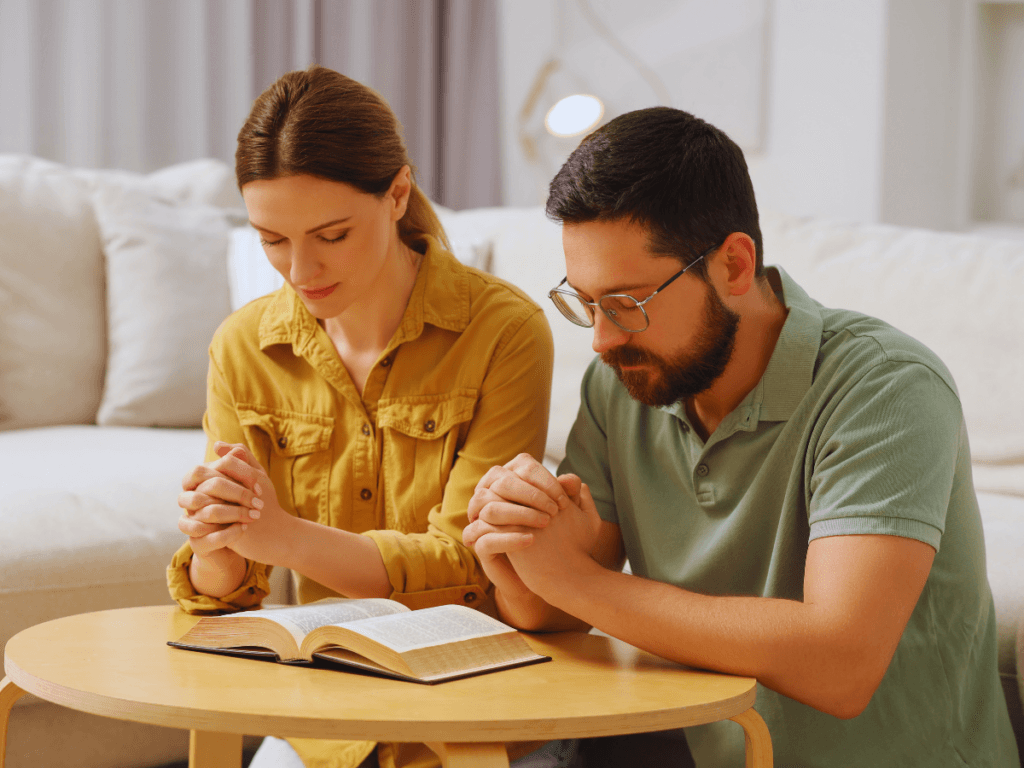
Image 3 Recommendation
Placement: After the daily habit section, before the personal reflection section
Alt text: “small group studying the Bible for beginners together growing in faith through Scripture and community”
Caption: Reading Scripture in community unlocks dimensions of understanding that private reading alone cannot reach. The body of Christ was designed to understand the Bible together.
A Word to the Person Who Has Tried Before and Stopped
Perhaps you have started reading the Bible before. Perhaps more than once. Perhaps you went strong for two weeks and then missed a day and then two days and then the Bible quietly returned to the shelf where it sat untouched until another wave of resolution carried you back to it again, only for the cycle to repeat. That cycle is more common than most people admit, and it is not evidence that you are uniquely undisciplined or spiritually defective. It is evidence that the practice of daily Scripture reading is genuinely difficult to sustain, that it requires intentional structure and honest motivation, and that it is worth beginning again regardless of how many times you have had to start over.
God is not counting the number of times you have stopped. He is the God who runs toward the returning prodigal, who leaves the ninety-nine to find the one, who called Elijah back to his feet after the prophet had collapsed in exhaustion and told God he was finished. He meets you wherever you are today, not wherever you wish you had remained. Begin again. Not with a grand resolution and an aggressive reading plan that will collapse under the weight of real life. Begin with one chapter tomorrow morning. Begin with a simple prayer: Lord, open your Word to me today. Begin with the willingness to be changed by what you find there. That is enough. It has always been enough.
Furthermore, if guilt or shame about past inconsistency is part of what is holding you back, our article on exploring forgiveness in the Bible offers a rich biblical portrait of a God who forgives completely and invites new beginnings with extraordinary generosity. Additionally, for anyone returning to faith after a long distance, our reflection on moving from head knowledge to a genuine heart relationship with Jesus speaks directly to the experience of knowing God intellectually while longing to know Him personally.
A Personal Reflection Before the Questions
Before reading the FAQ section, take a moment with this honest question. Think carefully about your current relationship with the Bible. Is it a living conversation or a distant obligation? Do you approach it with genuine expectation that God will speak, or with a low-grade anxiety about whether you are reading it correctly or doing it well enough?
Whatever your honest answer is, bring it to God right now. He already knows it. The only thing honesty about it accomplishes is bringing you into agreement with the reality He is already holding. And from that honest place, everything is possible. He has never turned away anyone who came to His Word asking simply: Lord, speak to me. He will not turn you away either.
Frequently Asked Questions About How to Read the Bible for Beginners
Where should a complete beginner start reading the Bible?
The Gospel of Mark is the single best starting point for most beginners. It is the shortest Gospel, immediately engaging, and gives you a vivid account of who Jesus is and what He did. After Mark, read the Gospel of John, then Romans, then the Psalms. From there, the rest of the New Testament provides an excellent foundation before moving into the Old Testament. Beginning with Jesus rather than Genesis removes the most common early barriers to sustained reading and places you immediately in the presence of the person around whom the entire Bible is organized.
How long should I read the Bible each day as a beginner?
Consistency matters far more than duration. Ten to fifteen minutes of genuinely attentive daily reading is far more valuable than occasional hour-long sessions with long gaps between them. One chapter per day, read slowly and with prayer, is an excellent starting point for anyone learning how to read the Bible for beginners. As the habit becomes established, the duration will often increase naturally as your engagement deepens and the practice becomes something you look forward to rather than something you feel you ought to do.
Which Bible translation is best for beginners?
The New International Version and the English Standard Version are both widely recommended for their combination of accuracy and readability. The New Living Translation is an excellent choice for readers who find the ESV or NIV difficult at first. All three are available free on the YouVersion Bible App and on Bible Gateway online. What matters most is not which translation you choose but that you choose one and begin reading it consistently. You can always expand your translation range as your familiarity with Scripture grows, and reading two translations side by side on Bible Gateway is one of the most powerful tools for deeper understanding.
Do I need to understand everything I read in the Bible?
No, and this is one of the most important things to know when learning how to read the Bible for beginners. Not understanding a passage is a perfectly normal part of reading the Bible, even for experienced readers and seminary-trained scholars. Note what you do not understand, seek context and resources when helpful, and keep going. Understanding deepens over time, not in a single reading. The goal of daily Bible reading is not the immediate resolution of every difficulty but the ongoing building of a relationship with the God who speaks through every page, including the pages that currently resist your understanding.
Is it okay to skip around in the Bible rather than reading straight through?
Absolutely. The Bible is a library, not a novel, and there is no single correct order in which to read it. Reading thematically, following a specific book or letter, reading what speaks to your current season of life, all of these are valid and often deeply fruitful approaches. What matters is that you are reading regularly and with genuine attentiveness rather than racing to cover as much ground as possible. Many experienced readers follow a reading plan that takes them through the whole Bible in a year, alternating between Old and New Testament passages each day, which provides breadth while maintaining a navigable daily portion.
What do I do when I read something in the Bible I disagree with or find confusing?
Write it down honestly. Seek context by reading the surrounding passages and the whole chapter. Consult trusted resources like GotQuestions, a study Bible, or a pastor or mature believer in your church community. Hold the question with patience rather than treating it as a reason to stop reading. The Bible can sustain honest questioning, and many of the greatest biblical scholars in history began their journey of faith with exactly the questions that once seemed to threaten it. Furthermore, bringing your honest questions to God in prayer is itself a form of engagement that often produces clarity over time.
How do I keep Bible reading from becoming just a religious routine?
Come to it with a genuine question each time. Pray specifically for God to speak before you begin. Write down what you notice rather than just reading past it. Share what you are learning with another person in your life. When it begins to feel mechanical, change your location, your translation, your time of day, or your approach rather than abandoning the practice entirely. Additionally, reading biographies of people whose lives were transformed by Scripture, like Augustine, C.S. Lewis, or Corrie ten Boom, regularly reminds you of the transforming power that is available in the same book you are holding.
Should I use a study Bible or a regular Bible as a beginner?
Both have their place and serve different purposes. A regular Bible, without notes, encourages you to engage with the text on its own terms first, without immediately reaching for someone else’s interpretation. This kind of raw encounter with Scripture is valuable and should not be replaced entirely. A study Bible is enormously helpful for context, historical background, word definitions, and difficult passages, particularly once you have established a basic reading habit and want to go deeper. Many experienced readers use both: a clean Bible for devotional reading and a study Bible for deeper engagement with specific passages and questions.
Conclusion: The Book That Reads You Back
There is a phrase that experienced Bible readers sometimes use, half-joke and half-profound truth: the Bible does not just give you something to read. Over time, it reads you. Open it honestly and consistently, and you will find that it has an uncanny way of landing exactly where you are. The passage you read on a Tuesday morning will speak directly to the conversation you have that evening. The psalm you struggled through last week will come back to you in the middle of a crisis with a clarity that stops your breath. The promise you barely noticed six months ago will become the thing you are standing on when the ground beneath you gives way.
This is not coincidence. It is the living quality of a book breathed into being by the God who knows you completely, who is actively and specifically involved in your life, and who has been speaking through these words to people in every conceivable circumstance for thousands of years without the message growing old or losing its power. Therefore, learning how to read the Bible for beginners is not ultimately about acquiring a skill or developing a habit, as important as both of those things are. It is about entering a relationship with the God who wrote it, who wants to speak to you through it, and who has been waiting with extraordinary patience for you to open it and listen.
Second Timothy 3:16-17 holds both the claim and the promise: “All Scripture is breathed out by God and profitable for teaching, for reproof, for correction, and for training in righteousness, that the man of God may be complete, equipped for every good work.” Complete. Not merely improved or educated. Complete. The kind of completeness that only comes from sustained encounter with the God who made you and who alone knows what you were made to be. Open the book. Open it today. Bring your questions and your confusion and your skepticism and your longing. He is speaking. The question has always been whether you are willing to listen.
Moreover, if reading this article has stirred something in you about your relationship with Jesus Himself, our article on Jesus Christ as the true way to know God personally takes the next step in that conversation with warmth, biblical depth, and genuine pastoral care.
Your word is a lamp to my feet and a light to my path.Psalm 119:105 (ESV)
A Closing Prayer
Lord, I want to know your Word. Not just know about it, but know it the way I would know a person, intimately, familiarly, over time. I confess that I have sometimes treated it as an obligation rather than a gift, as a religious duty rather than a living conversation with the Father who made me and loves me and has been speaking through these pages for longer than I have been alive. Forgive me for the times I closed the book without opening my heart. Open my eyes to see what is really here. Give me the discipline to return to it daily, the humility to receive what I find there, and the courage to obey it when it asks something difficult of me. Meet me on the page, Lord. I am listening. In Jesus’s name, amen.
Keep Growing in Your Daily Faith
Explore more deeply researched, biblically faithful articles on prayer, Scripture, purpose, and walking closely with God at Restored in Prayer.Explore More Articles
Continue Your Journey
- How to Read the Bible Daily and Stay Consistent: A Practical Guide
- Knowing God Personally: Moving from Head Knowledge to Heart Relationship
- Is There a God? Faith, Doubt, and Knowing God Personally
- Overcoming Spiritual Dryness: A Biblical Guide
- Exploring Forgiveness in the Bible: A Biblical Guide to Grace and Freedom
- Jesus Christ: The True Way to Know God Personally and Find Purpose
Written by a Follower of Jesus Christ | Restored in Prayer
This article is written by a believer who holds that the Bible is the living, breathing, God-breathed Word of God, fully trustworthy and inexhaustibly rich for every person in every season of life. All Scripture quotations are from the New International Version (NIV) or English Standard Version (ESV) as noted. The best moment to begin reading Scripture is always right now. May this guide be the step that gets you there.