You are trying to trust God and everything is falling apart. Trust grows by remembering what He has already done, long before the feeling returns.
Jeremiah wrote Lamentations while smoke was still rising off Jerusalem. Somewhere in the middle of that wreckage he writes the line people cross stitch onto pillows, that His mercies are new every morning. What almost nobody notices is the verse directly above it, where he explains how he got there.
He made himself remember. The hope did not arrive on its own and it did not arrive because conditions improved. He reached back for one thing he knew to be true about God and carried it deliberately to a heart that had already let go of it, and that act is what the verse is really describing. Jesus went into the same darkness ahead of you and came out holding the other end of it, which is the only reason remembering works at all.
What Does the Bible Say About Trusting God When Life Falls Apart?
Lamentations 3:21 is one of the most practical verses in Scripture and it gets skipped almost every time. The Hebrew reads close to “this I return to my heart, therefore I have hope.”
Return it. The verb describes a deliberate act of bringing something back to a place it had drifted from. Jeremiah is not describing a mood that lifted. He is describing a man reaching for a specific truth and carrying it back to a heart that had let go of it. You can see the Hebrew and the range of English renderings side by side at Blue Letter Bible.
The context makes it heavier. The chapters around it are structured as acrostic poems, each section moving through the Hebrew alphabet in order. A man whose city has been destroyed and whose people are starving sat down and wrote in a strict poetic form. Grief that disciplined is not grief that has been resolved. It is grief that has been given somewhere to go.
That reframes what trust asks of you. Nobody in that chapter feels steady. Verse 8 says he cried for help and his prayer was shut out. Verse 17 says his soul is bereft of peace and he has forgotten what happiness is. Then verse 21, then the mercies.
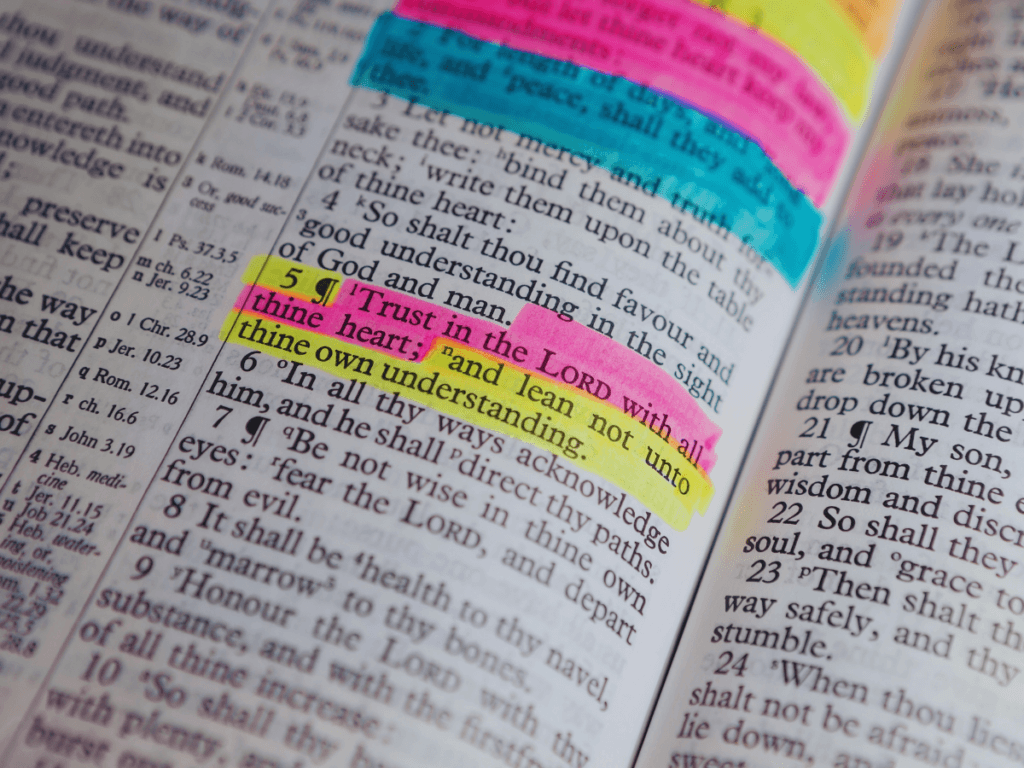
Proverbs 3:5 and 6 tells you to trust in the Lord with all your heart and lean not on your own understanding. The second half is the hard part when life collapses, because your understanding is screaming a verdict about what all this means. Trust, in that verse, is choosing not to rule on the meaning of your circumstances before God has finished writing them. If the weight of the last few months has been more than you can carry alone, bring it into prayer honestly rather than tidying it up first.
What Jesus Already Did in the Dark
Christianity has an answer to suffering that no other faith attempts. God came and went through it Himself.
Isaiah 53:3 describes Him as a man of sorrows, acquainted with grief. In Gethsemane He told His friends His soul was overwhelmed to the point of death. On the cross, Mark 15:34 records Him crying out asking why God had forsaken Him, quoting the opening line of Psalm 22.
Sit with that. The one sentence you are most ashamed of praying is a sentence Jesus prayed out loud. He was not rebuked for it, and Hebrews 4:15 says He is now a high priest who is able to sympathize with your weakness because He has been through it.
He was not spared. That is what makes His presence with you credible rather than theoretical. He went into the worst of it and came out on the third morning, and Romans 8:38 and 39 say that nothing in the whole created order can separate you from the love of God in Christ Jesus. Your circumstances were included in that list.
How Do You Keep Trusting God When Nothing Is Getting Better?
These are not sequential. Start wherever you actually are today.
Say the complaint out loud to Him. Psalm 13 opens by asking how long the Lord will forget him. Psalm 88 runs for eighteen verses of unrelieved darkness and its final word is darkness, with no resolution offered. God put that prayer in the book on purpose. There is no version of honesty that disqualifies you from being heard.
Rehearse something specific He has already done. Vague gratitude does not hold weight under pressure. Name the actual thing, with the date and the details, the way Israel was told in Joshua 4 to stack twelve stones out of the riverbed so their children would ask what they meant.
Shorten the horizon. Matthew 6:34 says not to be anxious about tomorrow, because today has enough trouble of its own. Jesus taught His followers to ask for daily bread. When the year is unbearable, the assignment shrinks to the next hour.
Let people carry you for a while. In Mark 2 a paralyzed man was brought to Jesus by four friends who dug through a roof to do it. The text says Jesus saw their faith. There are seasons where other people’s faith is the thing holding you, and that arrangement has His approval. If you have no one doing that for you right now, ask someone to pray with you this week.
Tend the body without apology. Sleep, food, and movement change what you are capable of believing. Elijah was suicidal under a broom tree in 1 Kings 19 and God’s first response was bread and rest before a single word of counsel.
Keep doing the small obedient thing. Show up. Tell the truth. Feed somebody. Faith in a collapse usually looks less like a breakthrough and more like refusing to stop doing what you already know is right.
Refuse to read silence as a verdict. Job never received an explanation. He received God Himself, and that turned out to be the thing he needed. Silence from God in a season means the explanation has not come yet, and it carries no information about His disposition toward you.
Put it in writing. Date the entry, write what is true right now, and write what you are asking Him for. Six months on, that page becomes evidence. Reading a psalm across several translations at Bible Gateway is a good companion to it when your own words run out.
Where This Actually Ends
Joseph spent years in a pit, a household, and a prison on a false accusation before any of it made sense. Genesis 50:20 has him telling his brothers that they meant evil against him and God meant it for good, to keep many people alive. He could only say that sentence looking backward.
You may be in the part of the story where the meaning has not arrived. That is a real place and it is not a sign of failure. Walking with others who have been in it tends to matter more in that stretch than any explanation would.
What Jeremiah did on the worst day of his life is available to you today. He reached for one true thing about God and returned it to his heart, and the mercies he described were new the next morning whether or not he had felt them coming.
Jesus is not waiting for you to get your trust up to a passing grade. He already went into the dark, already finished it, and already promised He would never leave. Your job right now is smaller than you think. Bring Him the honest version of today, and let Him hold the rest.