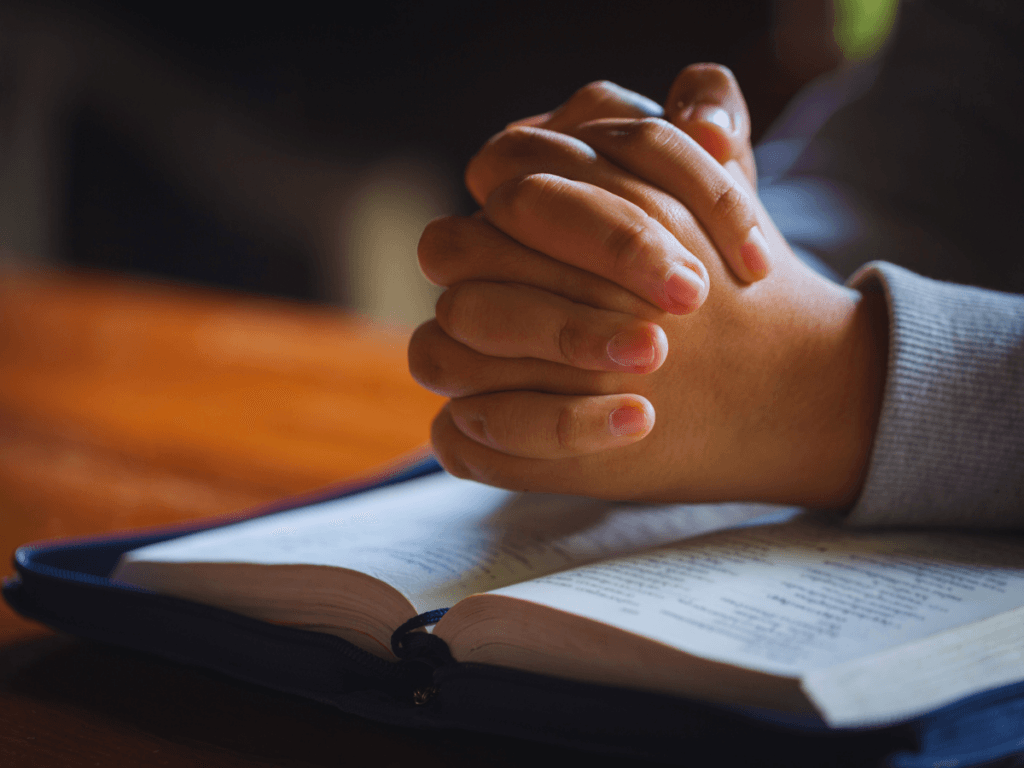
An encouraging walk through the Psalms that speak directly to grief, doubt, and longing.
There are moments in life when the words simply stop coming. When something has broken, or ended, or not come at all and the gap between where you are and where you hoped to be is so large that language feels inadequate, prayer feels impossible, and the distance between you and God feels very, very wide.
If you have ever sat in that silence, you are not the first. And you are not alone. Long before you arrived at this moment, men and women were sitting in theirs and they were writing.
The book of Psalms is unlike any other book in the Bible. It is not primarily a book of doctrine, though doctrine runs through it. It is not primarily a book of history, though history fills its pages. It is, at its core, a book of honest conversation between human beings and God raw, unfiltered, sometimes furious, sometimes exquisitely tender, and always, always honest.
The Psalms were written over hundreds of years, by many different authors David the shepherd-king, Asaph the temple musician, the sons of Korah, unnamed poets in exile. They were written in palaces and in caves, in times of celebration and in times of crushing darkness. They were sung in temple worship and whispered in dungeons. They became the prayer book of ancient Israel, the hymnal of the early church, and they remain centuries later one of the most read and memorized collections of writing in human history.
Why? Because they tell the truth. Because they do not clean up the mess of human experience before presenting it to God. They bring the grief, the doubt, the longing, the anger, and the exhaustion directly to the throne and in doing so, they give the rest of us permission to do the same.
This article walks through five psalms that speak with particular power to the hard seasons of life. They are not five easy answers. They are five companions for the journey voices from across history that say, in essence: I have been where you are. God was there too. Keep going.
You do not have to read all five at once. You might find that one speaks directly to where you are today. You might come back to another one in a different season. The Psalms are not a curriculum to complete they are a well to return to, again and again, and find that the water is always fresh.
Psalm 22
“My God, My God, Why Have You Forsaken Me?”
For when you feel utterly abandoned by God, by people, by hope itself
“My God, my God, why have you forsaken me? Why are you so far from saving me, so far from my cries of anguish? I cry out by day, but you do not answer, by night, but I find no rest.” — Psalm 22:1–2
We begin with the darkest psalm in this collection and perhaps the most honest prayer ever written.
Psalm 22 opens not with praise, not with petition, not even with a proper greeting. It opens with an accusation. My God, my God the doubling of the address signals both intimacy and anguish why have you forsaken me? This is not a polite theological question. This is a cry wrenched from the chest of a person who feels completely, devastatingly alone.
And then comes the silence that makes it worse. “I cry out by day, but you do not answer, by night, but I find no rest.” There is perhaps no more honest description of a particular kind of spiritual suffering the suffering of unanswered prayer. Not the suffering that comes from tragedy alone, but the compounded suffering of crying out to God and hearing nothing back. Of praying and praying and waiting and waiting and the heavens feeling like brass.
The God who seems absent
Theologians have a word for this experience: desolation. It is the season where the felt presence of God withdraws, where prayer feels like speaking into an empty room, where the very faith that once sustained you seems to have gone quiet. Dark night of the soul, John of the Cross called it. The mystics knew it well. So did the psalmist. So, perhaps, do you.
What is extraordinary about Psalm 22 is that the psalmist does not resolve this crisis by pretending it is not happening. He does not pivot quickly to praise in order to avoid sitting in the discomfort. He stays with it. He articulates it with devastating clarity. He names the feeling of abandonment and holds it out to God and says: this is where I am. This is what I am experiencing. And I am bringing it to you anyway.
This is a profound act of faith. It may not look like faith from the outside — it looks more like despair. But the very act of crying out to God in the darkness, the refusal to stop addressing him even when he seems absent, is itself a form of trust. You do not cry out to someone you truly believe is not there.
The very act of crying out in the darkness is itself a form of faith. You do not call to someone you truly believe is gone.
The memory that sustains
As the psalm continues, something shifts — not the circumstances, not the felt absence of God, but the psalmist’s gaze. He looks backward. “In you our ancestors put their trust; they trusted and you delivered them. To you they cried out and were saved; in you they trusted and were not put to shame” (vv. 4–5).
This is a crucial spiritual movement, and it is one we can learn from. When the present feels unbearable and the future feels inaccessible, memory becomes an anchor. What has God done before? What is the testimony of those who came before me? The psalmist reaches back through generations of faith — not to escape his own suffering, but to find the thread that connects his story to a larger one. Others have cried out like this. Others have felt this forsaken. And God has not abandoned them permanently.
This does not minimize the present pain. The psalmist is still suffering. But the suffering is now held within a larger frame — the frame of God’s faithfulness across time.
The turn
Psalm 22 does not stay in the dark. By the middle of the psalm, there is a turning — not a sudden leap into euphoria, but a gradual shift, like the first grey light before dawn. “For he has not despised or scorned the suffering of the afflicted one; he has not hidden his face from him but has listened to his cry for help” (v. 24).
Read that carefully. God did not despise the suffering. He did not turn away from it. He did not demand that the psalmist clean himself up before approaching the throne. He listened to the cry for help. The very prayer that seemed to go unanswered — the God who seemed absent — was heard. Was present. Was not as far as he felt.
This is not a resolution that comes easily or quickly in the psalm. The psalmist earns it through honest wrestling. But it comes. And the psalm ends not in despair but in declaration: “They will proclaim his righteousness, declaring to a people yet unborn: He has done it” (v. 31).
You may be in the early verses of your own Psalm 22. You may be in the cry of abandonment, the unanswered prayer, the dark night. If so, this psalm gives you permission to stay there honestly — and it also shows you where the road eventually leads. Not away from the suffering, but through it, into something that can say with the psalmist: He has done it.
It is worth noting, finally, that Jesus himself prayed these opening words from the cross (Matthew 27:46). In his darkest moment, the Son of God reached for this psalm. He entered the very experience the psalmist described — and in doing so, he sanctified it. Whatever desolation you are in, Jesus has been there too. You are not following him into unfamiliar territory. You are following him into the valley he has already walked, and already walked through.
― ― ―
Psalm 46
“God Is Our Refuge and Strength”
For when the ground is shaking and everything feels unstable
“God is our refuge and strength, an ever-present help in trouble. Therefore we will not fear, though the earth give way and the mountains fall into the heart of the sea, though its waters roar and foam and the mountains quake with their surging.” — Psalm 46:1–3
There is a particular kind of fear that comes not from a single crisis but from the cumulative experience of a world that seems to be coming apart. Not just one hard thing, but many hard things at once. Not just a personal struggle, but a sense that the structures and certainties that once felt solid are shifting beneath your feet.
Psalm 46 was written for exactly that feeling.
The imagery it uses is deliberately extreme — mountains falling into the sea, waters roaring and foaming, the earth giving way. These are not metaphors for minor inconveniences. They are images of total cosmic upheaval. The psalmist is not describing a difficult week. He is describing the felt experience of a world in freefall.
And yet the psalm opens not with a cry of alarm but with a declaration of steadiness. God is our refuge and strength. An ever-present help in trouble. The word translated “ever-present” in Hebrew is very literally “found very quickly” — the sense of a God who is not merely theoretically available, but immediately, practically near. Not a God you have to search for in the chaos. A God who is already there when the chaos begins.
The city of God in a crumbling world
The center of Psalm 46 introduces a striking image: the city of God. “There is a river whose streams make glad the city of God, the holy place where the Most High dwells” (v. 4). Surrounding this city, nations are in uproar. Kingdoms fall. The earth melts. And yet — “God is within her, she will not fall” (v. 5).
Biblical scholars have debated what this city refers to — Jerusalem, certainly, in its historical context, but also something more. The city of God in the Psalms is not merely a geographical location. It is a theological reality — the place where God’s presence dwells, which is therefore the place of unshakeable security. The psalm is saying: there is a center that holds, even when everything on the periphery is dissolving.
For the Christian reader, this image extends into the New Testament vision of a community indwelt by the Holy Spirit — a people who carry the presence of God with them, who are therefore always, in some sense, in the city that cannot fall. Whatever external instability you face, if God is in you and with you, there is a river of gladness that runs beneath the surface of your life that the external chaos cannot reach.
Come and see what the Lord has done
Psalm 46 does not ask you to ignore the chaos. It asks you to look at it through the right lens. “Come and see what the Lord has done, the desolations he has brought on the earth” (v. 8). Look at the ruins. Look at the wars. Look at the broken things. And see in them the God who is sovereign even over the breaking — who brings wars to an end, who shatters the weapons, who says “enough” to the forces of destruction.
There is a crucial difference between ignoring a storm and standing firm within it. Psalm 46 does not ask for naivety. It asks for rootedness. Know who God is deeply enough that when the shaking comes, your foundation does not move.
Be still, and know that I am God. Not because the chaos has ended. But because in the middle of the chaos, God is still God.
Be still and know
The most famous verse of Psalm 46 comes near the end: “Be still, and know that I am God” (v. 10). This has become a kind of Christian cliché, cross-stitched onto pillows and whispered at the end of difficult conversations. But in context, it is arresting.
The Hebrew word translated “be still” is raphah — it means to let go, to release, to slacken. It carries the sense of releasing a clenched grip. And it is spoken not as a gentle suggestion but almost as a command, an imperative: Let go. Cease striving. Drop what you are holding so tightly.
The verse is not saying: be still because everything is fine. It is saying: be still because I am God, and I am enough, even when everything is not fine. The stillness is not the absence of trouble. It is a posture of trust in the midst of trouble. It is the deliberate choice, made in the shaking, to release your grip and rest your weight on the One who does not shake.
If your world is shaking right now — if the mountains of certainty that once seemed fixed are trembling, if the structures you relied on have failed, if the future you planned has dissolved — Psalm 46 does not promise you an immediate return to calm. It offers you something better: a refuge that exists within the storm, a strength that is not your own, and the voice of a God who speaks into the chaos and says: Be still. I am here. I am God.
Psalm 34
“I Sought the Lord, and He Answered Me”
For when you are in distress and struggling to believe God hears
“I sought the Lord, and he answered me; he delivered me from all my fears. Those who look to him are radiant; their faces are never covered with shame. This poor man called, and the Lord heard him; he saved him out of all his troubles.” — Psalm 34:4–6
Psalm 34 comes with one of the most unusual backstories of any psalm in the collection. Its heading reads: “Of David. When he pretended to be insane before Abimelech, who drove him away, and he left.”
If you read 1 Samuel 21, you find the story. David is fleeing for his life from King Saul. He arrives at the court of the Philistine king Achish (called Abimelech in the psalm heading — likely a royal title). The king’s servants recognize him. David realizes he has walked into a trap. And in a desperate, undignified, almost absurd act of self-preservation, he begins to act insane — scratching on the doors of the gate, letting his saliva run down his beard.
It works. The king decides he doesn’t want a madman at his court and sends David away. And David — delivered not by some great act of heroism, not by the parting of seas or the intervention of angels, but by his own humiliating performance — writes a psalm of praise.
Praise born in strange places
This backstory matters enormously, because it tells us what kind of praise Psalm 34 is. It is not the praise of someone whose circumstances have become beautiful. It is the praise of someone who scratched at doors and drooled on himself and found that God was still there — and still faithful — in the indignity of it all.
This is a word for those who feel that their situation is too messy, too shameful, too chaotic for God to be present in it. David’s deliverance came in one of the most unglamorous moments of his life. And from that moment came one of the most beautiful declarations of faith in the entire Psalter.
“I will extol the Lord at all times; his praise will always be on my lips” (v. 1). The “all times” is doing enormous work here. Not in the times of victory. Not in the times of spiritual clarity and warmth. All times. Even the times when you are scratching at doors. Even the strange, undignified, frightening seasons that you would never choose.
Taste and see
One of the most famous invitations in the Psalms is found in verse 8: “Taste and see that the Lord is good; blessed is the one who takes refuge in him.”
The appeal to taste is deliberate and sensory. You cannot prove to someone that a meal is delicious by describing it. You cannot argue them into agreeing that a particular wine is rich or a particular fruit is sweet. Taste is experiential. It bypasses the intellectual defenses and goes directly to direct encounter.
The psalmist is saying: the goodness of God is not primarily a theological proposition to be accepted. It is an experience to be had. And it is available to you. Not someday, not when your circumstances improve, not when your faith is stronger. Now. In the distress. In the fear. In the strange and frightening season you are in.
“This poor man called, and the Lord heard him” (v. 6). The poverty here is not merely financial — it is the poverty of a person with no resources left, no strategy remaining, nothing to offer but the cry itself. And the Lord heard him. Not because the cry was eloquent. Not because the man was worthy. Because the Lord is near to the brokenhearted (v. 18), and calling out to him is enough.
The nearness of God to the brokenhearted
Verse 18 deserves its own dwelling. “The Lord is close to the brokenhearted and saves those who are crushed in spirit.”
The brokenhearted and the crushed in spirit are not people who have conquered their grief. They are people in the middle of it. They are people whose hearts are still in pieces. And the Lord is not at a careful distance from them — he is close. He does not stay back and wait for them to collect themselves. He draws near to the breaking place.
This is radically counter-intuitive. We tend to assume that closeness to God is a reward for spiritual health — that the strong in faith are near to God, and the weak, the doubting, the broken are further away. But Psalm 34 inverts this entirely. The crushing, the breaking, the poverty of spirit — these are not distances from God. They can be, in ways we do not fully understand, the very conditions under which his nearness becomes most palpable.
The Lord is close to the brokenhearted. Not waiting for them to recover. Not watching from a distance. Close.
If you are brokenhearted today — if grief has fractured something in you that has not yet begun to knit back together — Psalm 34 does not ask you to pretend otherwise. It simply tells you where God is in relation to you. He is close. Closer, perhaps, than you have dared to believe.
Psalm 139
“You Have Searched Me and Known Me”
For when you feel invisible, misunderstood, or utterly unknown
“You have searched me, Lord, and you know me. You know when I sit and when I rise; you perceive my thoughts from afar. You discern my going out and my lying down; you are familiar with all my ways. Before a word is on my tongue you, Lord, know it completely.” — Psalm 139:1–4
Loneliness is one of the most acute forms of human pain. Not just the physical aloneness of having no one in the room, but the deeper ache of feeling unseen — of living in proximity to others while remaining, in some fundamental way, unknown. Of carrying an interior life that no one has ever fully witnessed.
Many people move through entire relationships, careers, even marriages, carrying this ache. They are surrounded by people and yet alone in themselves — known on the surface, perhaps, but not in the depths. And this aloneness can become a kind of prison, reinforced by the belief that if people truly knew what was inside them — every fear, every failure, every dark thought, every petty jealousy — they would not stay.
Psalm 139 speaks directly into this prison. And it does something remarkable: it describes a total knowledge that produces not rejection but presence.
The God who knows everything about you
The first four verses of Psalm 139 are among the most intimate in all of scripture. God knows when David sits down and when he stands up. He perceives his thoughts from afar — before they are fully formed, before they have reached the surface of consciousness. He is familiar with all David’s ways. Before a word is on his tongue, God knows it completely.
This is comprehensive knowledge. There is no corner of David’s life that God has not already seen. No hidden room, no private thought, no unspoken word. And yet — crucially — this knowledge does not produce any distancing. God does not back away from what he finds. There is no moment of “ah, I see — so that is what you are really like” followed by a withholding of presence. The knowledge and the intimacy go together. God sees everything, and he is still here.
This is the antithesis of the fear that drives so much human isolation: the fear that if you were truly known, you would be found unworthy of love. Psalm 139 does not deny the extent to which you are known. It simply refuses the conclusion that such knowledge leads to rejection.
Where can I flee from your presence?
The middle section of the psalm is a meditation on the inescapability of God’s presence. “Where can I go from your Spirit? Where can I flee from your presence? If I go up to the heavens, you are there; if I make my bed in the depths, you are there” (vv. 7–8).
This is sometimes read as a threatening passage — as though God’s omnipresence is a form of surveillance, inescapable and inescapable. But the emotional register of the psalm does not support this reading. David is not describing a prison. He is describing a comfort.
The word “flee” is the same word used for running away from something frightening. And the answer to the question — where can I flee? — is: nowhere. Not because God has trapped you, but because there is no circumstance, no depth, no darkness so complete that God is not already there. “Even there your hand will guide me, your right hand will hold me fast” (v. 10). Even there. Even in the depths. Even in the place you would never choose to be.
If you are in the depths right now — in the place that feels furthest from everything good and bright and alive — you are not beyond the reach of God’s right hand. He does not send his presence only to the high and the holy places. He is present in the depths. He is already there.
Fearfully and wonderfully made
Psalm 139 does not only speak to the darkness. It also speaks to those who struggle to believe that they have worth — who look at their own lives, their own bodies, their own histories, and find them unremarkable, flawed, insufficient. Verses 13–16 address this directly.
“For you created my inmost being; you knit me together in my mother’s womb. I praise you because I am fearfully and wonderfully made; your works are wonderful, I know that full well” (vv. 13–14).
The image of knitting careful, deliberate, intricate suggests that your existence is not an accident. You were not mass-produced. You were made specifically, with attention, with intention. The inmost being the Hebrew is literally kidneys, the ancient Near Eastern seat of the deepest self, the most interior self was created by God. He made not just your exterior but your depths.
“Fearfully and wonderfully” does not mean flawlessly. It means with awe-inspiring care and skill. It is the kind of language used to describe a masterwork. You in all your complexity, your contradictions, your wounds and your gifts are the work of a craftsman who does not make junk.
You were not mass-produced. You were knit. Carefully, specifically, with every thread of your particular life held in the hands of the One who made you.
If you have spent years feeling invisible, unknown, or unworthy of being truly seen — bring yourself to Psalm 139. Let its words be a slow truth that seeps into the defended places. You are searched. You are known. And the One who knows you fully has not looked away.
Psalm 62
“My Soul Finds Rest in God Alone”
For when you are exhausted from waiting, striving, and holding on
“Truly my soul finds rest in God; my salvation comes from him. Truly he is my rock and my salvation; he is my fortress, I will never be shaken.” — Psalm 62:1–2
There is a tiredness that sleep cannot fix. It is the tiredness that comes from carrying something too heavy for too long from waiting for a prayer to be answered, a situation to change, a relationship to heal, a grief to lift. It is the weariness of sustained uncertainty, of hope deferred again and again until the hoping itself begins to feel like its own kind of pain.
It is the tiredness that comes from trying to hold things together by force of will when the will has run out.
Psalm 62 is for this kind of tired.
David wrote it, most scholars believe, during a period of sustained threat and betrayal. People were plotting against him, attacking him with lies, blessing him to his face while cursing him behind his back (vv. 3–4). The threat was not a single dramatic crisis but a grinding, sustained assault on his security and his dignity. And David’s response is not heroic defiance. It is something quieter and more radical.
The discipline of rest
“Truly my soul finds rest in God alone” (v. 1). The word “truly” here or “only” in some translations is doing the work. Not in my own resources. Not in the outcome I am waiting for. Not in the approval of others, or the resolution of the crisis. In God alone.
And then verse 5 repeats the refrain with a significant difference. “Yes, my soul, find rest in God.” The first occurrence is a statement of reality: my soul finds rest. The second is a command to himself: find rest, my soul. Which tells us that this is not an automatic state. It is a discipline. It is something that has to be chosen, returned to, insisted upon, even when the soul is restless and afraid.
This is not passive resignation “whatever happens, happens.” It is active trust the deliberate decision, made again and again, to place your weight on God rather than on circumstances. To say: I cannot control the outcome. I cannot force the resolution. I cannot hold this together by striving harder. But I can rest in the One who holds all things and that, right now, is enough.
He is my rock
The metaphor of God as rock runs throughout the psalm. “He is my rock and my salvation; he is my fortress” (vv. 2, 6). In the ancient world, a rock was not merely a symbol it was a strategic reality. Fortresses were built on high rocky outcroppings precisely because a rock could not be moved, could not be undermined, could not be destabilized by the surrounding circumstances.
David is saying: in a situation where everything else is shifting the loyalties of people, the outcomes of battles, the reliability of my own strength there is one thing that does not shift. Not my circumstances. Not my feelings. Not the resolution of the situation I am waiting for. God himself. His character. His faithfulness. His power. These are the rock.
When what you are waiting for has not come when the healing has not arrived, when the relationship has not mended, when the door has not opened, when the grief has not lifted the rock is still the rock. The waiting does not change the nature of the One you are waiting with.
Pour out your heart
One of the most tender verses in this psalm comes in verse 8: “Trust in him at all times, you people; pour out your hearts to him, for God is our refuge.”
Pour out your hearts. Not present a tidy summary of your needs. Not bring a theologically balanced request. Pour. The image is of something that has been held too long under pressure and the invitation is to release it, all of it, into the presence of God.
The exhaustion, the disappointment, the fear, the confusion, the things you are ashamed to admit that you feel all of it. God can hold it. He is a refuge which means he is a place you can come to undone, and find that the walls hold, the ground is firm, and you are safe.
There is something deeply healing about the act of pouring out of not managing your interior life so carefully in God’s presence, of releasing the white-knuckle grip on everything you have been holding together. You do not have to be strong in God’s presence. You are allowed to be tired. You are allowed to say: I have nothing left. I cannot do this anymore. Here is all of it, the mess and the exhaustion and the not-knowing. I am putting it down.
What rest feels like in the middle of the waiting
Rest in God does not feel the same as the end of the waiting. It does not feel like the prayer being answered, or the situation resolving, or the grief lifting. It is something quieter and harder to describe. It is the sense, even in the middle of the unresolved, that you are not carrying it alone. That underneath the weight of it, there is a strength that is not yours, holding you up.
It is the moment where you stop gripping and start trusting. It is not a moment of certainty about outcomes. It is a moment of certainty about a Person.
And that certainty does not have to feel like what you imagined it would feel like. It can feel like a very small quiet thing in the center of a very large noise. It can feel like a breath. But it is real, and it is enough, and it is available to you not when the waiting ends, but right now, in the middle of it.
Rest in God does not mean the waiting is over. It means you are no longer carrying it alone.
A Final Word
The five psalms in this article were written in different centuries, by different people, in different crises. And yet they share something essential: they are all honest. None of them pretend that the hard season is not happening. None of them rush to resolution before the grief has been named. None of them demand a tidiness of emotion that real human experience never provides.
And that honesty is, itself, a form of theology. It is a theology that says: God is large enough for the truth. The suffering is real, and God is real, and both of these things can be true at the same time without one cancelling the other out. You do not have to choose between honest pain and genuine faith. The Psalms hold both, always, together.
Whatever hard thing you are carrying into the Psalms today grief, doubt, longing, exhaustion, the silence of unanswered prayer, the ache of feeling unknown, the shakiness of a world that seems unstable you will find that you are not the first person to bring it here. Long before you arrived, others brought the same weight to these words. And they found that the words held. That God, addressed in the darkness, did not turn away.
You are in good company. The road through the hard season is ancient and well-worn, and many have walked it before you, and found on the other side not the absence of scars, but the presence of a God who was faithful through the valley, and remains faithful still.
Come and see that the Lord is good. Even here. Especially here.
For Personal Reflection
Take time with the following questions alone, in a journal, or with a trusted friend or small group.
Which of these five psalms speaks most directly to where you are right now? What is it that resonates?
The Psalms model radical honesty with God. Is there something you have been holding back from him — a fear, a doubt, an anger? What would it look like to bring it to him in prayer today?— Psalm 22 shows us that crying out to God in the dark is itself an act of faith. How does this reframe your understanding of the seasons when prayer has felt most difficult?
Psalm 34:18 says that God is close to the brokenhearted. Have you experienced this closeness in a time of grief? If not, what might be standing between you and receiving it?
Psalm 62 distinguishes between striving and resting in God. Where in your life are you still striving to hold something together that might need to be released into God’s hands?
If you were to write your own psalm for this season of your life, what would its opening cry be? And what might its closing declaration become?
A Closing Prayer
Lord God, you are the God of the Psalms — the God who does not flinch at honest prayer, who does not require us to arrive composed before we can enter your presence. Thank you for these ancient voices who named the darkness and found you faithful within it. Meet us where we are today. In the grief, the silence, the confusion, the exhaustion, the longing. Be what you have always been: our refuge, our strength, the rock that does not move. Teach us to pour our hearts out to you — all of it, the beautiful and the broken. And give us grace to wait, and rest, and trust. We are yours. Amen.