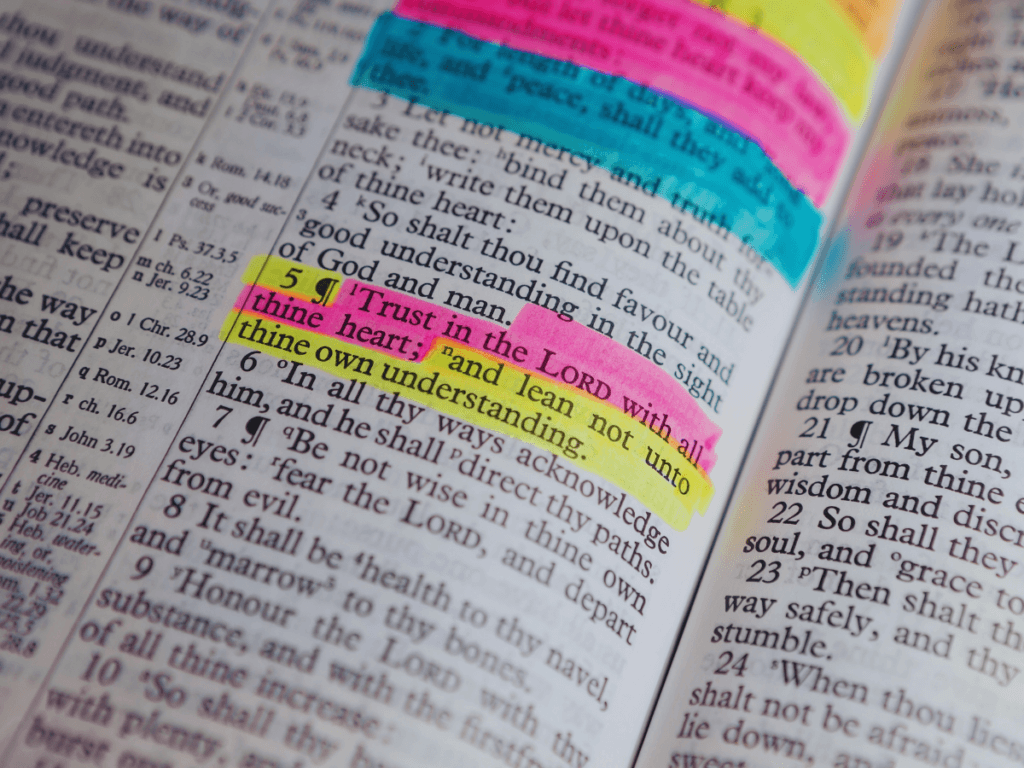
You want to hear God’s voice, and all you get is silence. God speaks through His Word, and He confirms it through peace and wise counsel.
Think of Elijah on the mountain. Wind tore the rocks apart, an earthquake came behind it, then fire, and God was in none of them. What came next was so quiet the Hebrew text struggles to name it. A thin, low hush. He wrapped his face in his cloak and walked out to meet it.
Most people are waiting for the fire because the fire would settle the question, and a whisper leaves room to wonder whether you imagined it. Jesus opened a different way. He tore the curtain, sent His Spirit to live inside His people, and made that quiet voice something you are already equipped to recognize. What follows is how to tell it apart from everything else competing for your attention.
What Does the Bible Say About Hearing God’s Voice?
Jesus said it plainly in John 10:27. His sheep hear His voice, He knows them, and they follow Him. He did not frame this as a reward for the spiritually advanced. He described it as the ordinary condition of belonging to Him.
The most instructive passage on the sound of that voice sits in 1 Kings 19:11 and 12. The Hebrew phrase is qol demamah daqqah. The King James renders it “a still small voice.” The English Standard Version gives “the sound of a low whisper.” You can check both the Hebrew terms and the translation range yourself at Blue Letter Bible’s interlinear tools, where the entries for demamah carry the sense of stillness or calm, and daqqah carries thin or fine, the word used for dust that has been crushed small.
Here is what most articles on this passage skip. Before Elijah heard anything, God fed him. An angel woke him twice under the broom tree, gave him bread baked on hot stones and a jar of water, and let him sleep in between. Only after that did the journey to Horeb begin, and only after the journey did the whisper come.
Elijah was suicidal when that chapter opened. He had asked God to take his life. The response was not a rebuke and not a revelation. It was food, water, and sleep. God tended the body before He addressed the heart, and He addressed the heart before He gave the assignment.
That order matters for anyone asking how to hear God’s voice today, especially in seasons of grief and exhaustion. Exhaustion is not a spiritual failure, and it is one of the most common reasons the whisper seems absent. Sometimes the first act of obedience is rest.
What Jesus Already Did So You Could Hear Him
For most of Israel’s history, access to the voice of God was mediated. A priest went behind the curtain. A prophet carried the word out to the people. The ordinary person heard God secondhand.
Matthew 27:51 records what happened at the moment Jesus died. The curtain of the temple tore from top to bottom. The direction is the whole point. No one reached up and pulled it open. It was opened from above.
Hebrews 10:19 through 22 spells out what that purchased. You have confidence to enter the holy place by the blood of Jesus, through a new and living way that He opened. The writer then tells you to draw near with a true heart in full assurance of faith.
Then Jesus sent the Spirit. In John 16:13 He promised that the Spirit of truth would guide His people into all truth. The one who guides you now lives inside you. He is not shouting from a mountain you have to climb.
So when you ask how to hear God’s voice, you are not asking God to start speaking. He already did the expensive part. You are learning to recognize a voice that has been near you the whole time.
How Do You Recognize God’s Guidance?
These are not steps in order. Any one of them can be the place you start today.
Measure everything against Scripture. The believers in Berea were commended in Acts 17:11 for examining the Scriptures daily to see whether what Paul preached was true. They tested an apostle. You are allowed to test an impression. God does not contradict what He has already written, so a leading that requires you to disobey His Word is not from Him.
Watch where the peace sits. Colossians 3:15 tells believers to let the peace of Christ rule in their hearts. The Greek verb there is brabeuō, the word for an umpire making the call in a contest. Blue Letter Bible’s lexicon entry carries that athletic sense directly. Peace is not merely a feeling that follows a good decision. It functions as the official who signals which way play goes.
Bring it to people who love Jesus and will tell you the truth. Proverbs 11:14 says that in an abundance of counselors there is safety. God routinely confirms His guidance through believers who have walked further than you have. If you are learning how to pray with more confidence, the people around you are part of the answer.
Notice the character of the voice. Jesus described the Spirit’s work in John 16:8 as convicting the world concerning sin. Revelation 12:10 names the enemy as the accuser. Both bring your sin into view, and they feel nothing alike. Conviction is specific, names one thing, and comes with a door out. Accusation is vague, names you rather than the act, and leaves you nowhere to go. If a voice is telling you what you are instead of what you did, consider the source.
Look at what it produces. Galatians 5:22 and 23 lists the fruit of the Spirit, love and joy and peace and patience and kindness and goodness and faithfulness and gentleness and self control. Guidance from God grows those things over time. Guidance that leaves you frantic, isolated, or contemptuous of other believers is worth holding loosely.
Let time do its work. Psalm 27:14 says to wait for the Lord and to be strong. A genuine leading from God survives waiting. Urgency that cannot tolerate a week of prayer is usually pressure from somewhere else. For more on this, Bible Gateway’s parallel translation view is a useful place to sit with a passage in several renderings before you move.
Write it down. Habakkuk was told in Habakkuk 2:2 to write the vision and make it plain on tablets. Impressions fade and memory edits itself. A dated page turns a vague sense into something you can weigh later against what actually happened.
Where Hearing His Voice Leads
Elijah did not stay on the mountain. The whisper gave him three assignments and one piece of news. Anoint Hazael, anoint Jehu, anoint Elisha as your successor, and there are seven thousand in Israel who have not bowed to Baal. The man who thought he was the last one left was told he was one of thousands.
That is the shape of it. God speaks, and what He says sends you somewhere and puts you back among His people.
The same thing happened to Samuel. He was a boy who did not yet know the Lord, and the voice came anyway, three times, until Eli told him how to answer. First Samuel 3:19 says the Lord was with him as he grew and let none of his words fall to the ground.
You are not disqualified by being new at this. You are not disqualified by a season of silence or by the fact that you have gotten it wrong before. Jesus tore the curtain, sent His Spirit, and called you by name before you knew how to listen.
He is speaking. Ask Him to help you hear it, and start with the Word He has already written down. The voice you are straining for has been closer than the noise the whole time. If you want to go further, the prayer resources here are a good next step toward hearing Him clearly.