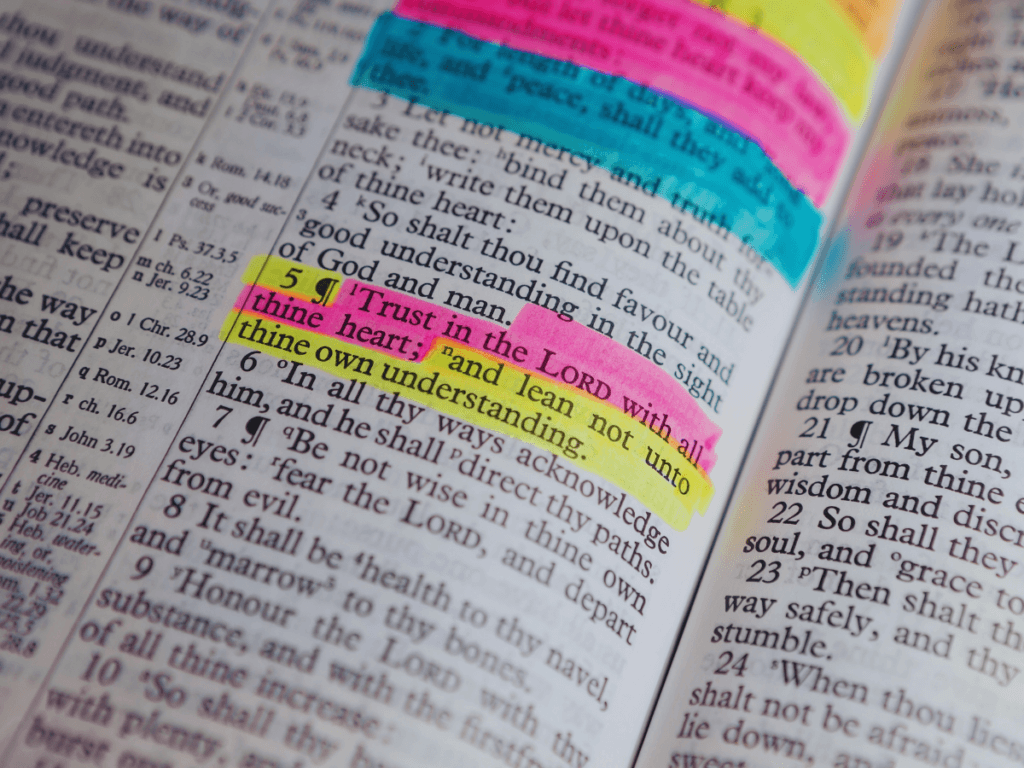
Christianity rests on a handful of convictions that everything else hangs from. God made everything and made people in His image. People sinned and broke that relationship. God sent His Son Jesus, who lived without sin, died on a cross for sin, and rose from the dead. Salvation comes by grace through faith in Him, not by works. The Bible is God’s Word, the Church is His people, and Jesus will return to make all things new. Everything below unpacks that in the order the Bible tells it.
Who is God in Christianity?
Christians believe in one God who exists eternally as Father, Son, and Holy Spirit. Three persons, one God. This is the Trinity, and it is a mystery the Bible teaches without fully explaining. Jesus commanded baptism in the name of the Father and of the Son and of the Holy Spirit in Matthew 28. Paul closed 2 Corinthians with a blessing naming all three.
God is not a distant force. He is personal, He speaks, He acts, and He is holy. He is also love, which 1 John 4 says plainly. Those two things sit together, His holiness and His love, and the whole story of the Bible is how He holds both without dropping either.
What does Christianity teach about creation and humanity?
God made the heavens and the earth, and He made it good. Then He made people, male and female, in His own image, and gave them charge over the earth. That image is what gives every human life its worth. It is not your productivity, your usefulness, or your health that makes you valuable. It is whose image you carry, and that does not change.
Genesis 3 tells what went wrong. The first humans doubted God’s word, chose their own way, and sin entered the world. Paul explained the fallout in Romans 5: through one man sin entered the world, and death through sin, and so death spread to all because all sinned. That is the diagnosis the rest of the Bible answers.
Who is Jesus Christ?
This is the center. Christians believe Jesus is God the Son, fully God and fully man, born of a virgin, who lived a sinless life. He taught with authority, healed the sick, and claimed to be one with the Father, which is why the religious leaders of His day wanted Him dead.
He was crucified under Pontius Pilate, died, and was buried. On the third day He rose from the dead. Paul said in 1 Corinthians 15 that if Christ has not been raised, your faith is futile and you are still in your sins. The resurrection is not a nice add on. It is the hinge the whole thing turns on.
What is salvation and how does someone receive it?
Salvation means being rescued from sin and its wages, which Romans 6:23 names as death, and given eternal life. It is a gift. Ephesians 2 says by grace you have been saved through faith, and this is not your own doing, it is the gift of God, not a result of works, so that no one may boast.
That last phrase matters. You cannot earn it. You receive it. Repentance and faith are the open hands. Jesus said in John 3 that God so loved the world that He gave His only Son, that whoever believes in Him should not perish but have eternal life. Whoever. Not whoever is good enough. Whoever believes.
What do Christians believe about the Bible?
Christians hold that the Bible is God’s Word, given through human authors, and it is trustworthy and authoritative for what we believe and how we live. Paul wrote in 2 Timothy 3 that all Scripture is breathed out by God and profitable for teaching, for reproof, for correction, and for training in righteousness.
It is not a rulebook to skim for loopholes. Jesus read it as pointing to Himself. In John 5 He told the religious leaders that the Scriptures testify of Him, and yet they would not come to Him for life.
What is the Church?
The Church is not a building. It is the people Jesus has saved, gathered together. Paul called it the body of Christ in 1 Corinthians 12, with many members and one Spirit, each with a part to play. Jesus said He would build His church and the gates of hell would not prevail against it.
Christians meet to worship, hear the Word, pray, celebrate baptism and communion, and care for one another. The early church in Acts 2 devoted themselves to the apostles’ teaching, to fellowship, to the breaking of bread, and to prayer. That pattern has not changed.
What are the sacraments or ordinances?
Most Christian traditions hold to two that Jesus Himself instituted.
Baptism. Jesus told His disciples to baptize in the name of the Father, Son, and Holy Spirit in Matthew 28. It is the outward sign of an inward reality, being buried and raised with Christ, as Paul describes in Romans 6.
Communion, also called the Lord’s Supper. On the night He was betrayed, Jesus took bread and a cup and told His disciples to do this in remembrance of Him. Paul passed that instruction on in 1 Corinthians 11. It is a meal that looks back to the cross, feeds the believer now, and points forward to His return.
What does Christianity teach about the future?
Jesus will return. He said so plainly, and the apostles repeated it. When He comes, He will judge the living and the dead, raise the dead, and make all things new. Revelation 21 describes a new heaven and a new earth where God dwells with His people, wipes away every tear, and there is no more death or mourning or crying or pain.
Until then, Christians are not waiting passively. Jesus told parables about servants left in charge while the master is away, and the point was faithfulness, not idleness. You live now in light of what is coming.
What does Christianity require of a believer?
Jesus summarized it in Matthew 22. Love the Lord your God with all your heart, soul, and mind. Love your neighbor as yourself. On these two commandments hang all the Law and the Prophets.
Then He said in Matthew 16 that whoever would follow Him must deny himself, take up his cross, and follow. That is the shape of the life. Not a list to check off, but a Person to follow, one day at a time, in the power of the Holy Spirit who lives in every believer. Paul said in Galatians 2, I have been crucified with Christ, and it is no longer I who live, but Christ who lives in me.
A short summary
One God in three persons. Creation made good. Sin that broke it. Jesus who came, died, and rose to fix it. Salvation by grace through faith, not works. The Bible as God’s trustworthy Word. The Church as His people. Baptism and communion as His signs. A certain return and a restored world. And a life of love toward God and neighbor, lived by His Spirit.
That is the faith once delivered to the saints, as Jude put it. It is not complicated at the root. It is deep, and there is room in it to spend a lifetime and never reach the bottom.
Verse to hold onto
“For God so loved the world, that he gave his only Son, that whoever believes in him should not perish but have eternal life.” (John 3:16)